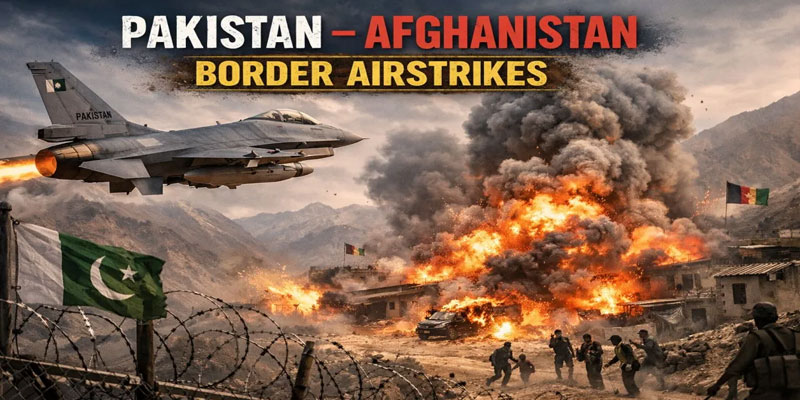
A Night of Retaliation
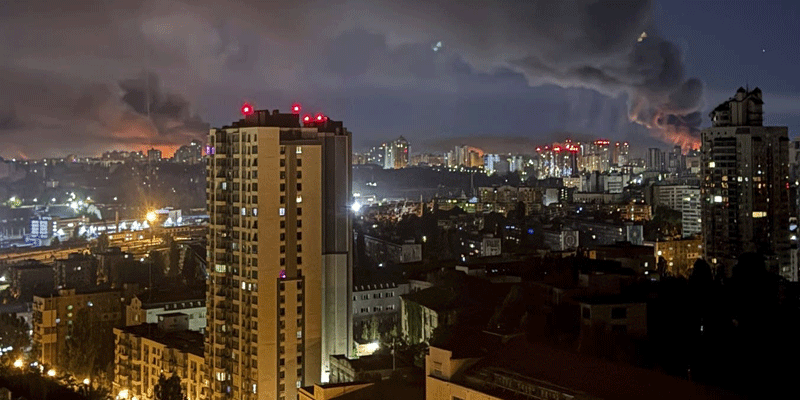
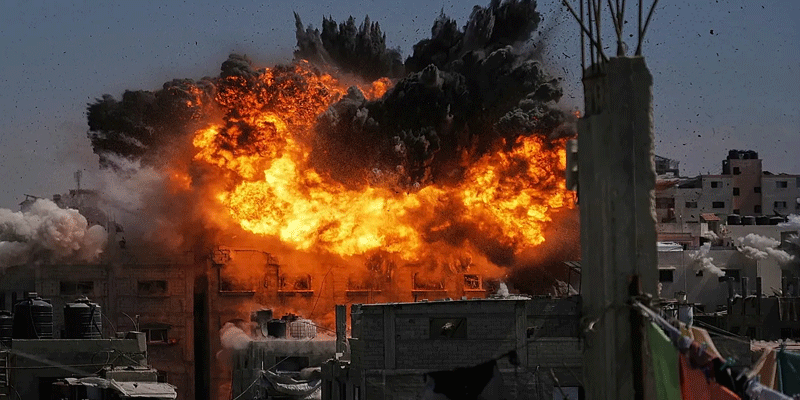
Deadly Pakistani airstrikes ripped across eastern Afghanistan on February 22, 2026, as Islamabad targeted seven alleged hideouts of the Tehreek-e-Taliban Pakistan (TTP) and ISIS-K affiliates. The strikes hit locations in Paktika’s Bermal district and parts of Nangarhar, with Pakistani officials claiming over 70 militants were killed. The operation followed a string of brutal attacks inside Pakistan, including a Bajaur vehicle-borne IED blast that killed 11 soldiers and a child, and a bombing at a Shiite Mosque in Islamabad that left 31 dead.
Pakistan insists it possesses “conclusive evidence” that the attackers were coordinated from Afghan soil. Kabul’s Taliban-led Defense Ministry swiftly condemned the airstrikes as violations of sovereignty, warning of a “calculated response.” The escalation underscores a fragile and increasingly combustible border dynamic.
Roots of the Renewed Hostilities
Since the Taliban’s return to power in 2021, attacks by the TTP inside Pakistan have surged sharply, with over 3,800 incidents reported in FY25. Islamabad accuses Kabul of failing to rein in militant factions sheltering along the porous Durand Line, particularly in Kunar and Khost. Despite Pakistan conducting tens of thousands of intelligence-based operations domestically—reportedly neutralizing 2,500 militants last year—the cross-border threat persists.
The February 22 strikes mirror earlier Pakistani operations in 2018 and 2024, signaling a hardened doctrine: no tolerance for external safe havens. For the Taliban, however, these actions inflame nationalist sentiment and strain already fraught bilateral ties. The risk of tit-for-tat retaliation, especially after prior clashes reportedly killed over 200 militants in 2025, raises the specter of wider confrontation.
Regional Security and Economic Implications
The airstrikes come at a delicate time for Pakistan. Its western frontier instability threatens the China-Pakistan Economic Corridor (CPEC), a $62 billion infrastructure lifeline under Beijing’s Belt and Road Initiative. Rising TTP violence—responsible for more than 1,200 deaths in 2025—diverts military attention and resources from other strategic fronts, including the eastern border with India.
Afghanistan’s own fragility compounds the danger. Continued border violence risks refugee flows, illicit arms transfers, and narcotics trafficking, given that Afghanistan remains the world’s leading opium producer. For China, which has quietly pushed mediation efforts after a failed October 2025 ceasefire, stability is paramount to protect its investments.
How Might This Affect U.S.–Pakistan Relations Post-Doha?
The 2020 Doha Agreement obligated the Taliban to prevent Afghan territory from being used for attacks against other states. Pakistan’s strikes invoke this very clause, arguing Kabul has failed to comply. For Washington, the calculus is complex but pragmatic.
The United States has consistently prioritized counterterrorism objectives in Afghanistan. The TTP and ISIS-K are recognized security threats, and Pakistan’s operations align with broader U.S. goals of preventing safe havens. Historically, the U.S. response to similar actions has emphasized restraint while quietly supporting anti-terror measures.
Post-Doha, U.S.–Pakistan ties have been cautiously stabilizing, marked by resumed security cooperation and F-16 sustainment support. The February strikes are unlikely to significantly strain this trajectory unless credible civilian casualty reports emerge. Instead, they may reinforce tactical convergence: both Washington and Islamabad share an interest in compelling the Taliban to curb transnational militancy.
However, escalation carries risks. A broader Taliban–Pakistan confrontation could complicate U.S. over-the-horizon counterterrorism capabilities and regional airspace access, undermining fragile stability.
Security Imperatives vs. Regional Stability
Pakistan’s airstrikes reflect a doctrine of proactive defense amid mounting militant violence. Yet each cross-border action chips away at an already brittle peace along the Durand Line. While Washington may view the strikes through a counterterror lens consistent with Doha commitments, unchecked escalation could destabilize Afghanistan further and imperil regional projects.
Ultimately, sustainable stability will require more than air power. Verifiable intelligence-sharing, border coordination, and political engagement between Islamabad and Kabul remain essential. Without these, retaliation risks becoming routine—and the frontier a perpetual flashpoint.
(With agency inputs)