Nitish Kumar Announces Shift to Parliament
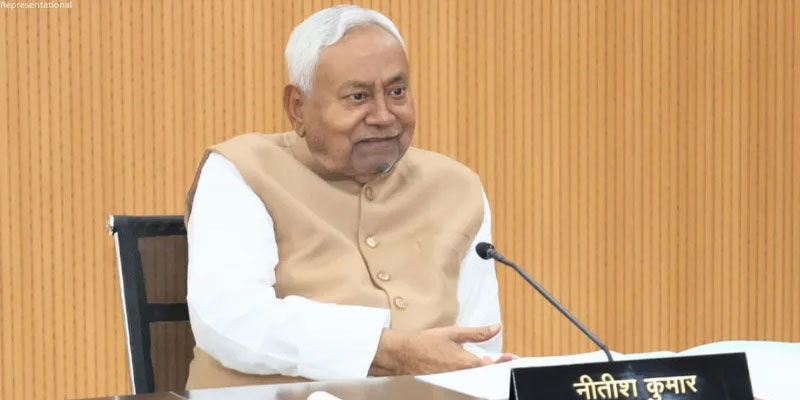
Bihar Chief Minister Nitish Kumar has indicated he will step down from the state’s top post and contest the upcoming Rajya Sabha elections, marking a major turning point in Bihar’s political landscape. In his first public reaction shared on X on March 5, 2026, the veteran leader said he had long desired to serve in both Houses of Parliament and saw this moment as the right time to pursue that ambition.
Kumar noted that his political journey had already taken him through the Bihar Vidhan Sabha, the Bihar Legislative Council, and the Lok Sabha. A Rajya Sabha term, he said, would complete that parliamentary arc. The Janata Dal (United) president also thanked the people of Bihar for their support over two decades and promised to continue guiding the state government even after stepping aside as chief minister.
His nomination is expected ahead of the March 16 Rajya Sabha elections, and he will remain chief minister until he is elected and formally sworn in as a member of the Upper House.
A Record Tenure Nears Its Close
Kumar’s announcement effectively brings the curtain down on one of the longest and most influential chief ministerial tenures in India. As Bihar’s longest-serving chief minister, he built his reputation around governance reforms popularly associated with the “Sushasan” (good governance) model.
Under his leadership, Bihar focused on infrastructure expansion, road connectivity, electricity access, and social initiatives such as prohibition and education reforms. Supporters credit these policies with helping move the state away from its earlier “BIMARU” image of economic stagnation.
Yet his long career was not without controversy. Critics frequently highlighted his shifting alliances—having changed political partners multiple times over the years. Still, his administrative experience and coalition management skills allowed him to remain a central figure in Bihar politics for nearly two decades.
Political Context: NDA Dominance After 2025
Kumar’s decision comes months after the National Democratic Alliance secured a decisive victory in the 2025 Bihar Assembly elections. His party, the Janata Dal (United), and the Bharatiya Janata Party won an almost equal share of seats within the NDA coalition.
That balance of power made Kumar’s continuation as chief minister politically viable, but it also strengthened the BJP’s long-standing aspiration to lead the state government. With the NDA commanding well over 200 seats in the 243-member assembly, the coalition remains secure even as leadership changes loom.
Health concerns also played a role in accelerating the transition. Viral videos and reports in recent months suggested visible fatigue during public appearances, prompting discussions within the JDU leadership about a smooth and timely succession plan.
Amit Shah’s Strategic Role in the Transition
The leadership transition is expected to be carefully choreographed by senior BJP leadership, particularly Union Home Minister Amit Shah. Shah’s scheduled visit to Patna on March 5, coinciding with Rajya Sabha nomination preparations, signals his central role in shaping the next phase of Bihar’s political leadership.
As the BJP’s chief strategist, Shah is likely to oversee negotiations between coalition partners and finalize the selection of the next chief minister. Potential contenders include Deputy Chief Minister Samrat Choudhary and Union Minister Nityanand Rai, both influential figures with strong organizational backing.
Shah’s task will be to balance several priorities simultaneously—ensuring a smooth transition, maintaining the NDA alliance with the JDU, and selecting a leader who reflects Bihar’s complex caste equations. BJP leaders are expected to emphasize representation for Other Backward Classes and Extremely Backward Classes while consolidating the party’s growing grassroots base.
What It Means for Bihar’s Political Future
If the BJP installs its first chief minister in Bihar, the move would represent a major shift in the state’s power dynamics. Governance could gradually move from Kumar’s development-centric administrative style toward a stronger ideological and organizational approach aligned with the BJP’s broader political priorities.
At the same time, the alliance must maintain internal harmony. Any friction between the BJP and the JDU could provide an opening for opposition forces led by Rashtriya Janata Dal.
A Carefully Managed Political Transition
Nitish Kumar’s move to the Rajya Sabha is both a personal milestone and a calculated political transition. For the veteran leader, it offers a dignified exit from day-to-day governance while preserving influence at the national level. For the BJP, it may finally open the door to leading Bihar directly.
Much will depend on how effectively leaders like Amit Shah manage the delicate balance within the NDA coalition. If executed smoothly, the transition could usher in a new political phase while preserving stability in one of India’s most politically significant states.
(With agency inputs)