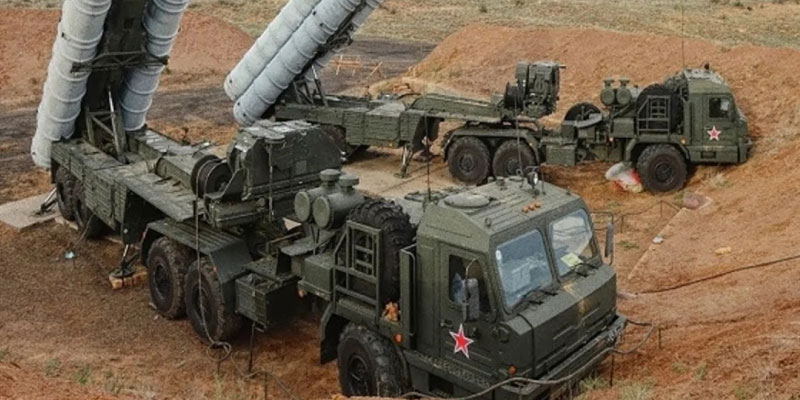
The S-400 and India’s Defence Gamble
When India signed a landmark $5.5 billion deal with Moscow in 2018 for five S-400 Triumf surface-to-air missile systems, it was more than just a defence purchase. The decision symbolised New Delhi’s determination to acquire cutting-edge military technology despite mounting Western pressure. The S-400, designed to counter everything from stealth aircraft to cruise and ballistic missiles, is regarded as one of the most formidable air defence systems in the world.
Today, nearly six years later, that partnership is poised to grow further. According to Russian state media, Moscow and New Delhi are once again in discussions for additional supplies of the S-400, reaffirming their long-standing defence ties.
Renewed Negotiations for Deliveries
Dmitry Shugayev, head of Russia’s Federal Service for Military-Technical Cooperation, confirmed that talks are underway. “India already has our S-400 system. There is potential to expand our cooperation in this area as well,” he told TASS, adding that discussions are still at the negotiation stage.
The original agreement for five units has experienced multiple delays, with final deliveries now rescheduled for 2026 and 2027. Yet both sides appear committed to expanding beyond that initial deal, reflecting India’s continued trust in Russian weaponry despite diversifying its sources of arms.
Russia’s Enduring Role in India’s Arsenal
Even as India buys more from France, Israel, and the United States, Russia remains its largest defence supplier. Data from the Stockholm International Peace Research Institute shows that between 2020 and 2024, 36 percent of India’s arms imports came from Russia.
This relationship is built on decades of joint projects: licensed production of T-90 tanks and Su-30MKI fighter jets, the supply of MiG-29 and Kamov helicopters, the refitting of the INS Vikramaditya aircraft carrier, co-development of AK-203 assault rifles, and the successful BrahMos cruise missile programme.
The S-400 itself has already been integrated into India’s defence strategy. Reports suggest it was deployed during Operation Sindoor, an Indian military action in May aimed at neutralising terrorist infrastructure across the border.
Standing Firm Against U.S. Pressure
The S-400 agreement also tested India’s ability to balance its relations with Washington and Moscow. The U.S. had threatened sanctions under its CAATSA law for major defence purchases from Russia, but New Delhi pushed ahead. Russian Foreign Minister Sergei Lavrov recently praised India for not bowing to American demands, particularly in the context of both defence purchases and oil imports.
In August, Indian refiners resumed buying Russian crude at discounted rates, securing more than 11 million barrels in a single week. Lavrov said Moscow valued India’s independent stance, highlighting that this approach strengthens the strategic bond between the two countries.
Modi–Putin Diplomacy at the SCO
The recent Shanghai Cooperation Organisation (SCO) summit further showcased the closeness of the India–Russia partnership. Prime Minister Narendra Modi and President Vladimir Putin held extended discussions, including a 45-minute conversation while travelling together in the same car. Modi invited Putin to visit India in December, telling him that 1.4 billion Indians were eager to welcome him.
Both leaders emphasised that their “Special and Privileged Strategic Partnership” extends beyond defence into energy, finance, and trade. Modi underlined that cooperation was vital not only for bilateral benefit but also for “global peace, stability, and prosperity.” He also expressed support for peace initiatives in Ukraine, stressing the urgent need to end hostilities.
Why the S-400 Matters
First introduced in 2007 by Russia’s Almaz Central Design Bureau, the S-400 Triumf is regarded as one of the world’s most advanced multi-layered air defence systems. Its ability to track and intercept a wide range of threats—fighter jets, drones, stealth aircraft, cruise missiles, and even ballistic missiles—has made it highly sought after.
For India, the system enhances air defence along its borders with China and provides a credible deterrent in any high-intensity conflict. By negotiating for more units, New Delhi appears determined to expand this protective shield.
A Partnership Rooted in Strategy, Not Convenience
The ongoing talks for additional S-400 systems are more than another arms deal. They reflect the resilience of India–Russia defence ties despite geopolitical headwinds and New Delhi’s growing relationships with other powers.
For India, the calculus is straightforward: the S-400 strengthens its military preparedness in a turbulent neighbourhood while preserving strategic autonomy in foreign policy. For Russia, deepening ties with India offers both economic benefits and diplomatic leverage at a time of Western isolation.
Ultimately, the negotiations highlight an enduring truth—India and Russia may adapt to changing global dynamics, but their security partnership continues to stand “shoulder-to-shoulder,” just as it has for decades.
(With agency inputs)