Why the Security Council Matters
The United Nations Security Council (UNSC) is the body entrusted with the most critical responsibility in global governance — the preservation of peace and security. It authorizes peacekeeping missions, imposes sanctions, and even approves the use of force in extreme cases. Yet, decades after its formation in 1945, the Council’s structure continues to reflect post-World War II geopolitics rather than today’s realities. With just five permanent members — the United States, Russia, China, the United Kingdom, and France — holding veto powers, questions of fairness, inclusivity, and legitimacy have repeatedly been raised by emerging powers and major contributors to UN operations.
India’s Call for Change
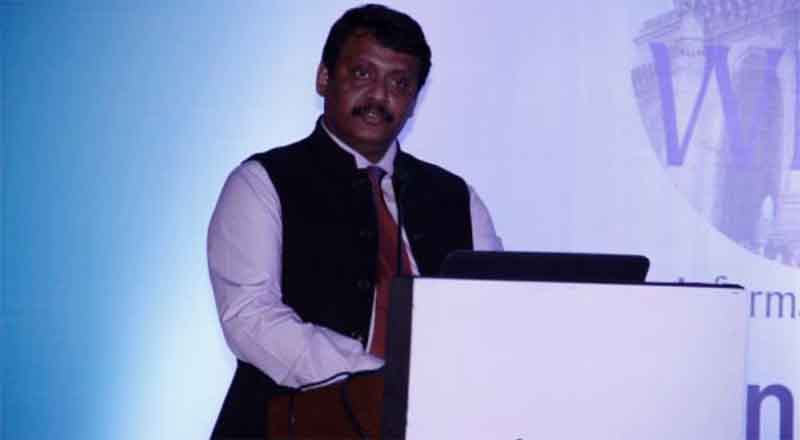
India, one of the largest and most consistent contributors to UN peacekeeping forces, has once again underlined the urgent need to reform the Security Council. Speaking at an open debate convened by South Korea, India’s Permanent Representative to the UN, P. Harish, stressed that peacekeeping can only succeed when it is backed by a Council that represents today’s world, not one frozen in the politics of the mid-20th century.
“The effectiveness of UN peacekeeping is tied to the structure and legitimacy of the UN Security Council,” Harish argued, calling for expansion in both permanent and non-permanent categories. His message was clear: those who risk their soldiers’ lives on the ground deserve a decisive voice in shaping mandates.
Disproportionate Roles and Limited Power
India’s frustration stems from its paradoxical position. It has contributed more troops to UN peacekeeping missions than any other nation, yet it remains excluded from permanent membership of the Council. This disconnects, Indian diplomats argue, undermines both legitimacy and efficiency.
Peacekeeping mandates are determined by a select few, while execution falls largely on countries like India, Bangladesh, Rwanda, and Ethiopia. “All stakeholders, particularly troop and police-contributing nations, must be part of the decision-making process,” Harish emphasized.
Current Challenges in Peacekeeping
The debate in New York also reflected on the growing complexity of peacekeeping missions. Harish noted that operations now face “political, operational, and technological” hurdles, often without sufficient clarity of purpose. Mandates, he stressed, must be “simple, realistic, clear, and focused.”
Another challenge lies in financing. With threats of reduced contributions — notably from the United States, which currently funds about a quarter of the UN peacekeeping budget — missions often struggle to align their goals with available resources. “The scope of mandates should match the resources available,” Harish warned, pointing out that unrealistic expectations jeopardize both troops and outcomes.
Calls to End Redundant Missions
India also questioned the continuation of outdated peacekeeping deployments. Harish suggested that missions with obsolete mandates should be withdrawn and dissolved. Although he did not name any, the long-standing UN Military Observer Group in India and Pakistan (UNMOGIP) is widely seen by India as a relic of the past, with little relevance in the current geopolitical climate.
Perspectives from UN Officials
Senior UN officials echoed the call for clarity and political engagement. Jean-Pierre Lacroix, Under-Secretary-General for Peace Operations, highlighted that peacekeeping missions must not be indefinite and should end only when political stability is assured. Similarly, Rosemary DiCarlo, Under-Secretary-General for Political and Peacebuilding Affairs, cautioned that many missions are deployed in highly volatile environments, sometimes amid civil wars. In such contexts, she argued, modest but achievable goals — like preventing escalation or securing a ceasefire — should be prioritized.
India’s Larger Reform Agenda
India’s push for UNSC reform is not new. For years, New Delhi has sought a permanent seat on the Council, arguing that its population size, economic weight, and global peacekeeping record make it a natural candidate. Alongside other aspirants like Germany, Japan, and Brazil, India has lobbied for a more inclusive and representative body. Yet, opposition from some permanent members has stalled progress, leaving the Council’s structure largely unchanged for nearly 80 years.
A Constructive Way Forward
The debate underscores a wider truth: peacekeeping cannot succeed in isolation from politics. Soldiers may stabilize a conflict zone temporarily, but without political will, resources, and legitimate global backing, long-term peace remains elusive. Reforming the Security Council is thus not just about power politics — it is about ensuring that UN peacekeeping reflects the values of fairness, inclusivity, and collective responsibility.
For India, the case is straightforward. A Council that excludes major contributors to peacekeeping undermines its own credibility. Expanding membership and involving troop-contributing nations in decision-making would not only strengthen the UN but also give peacekeeping the legitimacy it urgently needs.
(With agency inputs)