IPL Founder Announces Return Following Major Legal Relief
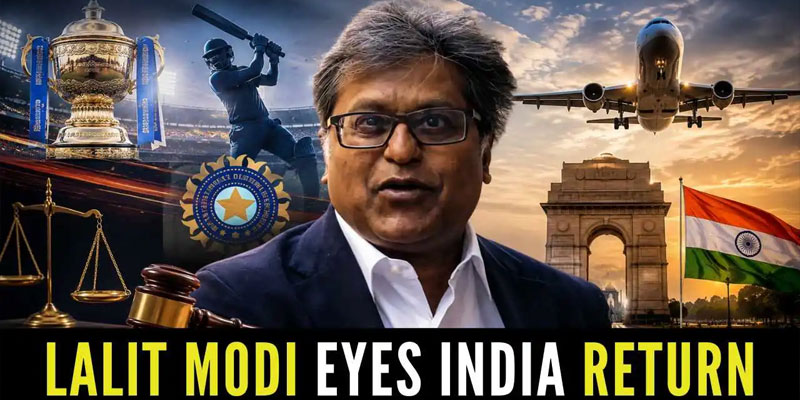
IPL founder Lalit Modi has announced that he will return to India after 16 years, following a tribunal verdict in his favour in the 2009 IPL South Africa Foreign Exchange Management Act (FEMA) case. The development marks a significant turning point in one of Indian cricket's most controversial chapters. While the ruling strengthens Modi's legal position in a key case, it does not automatically end all disputes surrounding him, including the BCCI's life ban imposed over alleged misconduct.
The Visionary Behind the IPL Revolution
Lalit Modi, a member of a prominent business family, transformed Indian cricket through the launch of the Indian Premier League (IPL) in 2008. As the league's founding chairman and commissioner, he introduced the franchise model, player auctions and a commercially driven format that revolutionised cricket worldwide.
Under his leadership, the IPL rapidly became a multi-billion-dollar sporting enterprise, attracting massive investments, sponsorships and global audiences. However, its rapid success was accompanied by allegations of financial irregularities, governance issues and conflicts of interest, eventually leading to his fallout with the Board of Control for Cricket in India (BCCI).
How the 2009 South Africa IPL Led to Legal Trouble
In 2009, the IPL was shifted from India to South Africa because of the Lok Sabha elections. The relocation involved substantial foreign exchange transactions covering broadcasting, logistics, sponsorships and payments to Cricket South Africa.
The Enforcement Directorate (ED) later alleged violations of FEMA, including:
· Excess foreign remittances.
· Delays in repatriating ticket sale proceeds.
· Irregularities in overseas financial transactions.
The allegations resulted in penalties against Lalit Modi, the BCCI and several office-bearers.
Exile, Passport Dispute and BCCI Ban
The controversy eventually forced Modi to relocate to London in 2010.
Subsequent developments included:
· 2011: His passport was revoked before being restored later by the Delhi High Court.
· 2013: The BCCI imposed a life ban, citing indiscipline, governance failures and alleged financial irregularities.
· Modi consistently maintained that he had been made a scapegoat for collective decisions taken during the IPL's rapid expansion.
· In 2025, the Supreme Court declined his plea seeking BCCI indemnification for a FEMA penalty, asking him to pursue civil remedies.
Tribunal Verdict Changes the Legal Landscape
The turning point came with the July 16 ruling of the Appellate Tribunal under SAFEMA.
The tribunal held that:
· The disputed remittances for the South Africa IPL were current account transactions and did not violate FEMA as alleged.
· There was no evidence proving Lalit Modi was personally responsible for delayed repatriation of funds.
· Most ED findings and penalties against Modi, the BCCI and former office-bearers, including N. Srinivasan and M.P. Pandove, were set aside.
Modi described the verdict as his personal vindication and a reaffirmation of the rule of law.
What His Return Could Mean
Modi has directly linked his decision to return with the tribunal's favourable order.
His return could have several implications:
· Legal: While the ED may pursue appeals or related proceedings, the tribunal's observations weaken the enforcement case in this matter.
· Cricket administration: The BCCI life ban remains in force, making any immediate return to cricket administration unlikely.
· Public debate: His return is likely to revive discussions on IPL governance, financial transparency and the legacy of its formative years.
A Homecoming That Reopens Cricket's Biggest Debate
Lalit Modi's planned return is more than a personal homecoming—it revives one of Indian cricket's most debated legacies. Widely credited with creating the IPL while simultaneously facing years of legal scrutiny, Modi remains one of the sport's most polarising figures. Although the tribunal verdict strengthens his claim of vindication, it does not erase the controversies that shaped his exile. His return is likely to reopen debates on governance, accountability and the extraordinary transformation of the IPL into one of the world's most valuable sporting leagues.
(With agency inputs)