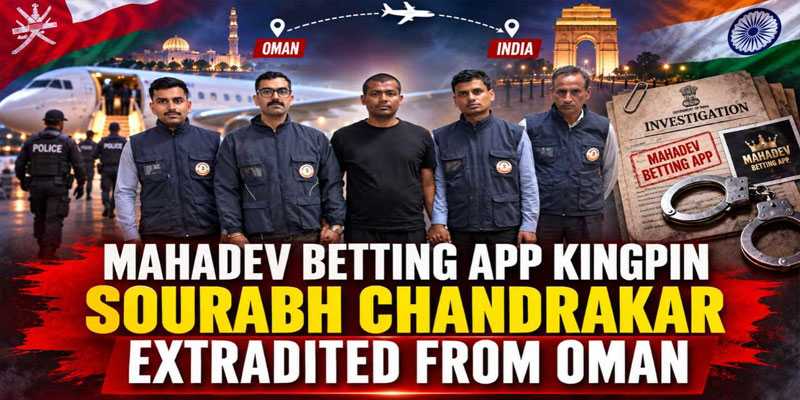
The Central Bureau of Investigation (CBI) has brought Sourabh Chandrakar, the alleged kingpin and promoter of the Mahadev online betting syndicate, back to India from Oman following his extradition from Muscat. Detained after an Interpol Red Notice was issued against him, Chandrakar is scheduled to be produced before a special CBI court in Raipur, Chhattisgarh. His return marks a significant breakthrough in India's investigation into an alleged international illegal betting network involving thousands of crores of rupees, suspected money laundering and alleged links with public officials.
Mahadev Betting Network: How Did It Operate?
The Mahadev Online Book case concerns an alleged transnational betting syndicate established by Sourabh Chandrakar and Ravi Uppal, both originally from Bhilai in Chhattisgarh.
Investigators allege that the operation expanded significantly around 2019–20, with much of its management conducted from Dubai. The platform allegedly facilitated illegal betting on multiple sporting events and games, including:
· Cricket, football, tennis and badminton.
· Poker and other card games.
· Various online betting and gambling activities.
The syndicate allegedly operated through a franchise-based system involving multiple panels and branches across India. These networks reportedly enrolled customers, collected betting stakes and transferred proceeds through complex financial channels.
The CBI took over the investigation following a request from the Chhattisgarh government.
Serious Allegations: Money Laundering and Official Protection
Chandrakar has been named as a key accused in CBI chargesheets invoking provisions of the Prevention of Corruption Act, 1988, the Indian Penal Code relating to criminal conspiracy, cheating and forgery, and the Chhattisgarh Gambling (Prohibition) Act.
Investigators allege that the network generated enormous illegal proceeds and concealed their movement through sophisticated financial arrangements.
The alleged methods included:
· Routing betting proceeds through numerous mule bank accounts.
· Splitting transactions to conceal the money trail.
· Transferring funds overseas through hawala channels.
· Paying alleged protection money to public servants to prevent official interference.
Chandrakar is also wanted in a separate Enforcement Directorate (ED) money-laundering investigation.
Extradition From Oman: A Major Investigative Breakthrough
Following his detention in Muscat under an Interpol Red Notice, a specially deputed CBI team escorted Chandrakar to India after the extradition request received approval.
The alleged betting racket has been associated with approximately ₹6,000 crore, although some reports cite higher transaction estimates. These figures remain investigative estimates rather than judicially established amounts.
What Happens Next?
His return will enable investigators to question him directly, examine digital evidence, verify financial transactions and confront him with witness statements. The ED has also attached several properties in India and abroad allegedly linked to proceeds of crime.
Beyond One Arrest: India's Fight Against Global Betting Networks
Chandrakar's extradition demonstrates the growing importance of international cooperation against cyber-enabled financial crime. However, bringing an accused back is only the beginning. The investigation must establish the complete financial trail, identify beneficiaries and determine whether public officials facilitated the alleged operation. Ultimately, the strength of the prosecution will depend on evidence presented before the courts, as extradition and arrest do not establish guilt.
(With agency inputs)