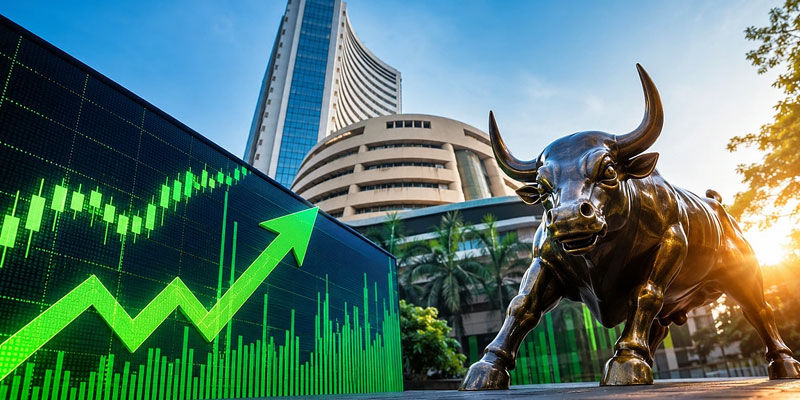
India's National Stock Exchange (NSE) has achieved a significant global financial milestone by becoming the world's fifth-largest publicly listed exchange operator by market capitalisation, overtaking established international players Nasdaq and Hong Kong Exchanges and Clearing (HKEX). The achievement, coming less than two months after its stock-market debut, reflects growing investor confidence in India's expanding financial markets and NSE's dominant position in the country's securities trading ecosystem. The development also places an Indian financial institution among the world's most valuable exchange operators.
NSE: The Institution Behind India’s Capital Market Growth
Established in 1992 and commencing operations in 1994, the National Stock Exchange of India transformed India's securities market by introducing nationwide electronic trading and improving transparency, accessibility and efficiency.
Over the years, NSE has played an important role in:
· Expanding electronic and transparent securities trading.
· Increasing retail investor participation.
· Supporting companies through capital-market access.
· Developing derivatives and risk-management products.
· Strengthening India's financial-market infrastructure.
Historic Market Capitalisation: NSE Overtakes Nasdaq and HKEX
NSE made its much-anticipated stock-market debut on September 24, 2026, ending years of anticipation surrounding its public listing.
By November 20, its market capitalisation had reached approximately $59.7 billion (₹5.56 lakh crore), placing it ahead of two major global exchange operators.
Its reported share price stood at ₹2,236.10 on November 20, gaining ₹47.80 or 2.18 per cent during the session.
The global comparison was:
- CME Group: Approximately $111.05 billion.
- Intercontinental Exchange: Approximately $95.5 billion.
- Deutsche Börse: Approximately $65 billion.
- London Stock Exchange Group: Approximately $60.3 billion.
- NSE: Approximately $59.7 billion.
- Hong Kong Exchanges and Clearing: Approximately $58.1 billion.
- Nasdaq: Approximately $57.7 billion.
This comparison concerns the market value of exchange-operating companies, not the total value of shares traded on their respective platforms.
What Makes NSE Attractive to Global Investors?
· Dominance in India's cash-equity trading segment.
· Significant derivatives trading volumes.
· Strong operating margins and established market infrastructure.
· Growing participation by domestic retail investors.
· Opportunities arising from new listings and expanding financial products.
India's expanding investor base and increasing household participation in equity markets provide significant growth opportunities for the exchange.
Sustaining Global Financial Leadership
NSE's entry into the world's five most valuable listed exchange operators marks an important milestone for India's financial-market ambitions. However, maintaining this position will depend on sustained earnings growth, technological innovation, regulatory compliance and its ability to attract wider investor participation. Its narrow valuation lead over Nasdaq and HKEX also means the ranking could change with market movements. Ultimately, NSE's achievement represents more than a stock-market valuation milestone: it reflects India's growing importance in global finance and the increasing international recognition of its capital-market infrastructure.
(With agency inputs)