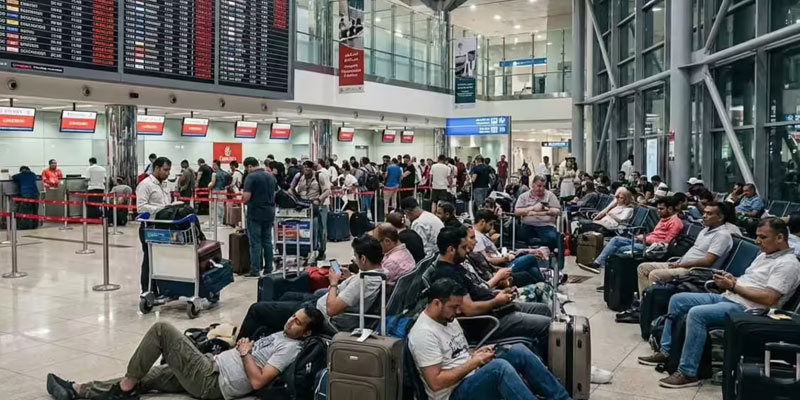
More than 52,000 Indian nationals have safely returned from the Gulf region between March 1 and March 7, 2026, as conflict between Iran, the United States, and Israel disrupted air travel and threatened civilian safety. The Ministry of External Affairs (MEA) confirmed that 32,107 passengers were flown home by Indian carriers, including Air India, while thousands more travelled on foreign airlines as commercial flights gradually resumed after partial reopening of regional airspace.
The swift movement of passengers reflects a rapid diplomatic and logistical response by India, which has one of the largest expatriate populations in West Asia.
War Disruptions Spark Mass Travel Chaos
The evacuation wave followed the dramatic escalation of hostilities on February 28, when U.S. and Israeli strikes targeted Tehran. Iran responded with missile attacks on military installations and airports across parts of the Gulf, forcing widespread aviation shutdowns.
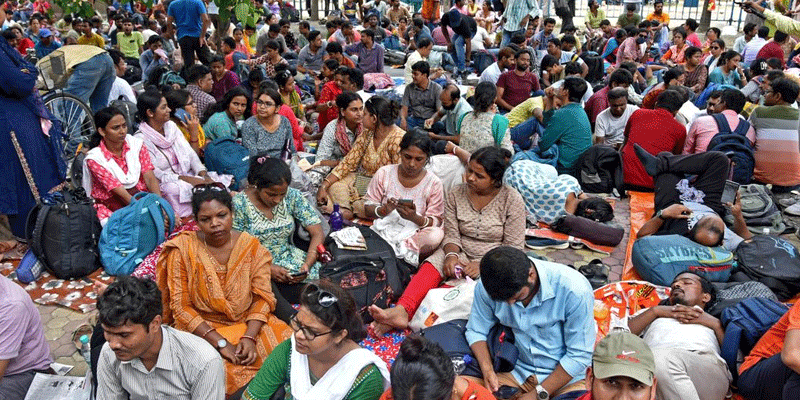
More than 1,100 flights were grounded during the initial days of the conflict, stranding thousands of passengers at major transit hubs such as Dubai, Abu Dhabi, and Doha. These airports normally handle around 90,000 passengers daily, making the sudden suspension of services a major logistical crisis.
Indian nationals were among the most affected, as millions live and work in the region and rely heavily on Gulf airports for international travel.
India’s Vast Diaspora in West Asia
The urgency of the situation stems from the sheer scale of India’s presence in the Gulf. Nearly 3.5 million Indians live in the United Arab Emirates, around 2.5 million in Saudi Arabia, and about one million each in Qatar and Kuwait. Across the Gulf Cooperation Council states, the Indian community totals roughly 9–10 million people.
These workers form a critical economic bridge between the region and India. Remittances from Indians abroad exceed $100 billion annually, with the Gulf contributing a major share. At the same time, India depends heavily on West Asian energy supplies, importing about 85% of its crude oil, much of it shipped through the strategic Strait of Hormuz.
This combination of economic and human stakes meant the government had to move quickly once tensions escalated.
MEA’s Rapid Coordination
The MEA activated crisis-management mechanisms almost immediately. A 24/7 control room in New Delhi was established to respond to queries from stranded passengers and their families, while Indian embassies across the region issued helpline numbers and travel advisories.
Special arrangements were made to bring back stranded travellers once airspace restrictions eased. Non-scheduled flights and additional seats on commercial services were coordinated, particularly from Abu Dhabi, where airlines such as Air India and Etihad began transporting passengers despite earlier cancellations.
Indian missions also advised citizens in high-risk areas to comply with local regulations and monitor official advisories.
Special Attention to Indians in Iran
Another sensitive challenge involved the 10,000 Indian nationals still in Iran, including roughly 3,000 students. Indian diplomatic missions encouraged those willing to leave to use land routes through neighbouring countries such as Armenia, prioritising vulnerable groups including students from Jammu and Kashmir.
The evacuation planning draws on lessons from earlier operations, including the 2025 Operation Sindhu, which rescued thousands of Indians from conflict zones in Iran and Israel.
Economic and Strategic Stakes
Beyond the humanitarian dimension, the conflict carries serious economic implications for India. Rising oil prices—already hovering above $85 per barrel—could push up domestic fuel costs and inflation.
At the diplomatic level, India has sought to maintain balanced engagement with all sides. External Affairs Minister S. Jaishankar has held discussions with counterparts in both Iran and Israel while exploring options to diversify energy imports from countries such as Russia and the United States.
A Test of Crisis Diplomacy
The return of more than 52,000 Indians in a single week demonstrates the scale and effectiveness of India’s crisis response system. Yet the situation remains delicate. With millions of Indians still living and working across the Gulf, prolonged conflict could disrupt livelihoods, remittance flows, and regional stability.
For India, the unfolding crisis highlights the importance of proactive diplomacy, diversified energy partnerships, and strong consular networks to protect its citizens abroad. As the war’s trajectory remains uncertain, ensuring the safety of its diaspora will remain a top national priority.
(With agency inputs)