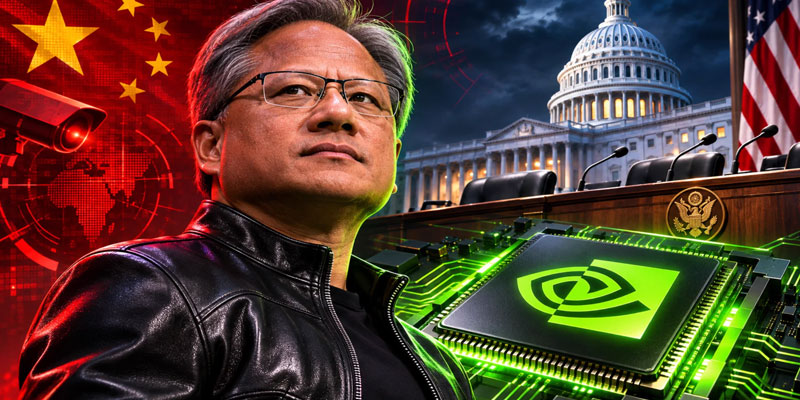
Nvidia CEO Jensen Huang is facing intense scrutiny following reports of an alleged relationship with a woman identified as a Chinese intelligence asset, raising concerns over corporate governance, executive accountability and national security.
According to the account, Huang acknowledged being unfaithful to his wife in an internal email to employees, expressing regret and apologising to his family, colleagues and shareholders.
The controversy reportedly emerged after allegations that Alice Huang, also known as Huang Le, had developed a close relationship with the Nvidia chief while working as a senior executive at Singapore-based data centre company Megaspeed.
Megaspeed had reportedly attracted US regulatory attention over concerns that it could have facilitated China's access to restricted Nvidia AI chips. Nvidia has maintained that allegations surrounding the company were investigated and debunked.
The account further states that Nvidia's board initiated an independent investigation involving external legal advisers. The company reportedly expressed confidence in Huang while indicating that it had no evidence of compromised corporate secrets or national security information.
The larger concern extends beyond an executive's personal conduct. Nvidia occupies a strategically sensitive position in the global semiconductor industry, supplying advanced AI processors that underpin cloud infrastructure, defence-related research and artificial intelligence development.
The allegations highlight the growing importance of executive risk management, confidential information protection and independent board oversight. Technology companies handling strategically important intellectual property must ensure that personal vulnerabilities cannot become avenues for manipulation or intelligence exploitation.
Ultimately, the episode raises a fundamental question: Can corporate governance adequately protect critical technology when leadership itself becomes a potential security vulnerability? For companies operating at the intersection of AI, geopolitics and national security, institutional safeguards must remain stronger than individual influence.