Six-Year Rift Ends Ahead of 2027 Elections
The Bharatiya Janata Party (BJP) and Shiromani Akali Dal (SAD) have formally announced the revival of their political alliance after six years, setting the stage for a potentially significant realignment ahead of the 2027 Punjab Assembly elections. The announcement brings together two former partners who governed Punjab for three terms and seeks to rebuild a formidable Hindu-Sikh political combination. However, the success of this reunion will depend on seat-sharing negotiations, leadership arrangements and the ability of both parties to regain public confidence.
From Longstanding Partnership to Political Separation
Under their traditional electoral arrangement, SAD was the senior partner, contesting 94 of Punjab's 117 Assembly constituencies, while the BJP contested 23, primarily in urban and Hindu-majority areas.
The relationship collapsed in September 2020 when SAD withdrew from the National Democratic Alliance (NDA) in opposition to the Centre's three controversial farm laws. Harsimrat Kaur Badal also resigned from the Union Cabinet.
Although those agricultural laws were subsequently repealed, the political separation continued. Both parties contested independently, seeking to expand their respective political bases.
Amit Shah Announces the Political Reunion
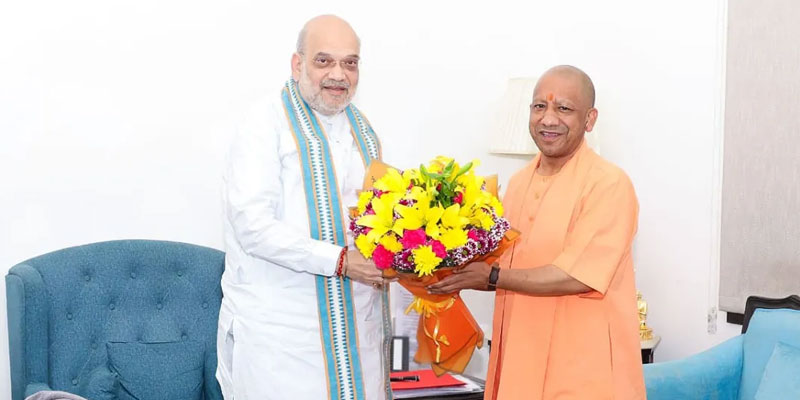
The announcement was made at BJP headquarters in New Delhi on Guru Nanak Jayanti, in the presence of Union Home Minister Amit Shah, BJP president Nitin Nabin and SAD president Sukhbir Singh Badal.
Shah described SAD as one of the BJP's oldest allies and said its return would complete the NDA. The timing also carried political symbolism, projecting the reunion as an effort to strengthen Hindu-Sikh political cooperation.
For the BJP, the partnership offers renewed access to Punjab's rural constituencies and Sikh political networks. For SAD, it provides an opportunity to regain national political relevance and strengthen its electoral prospects.
Seat-Sharing: BJP Seeks a Bigger Electoral Footprint
The biggest question now concerns the division of Punjab's 117 Assembly seats. Under the previous arrangement, SAD contested 94 seats and the BJP 23. However, the BJP is now seeking a significantly larger share, reflecting its ambition to expand beyond its traditional urban constituencies.
According to reports, the emerging understanding is:
· BJP: Around 40 seats, nearly double its earlier allocation.
· SAD: Approximately 77 seats, retaining the larger share.
However, this is a reported expectation, not a formally announced seat-sharing agreement. The chief ministerial face and constituency-level adjustments also remain important negotiating issues.
AAP and Congress Prepare for a Tougher Contest
The reunion presents a fresh challenge to Punjab's ruling Aam Aadmi Party (AAP) and the Congress, which remains the principal opposition party.
AAP swept the 2022 Assembly elections, winning 92 of 117 seats, while Congress secured 18. SAD and BJP managed just three and two seats respectively. Their combined return could consolidate sections of the rural Sikh and urban Hindu vote, potentially changing the electoral arithmetic.
Although a detailed official AAP response to the announcement was not immediately available, the ruling party will have to defend its governance record against a united opposition.
Congress leaders have been more vocal. Punjab Congress president Pargat Singh described the reunion as opportunistic politics, arguing that voters would question both parties over their past records, particularly the farm laws and the Badal family's governance. Congress leader Sachin Pilot had also questioned the political motivations behind the proposed reunion.
Can the Old Partnership Regain Punjab?
The alliance restores a familiar political combination, but the electoral landscape has changed considerably since 2020. SAD must rebuild its credibility among farmers and Sikh voters, while the BJP must demonstrate wider acceptance in Punjab.
The real test will be whether an alliance born out of political necessity can translate into public trust and electoral strength. Its success could reshape Punjab's 2027 contest, but unresolved farmer concerns, leadership ambitions and seat-sharing negotiations will ultimately determine its political future.
(With agency inputs)