Gandhi's 'Economic Disaster' Warning Sparks Controversy
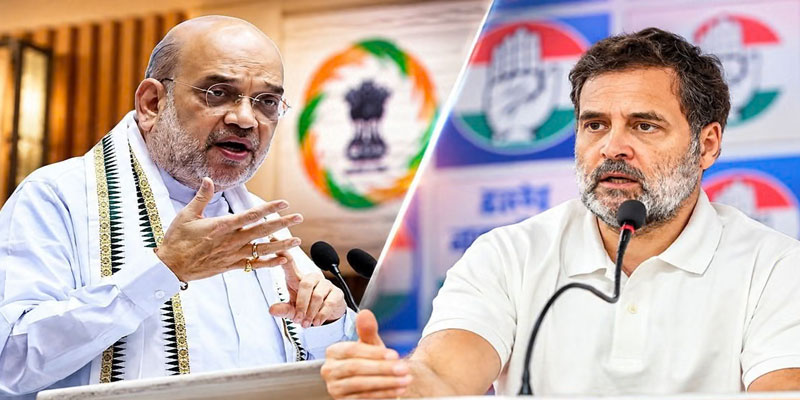
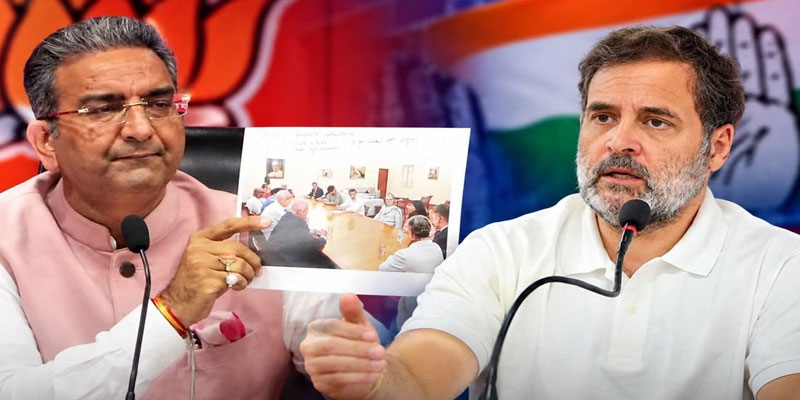
What did Rahul Gandhi say about India's economic situation? Congress leader and Leader of the Opposition in the Lok Sabha, Rahul Gandhi, has triggered a fresh political confrontation by describing India's economic trajectory as an impending disaster during an interaction at Columbia University in New York. His remarks on unemployment, manufacturing, education and electoral integrity prompted a sharp response from the Bharatiya Janata Party (BJP), which accused him of undermining India's achievements and projecting a negative image abroad.
Gandhi Questions India's Economic Model
During a fireside chat, Gandhi argued that India's economic model had stopped delivering results almost a decade ago. He warned that the country was facing structural challenges that could threaten its long-term economic stability.
His principal concerns included:
· Unemployment: He described unemployment as a massive national problem, particularly highlighting inadequate employment opportunities.
· Manufacturing: He alleged that India's manufacturing base was weakened and incapable of generating sufficient jobs.
· Education: He pointed to deep-rooted deficiencies in the education system, arguing that its shortcomings affected India's economic potential.
· Economic direction: He cautioned that continuing along the existing path could push the country into serious trouble.
Gandhi also revived his 'vote chori' allegations, claiming that 140 million potential voters had been removed from electoral rolls ahead of the 2024 Lok Sabha elections. He criticised the Election Commission of India and called for electoral reforms, connecting democratic accountability with the country's broader institutional challenges.
BJP Launches Strong Counterattack
The BJP strongly rejected Gandhi's assessment, accusing him of overlooking India's economic progress and international standing.
BJP national spokesperson Pradeep Bhandari described Gandhi as the "leader of anti-India propaganda". He alleged that Gandhi's hostility towards India's progress and democratic institutions was reflected in his criticism whenever he travelled overseas.
Bhandari maintained that India was recognised internationally as the world's fastest-growing major economy and a democracy commanding considerable global respect.
West Bengal BJP leader Dilip Ghosh also criticised Gandhi, claiming that his remarks abroad reflected his inability to gain public attention domestically. Citing India's GDP growth and record foreign-exchange reserves, Ghosh argued that the country's economic performance contradicted Gandhi's assessment and accused him of being hungry for power.
Economic Debate Becomes Political Confrontation
The controversy highlights competing political narratives. The Congress is emphasising unemployment, manufacturing weaknesses, education and electoral transparency, while the BJP is defending India's growth performance and questioning the credibility of criticism delivered on international platforms.
Gandhi's claim concerning 140 million removed voters remains contested, with the BJP rejecting the broader allegation.
Beyond Political Rhetoric, Accountability Matters
India's economic progress and its structural challenges deserve independent scrutiny rather than competing political assertions. Strong GDP growth, foreign-exchange reserves and global recognition are important achievements, but employment generation, manufacturing competitiveness and educational quality also require sustained attention. Equally, electoral integrity must remain beyond political suspicion. Ultimately, India's global credibility will be strengthened not by suppressing criticism or dismissing achievements, but by addressing genuine weaknesses through transparent institutions, measurable reforms and accountable governance.
(With agency inputs)