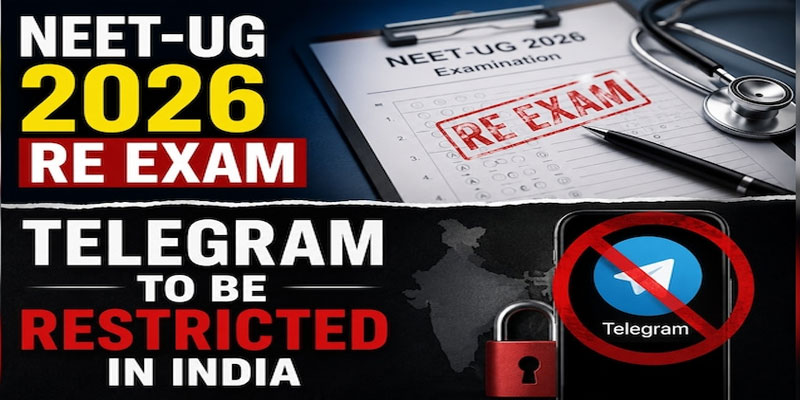
The Indian government has temporarily suspended access to Telegram ahead of the NEET-UG 2026 re-examination, citing concerns over possible leaks and manipulation of exam-related material. The restriction, recommended by the National Testing Agency (NTA), will remain in force until June 22 and is aimed at preventing the spread of misleading content and organized cheating attempts. The move reflects the extraordinary measures being adopted to safeguard the credibility of one of India’s most competitive entrance examinations, which determines admissions to medical colleges across the country.
Why Telegram Has Been Restricted
The temporary restriction was imposed under Section 69A of the Information Technology Act, 2000, following concerns that certain features on Telegram were being exploited by cheating networks. According to authorities, the platform’s message-editing capability enabled administrators to alter older posts after an examination, creating the appearance that question papers had been leaked beforehand.
Officials believe such practices not only mislead students but also fuel panic and speculation around the examination process. Alongside the temporary suspension, Telegram was reportedly directed to disable message-editing for existing posts until June 30 as an additional preventive measure.
The decision followed multiple enforcement actions by the Indian Cyber Crime Coordination Centre (I4C), which shut down several channels allegedly involved in promoting fake paper leaks and extracting money from anxious aspirants and their families.
The NEET-UG 2026 Controversy
The re-examination scheduled for June 21 comes in the aftermath of the cancellation of the original NEET-UG 2026 test conducted on May 3. Allegations of question paper leaks and examination irregularities triggered widespread concern among nearly 23 lakh candidates.
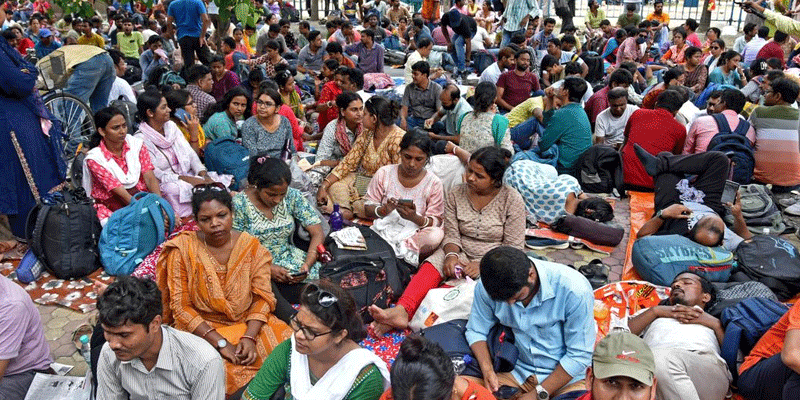
The matter has since been investigated by the Central Bureau of Investigation (CBI). While the NTA has maintained that only certain questions may have been compromised, public statements acknowledging a breach in procedural safeguards have intensified scrutiny. The differing narratives have contributed to student protests and heightened demands for transparency.
As a result, restoring confidence in the examination process has become a priority for both the government and examination authorities.
Enhanced Security and Candidate Support
In response to the controversy, authorities have implemented a comprehensive security framework for the re-test. Senior government officials have conducted high-level reviews to ensure strict monitoring at every stage of the examination process.
Security arrangements include central armed forces guarding question paper consignments, enhanced surveillance at examination centres, and tighter oversight of paper preparation and transportation. States, Union Territories and railway authorities have also been asked to facilitate smooth travel for candidates.
The NTA has simultaneously introduced student-friendly changes. The examination duration has been increased from 180 minutes to 195 minutes, rough-sheet availability has been doubled, and candidates with disabilities have been granted additional time. These measures are intended to improve both fairness and the overall examination experience.
Restoring Trust in a Critical Examination
The temporary Telegram suspension highlights the growing challenge of balancing digital freedoms with the need to protect high-stakes public examinations. More importantly, it signals a shift toward stronger platform accountability and coordinated institutional action against organized cheating.
A Test Beyond the Examination
The June 21 re-examination is about more than medical admissions. It represents a crucial effort to restore faith in India’s competitive examination system. The success of these measures will ultimately be judged not only by the conduct of the test but by their ability to reassure millions of students that merit, transparency and fairness remain at the heart of the process.
(With agency inputs)