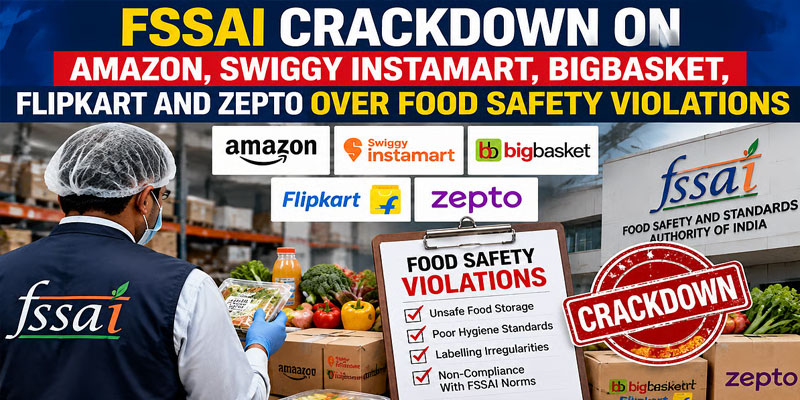
The Food Safety and Standards Authority of India (FSSAI) has issued nine notices to Swiggy Instamart following multiple consumer complaints alleging the delivery of spoiled, expired and contaminated food products. The complaints reportedly involved essential food items, including baby formula, eggs and other packaged products, raising concerns about food quality and safety within India's rapidly expanding quick-commerce sector. The regulatory action signals growing scrutiny of online grocery delivery platforms and reinforces that speed and convenience cannot come at the expense of consumer health and statutory compliance.
Food Safety Challenges in the Quick-Commerce Era
Quick commerce has transformed the way Indians purchase groceries, promising deliveries within minutes through a network of strategically located dark stores and highly efficient logistics systems. Swiggy Instamart has emerged as one of the leading players in this rapidly growing market, catering to millions of urban consumers seeking instant access to daily essentials.
However, the operational model also presents unique challenges. Maintaining proper storage conditions, ensuring timely stock rotation, monitoring expiry dates and preserving product quality become increasingly difficult when warehouses process thousands of orders under tight delivery timelines.
According to reports, FSSAI issued the notices after receiving several complaints about expired, spoiled and contaminated food items. The development follows earlier consumer grievances and judicial observations, including a recent consumer forum ruling in Hyderabad that highlighted the potential public health risks associated with the delivery of expired food products.
Why the Regulatory Action Matters
The significance of FSSAI's intervention extends beyond a single company. Once digital platforms undertake the delivery of food and essential groceries, they become integral components of the food supply chain rather than merely acting as technology intermediaries or logistics providers.
Consequently, they are expected to uphold the same food safety standards that apply to traditional supermarkets, grocery stores and distributors. This includes ensuring proper procurement, hygienic storage, accurate labelling, effective inventory management and timely removal of expired products.
The notices therefore underline the regulator's intent to hold online grocery platforms accountable for lapses occurring anywhere within their operational chain.
Impact on Consumers and the Industry
For consumers, food safety concerns carry implications far beyond financial inconvenience. Spoiled or contaminated products, particularly sensitive items such as dairy products, eggs, infant food and fresh produce, can pose serious health risks, especially to children, elderly individuals and people with compromised immunity.
The incident also places additional pressure on India's fast-growing quick-commerce industry. The sector's promise of ultra-fast delivery depends on maintaining high inventory turnover while ensuring strict warehouse discipline. Any breakdown in stock management or quality control can rapidly erode consumer trust and damage brand reputation.
The FSSAI action may encourage the entire industry to strengthen warehouse audits, improve temperature-controlled storage, enhance vendor verification, automate expiry tracking and establish more robust complaint redressal mechanisms. Greater regulatory oversight could ultimately lead to higher operational standards across all major quick-commerce platforms.
Safety Must Match the Speed of Delivery
The notices issued to Swiggy Instamart represent an important reminder that technological innovation and rapid delivery must be accompanied by uncompromising food safety standards. As online grocery platforms become an essential part of everyday life, consumer confidence will increasingly depend not only on delivery speed but also on product quality, transparency and accountability. Going forward, stricter regulatory compliance, stronger internal quality controls and greater operational discipline will be critical to ensuring that the convenience offered by quick commerce never compromises public health or consumer trust.
(With agency inputs)