Puri is preparing for Rath Yatra 2026 under an extraordinary security and public health framework, with the Odisha government determined to ensure a safe and incident-free pilgrimage after last year's tragic stampede. The annual festival, one of India's largest religious gatherings, is taking place amid heightened vigilance over crowd management and a precautionary Covid-19 watch following reported infections in neighbouring Andhra Pradesh. This year's preparations go beyond routine arrangements, reflecting the state's resolve to demonstrate that large-scale religious events can be managed through meticulous planning, advanced surveillance and coordinated administration.
A Festival of Faith and Massive Public Participation
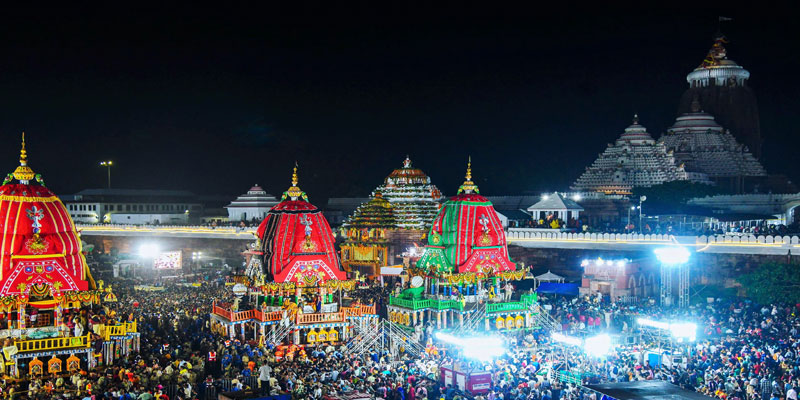
The Jagannath Rath Yatra is among the most revered festivals in Hinduism, during which Lord Jagannath, Lord Balabhadra and Devi Subhadra are ceremonially taken from the Jagannath Temple to the Gundicha Temple aboard massive wooden chariots. Every year, lakhs of devotees from across India and abroad gather in Puri to witness and participate in the grand procession, making it one of the world's largest annual religious congregations.
The sheer scale of the event presents enormous logistical challenges. Managing dense crowds along the Grand Road, ensuring smooth traffic movement, providing emergency medical services and maintaining public order require extensive coordination among multiple government agencies.
The urgency for stronger preparations stems from the 2025 Rath Yatra tragedy, when a stampede near the Gundicha Temple claimed three lives and injured more than 50 devotees. The incident triggered widespread criticism of the administration and prompted a comprehensive review of crowd-management protocols. Those lessons have become the foundation of this year's planning.
Latest Preparations: Stronger Security and Smarter Crowd Management
The Odisha government has significantly strengthened security arrangements for Rath Yatra 2026. Chief Minister Mohan Charan Majhi has personally reviewed preparations on multiple occasions, underscoring the importance attached to ensuring a smooth and secure festival.
This year, approximately 12,000 police personnel and Central Armed Police Force (CAPF) personnel have been deployed, supported by 19 senior IPS officers overseeing various aspects of security operations. Authorities have also expanded surveillance through hundreds of CCTV cameras positioned at strategic locations across Puri.
A modern Integrated Command and Control Centre will monitor crowd movement in real time, enabling officials to respond quickly to emergencies. Traffic restrictions have been imposed along the Grand Road and adjoining routes to minimise congestion and facilitate the smooth movement of pilgrims and emergency services.
Officials recognise that the greatest risks arise not only during the chariot procession itself but also during darshan, crowd dispersal, parking operations and movement around the temple precincts. Consequently, the strategy combines layered policing, digital surveillance and rapid-response teams rather than relying solely on barricades and manual crowd control.
Covid Precautions Add Another Layer of Preparedness
In addition to security concerns, Odisha has intensified health surveillance following reports of Covid-19 cases and fatalities in neighbouring Andhra Pradesh. Although no confirmed Covid cases have been reported in Odisha, health authorities have adopted a preventive approach, particularly in border districts such as Ganjam.
Hospitals have been instructed to conduct mandatory Covid testing for patients presenting with severe acute respiratory infection symptoms, while routine surveillance continues across healthcare facilities. These measures are intended to minimise public health risks associated with one of the country's largest mass gatherings.
A Crucial Test of Administrative Preparedness
Rath Yatra 2026 represents far more than a religious celebration; it is also a significant test of Odisha's administrative capacity to manage a mega-event safely after last year's tragedy. By combining extensive security deployment, technology-driven crowd management and proactive health monitoring, the state aims to protect both devotees and the sanctity of the festival. If these measures prove effective, Puri could set a new benchmark for managing large-scale religious gatherings in India. Success would not only restore public confidence but also demonstrate how faith, safety and efficient governance can coexist during one of the nation's most revered festivals.
(With agency inputs)