The modern diamond industry, forged in deep-earth pressure and century-old monopolies, is facing its first existential crisis. For decades, the trade relied on the premise of irreproducibility—the idea that a diamond’s value was tethered to its three-billion-year geological journey. Today, that foundation has cracked. Laboratory-grown stones, identical by every scientific measure, have forced the industry to answer a question it long avoided: what is a diamond worth when it can be made in a machine?
The path to this reckoning began in 1954 when General Electric produced the first synthetic crystal. While the industry initially dismissed these as industrial tools, the 1980s Chemical Vapor Deposition (CVD) revolution moved the goalposts toward gem-quality stones. By the time De Beers launched its own lab-grown brand in 2018, the "denial phase" was over. The technology had moved from the fringe to the mainstream, turning a scientific curiosity into a retail powerhouse.
This shift has triggered a massive philosophical rupture. If the physical object is indistinguishable, the "natural" premium is no longer based on beauty, but on a narrative of provenance and rarity. This has led to a sharp pricing divergence: as lab-grown supply scales, natural diamond prices in certain categories have plummeted by 80%. In the US, lab-grown stones now account for over 50% of engagement ring units sold, signaling a fundamental change in consumer values.
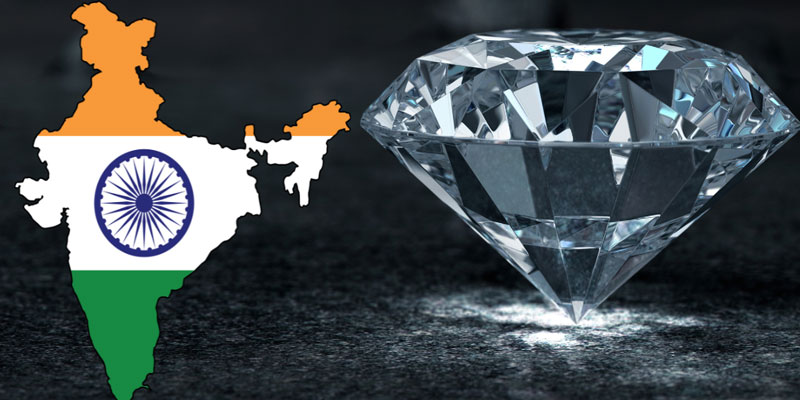
At the heart of this transformation is Surat, India. Once the exclusive capital of natural diamond polishing, Surat has rapidly evolved into a dual-hub, housing both traditional craftspeople and massive lab-grown production facilities. The city represents the industry’s new reality: a supply chain that must now navigate two distinct products—the mined and the manufactured—using the same infrastructure and expertise.
To manage this "split identity," the trade is leaning on narrative architecture. Natural diamonds are being repositioned as elite luxury assets defined by geological heritage. Conversely, lab-grown diamonds are marketed through the lenses of sustainability, accessibility, and technological innovation. These are no longer just two versions of the same stone; they are two different industries competing for the same finger.
As the lines blur, advanced technology has become the new differentiator. Companies like Diatech AI are bridging the gap, using AI-powered design and trade intelligence to provide clarity in a fractured market. These digital tools are essential for a sector where provenance tracking and precision design are the only ways to maintain consumer trust across irreconcilable product categories.
Looking ahead, the diamond’s next century will likely see a permanent bifurcation. Lab-grown stones may become a high-tech commodity, while natural diamonds retreat into the realm of ultra-rare collectibles. Whether they coexist or cannibalize one another, the rules of the trade have been rewritten: the value of a diamond no longer lies just in its atoms, but in the story told about its origin.