Supreme Court Clears Vinesh Phogat for Asian Games Trials
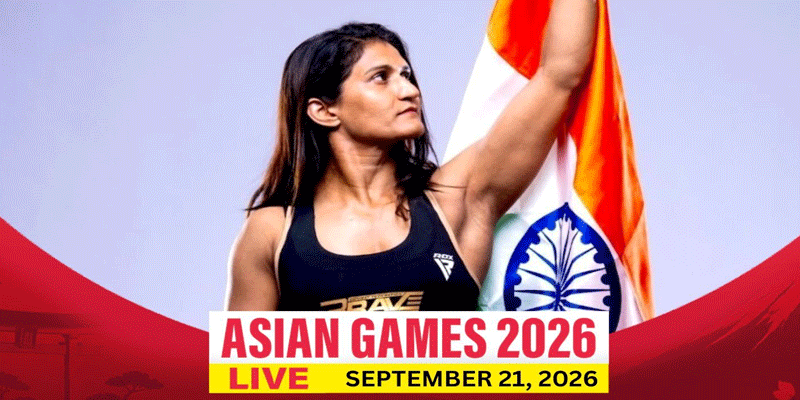
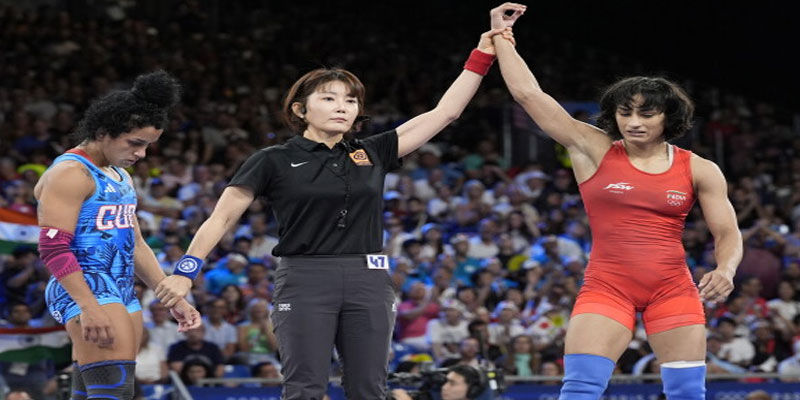
Olympic wrestler Vinesh Phogat has received temporary relief in her bid to return to competitive wrestling, with the Supreme Court allowing her to participate in the Asian Games 2026 selection trials. The decision came after the apex court refused to stay a Delhi High Court order permitting her participation. However, the relief was accompanied by a stern message, as the Supreme Court openly questioned aspects of the High Court’s reasoning and emphasized that its order should not be interpreted as a validation of the legal conclusions reached by the lower court.
The Dispute Over Anti-Doping Compliance
The controversy centers on allegations by the Wrestling Federation of India (WFI) that Phogat failed to comply with anti-doping regulations governing athletes returning to competition after a period away from the sport.
In May 2026, the federation issued a show-cause notice barring her from domestic competitions until June 26. The notice cited alleged disciplinary concerns, violations of anti-doping requirements and breaches of rules framed by United World Wrestling (UWW).
At the heart of the dispute is the mandatory six-month notice requirement under UWW anti-doping regulations. Athletes returning from retirement or extended absence must notify the governing body in advance and remain available for doping controls throughout the stipulated period. According to the federation, questions remain over whether Phogat complied with these obligations before attempting a competitive return.
Delhi High Court’s Intervention
The legal battle intensified when the Delhi High Court permitted Phogat to participate in the Asian Games selection trials. The court observed that the standards being applied to the selection process appeared to differ from previous practices and ruled in favor of allowing her to compete.
The High Court also made observations regarding the need to ensure that motherhood does not become a barrier to the sporting careers of elite athletes. While these remarks attracted public attention, they later became a point of concern during proceedings before the Supreme Court.
Supreme Court’s Cautious Relief
Hearing an appeal filed by the WFI, the Supreme Court declined to halt the High Court order, thereby allowing Phogat to participate in the selection trials. However, the bench made it clear that the decision was procedural and should not be construed as a final determination on the merits of the case.
The judges repeatedly questioned certain observations contained in the High Court ruling and expressed reservations about whether the anti-doping issues had been adequately addressed. The Court underscored that compliance with anti-doping regulations remains a fundamental requirement for all athletes, irrespective of their achievements or public stature.
As a result, while Phogat can now compete in the trials, her eligibility remains subject to the outcome of the broader legal and regulatory proceedings.
Relief Granted, Questions Still Unanswered
The Supreme Court’s decision offers Vinesh Phogat an opportunity to continue her comeback journey, but it stops short of resolving the core dispute. By allowing her participation while simultaneously questioning the reasoning behind the relief granted, the Court has signaled the importance of balancing athlete rights with strict adherence to anti-doping norms. The final outcome of the case will likely have implications not only for Phogat’s career but also for how sporting authorities and courts address future disputes involving athlete eligibility, fairness and regulatory compliance.
(With agency inputs)