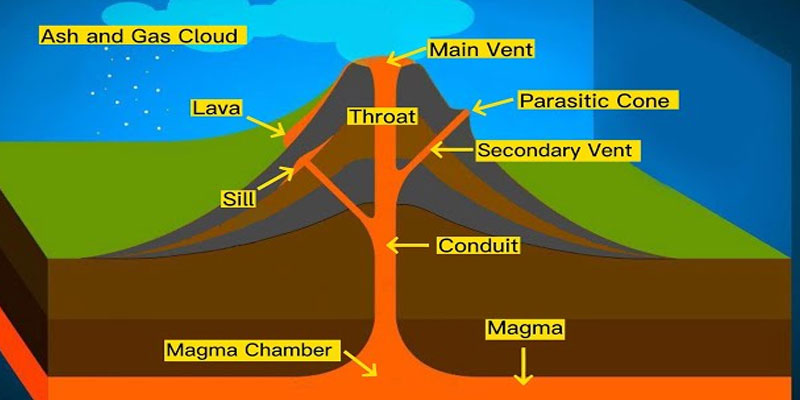
Volcanoes are often feared for their destructive power, yet they have been fundamental to making Earth habitable and sustaining life for billions of years.
First, volcanoes built the planet itself. Most of Earth’s crust—both continental and oceanic—was formed through volcanic activity as magma rose from the mantle and solidified. Without this process, there would be no continents, no stable land for ecosystems to evolve.
Second, they created our atmosphere and oceans. Early Earth was barren and airless. Massive volcanic outgassing released water vapor, carbon dioxide, nitrogen, and other gases that formed the primordial atmosphere. When water vapor condensed, it filled the oceans—literally volcanically sourced seawater.
Third, volcanoes regulate Earth’s climate over geological time. They recycle carbon through the deep carbon cycle: CO₂ is released during eruptions and later locked away in rocks through weathering, preventing runaway greenhouse effects like those on Venus. This long-term thermostat has kept Earth in the habitable zone for eons.
Fourth, volcanic soils are extraordinarily fertile. Ash and lava weather into mineral-rich soils that support lush vegetation—from the vineyards of Naples to the rainforests of Indonesia. Roughly 10% of the world’s population lives on volcanic soil because it grows food so effectively.
Finally, volcanoes drive biodiversity. Hydrothermal vents on mid-ocean ridges—undersea volcanoes—host chemosynthetic ecosystems that may represent the origin of life itself and continue to seed the deep ocean with energy and nutrients.
In short, without volcanoes, Earth would be a lifeless rock with no air, no water, no fertile land, and no mechanism to stabilize its climate. Their eruptions remind us that creation and destruction are two sides of the same life-giving force.