Newly Opened Highway Faces Scrutiny Over Construction Quality
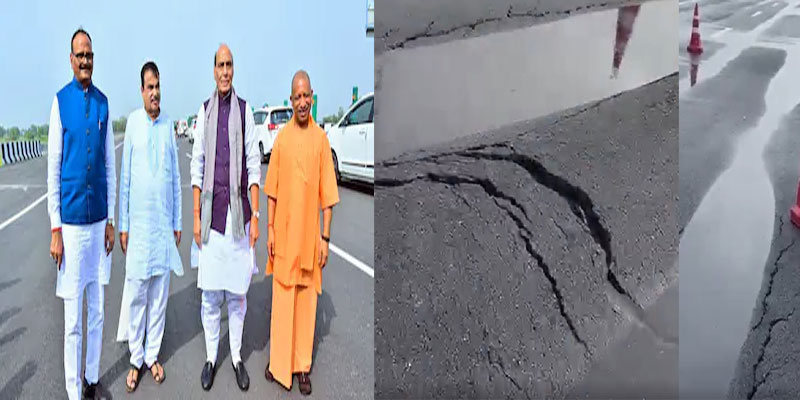
A flagship infrastructure project in Uttar Pradesh has come under intense scrutiny after sections of the newly inaugurated ₹4,200-crore Kanpur–Lucknow Greenfield National Elevated Expressway reportedly developed cracks, subsidence and surface damage within weeks of opening to traffic. Videos showing dug-up stretches, potholes and repair work quickly went viral, raising serious questions about construction quality and project oversight. The National Highways Authority of India (NHAI) has since suspended toll collection indefinitely, ordered a technical investigation and initiated action against officials and contractors responsible for the project.
The Kanpur–Lucknow Expressway at a Glance
The 63-km Kanpur–Lucknow Greenfield National Elevated Expressway was inaugurated on July 13, 2026, with the objective of significantly reducing travel time between Uttar Pradesh's two major cities.
Key Highlights
· Built at an estimated cost of ₹4,200 crore.
· Constructed by PNC Infratech Limited under a Public-Private Partnership (PPP) model.
· Executed under the supervision of the National Highways Authority of India (NHAI).
· Designed to decongest the busy NH-27 corridor.
· Promoted as a modern, high-speed, all-weather expressway with stringent quality standards.
· Toll collection commenced immediately after the expressway was opened to the public.
Defects Surface Soon After Inauguration
Trouble began within days of the expressway's inauguration when heavy monsoon showers exposed visible defects in several stretches. Initial reports highlighted cracks and road slippage near Korari in Unnao district, particularly around kilometre 64.
NHAI initially described the issue as damage limited to the upper bituminous layer over a short stretch, insisting that there was no structural failure and that repairs had been completed within hours. However, over the following weeks, additional sections reportedly developed subsidence, potholes and edge erosion, with some reports claiming multiple cave-ins along the corridor.
Independent assessments suggested that inadequate sand compaction, poor embankment preparation and insufficient drainage may have contributed to the failures. Viral videos showing workers excavating damaged portions and using electric fans to dry waterlogged road sections intensified public criticism and fuelled political debate over construction standards.
NHAI Orders Probe, Suspends Toll Collection
Responding to mounting concerns, NHAI on August 5, 2026, suspended toll collection indefinitely until the damaged stretches are fully repaired and certified safe for commuters.
The authority has announced that the resulting revenue loss will be recovered from concessionaire PNC Infratech. It has also initiated disciplinary proceedings against the concessionaire, the project consultant and several NHAI officials for alleged lapses in execution, supervision and quality control.
To establish the causes of the failures, experts from IIT Kharagpur have been tasked with conducting an independent technical investigation. Meanwhile, the project director has been removed, and PNC Infratech has been designated a "non-performer" for future bidding, signalling a tougher approach to accountability.
A Wake-Up Call for Infrastructure Quality
The controversy surrounding the Kanpur–Lucknow Expressway has reignited concerns over the quality of fast-tracked infrastructure projects and their resilience during India's monsoon season. While the suspension of toll collection provides temporary relief to commuters, recurring repairs have disrupted travel and undermined public confidence. The episode highlights the importance of rigorous quality audits, robust drainage design, transparent monitoring and strict enforcement of contractual obligations. As India continues expanding its highway network at an unprecedented pace, ensuring durability and accountability will be just as important as achieving ambitious construction targets.
(With agency inputs)