
A Charged Opening in Parliament
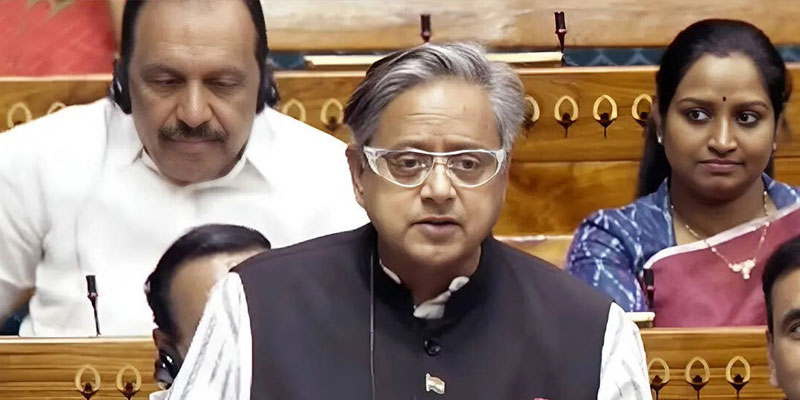
During the April 2026 special session of Parliament, Shashi Tharoor delivered a sharp and layered critique of the government’s proposed delimitation exercise, calling it nothing short of “political demonetization.” Speaking in the Lok Sabha, Tharoor argued that the move—framed as a democratic update—could fundamentally distort India’s federal balance. The debate unfolded under the watch of Speaker Om Birla, who attempted to maintain order amid rising tensions.
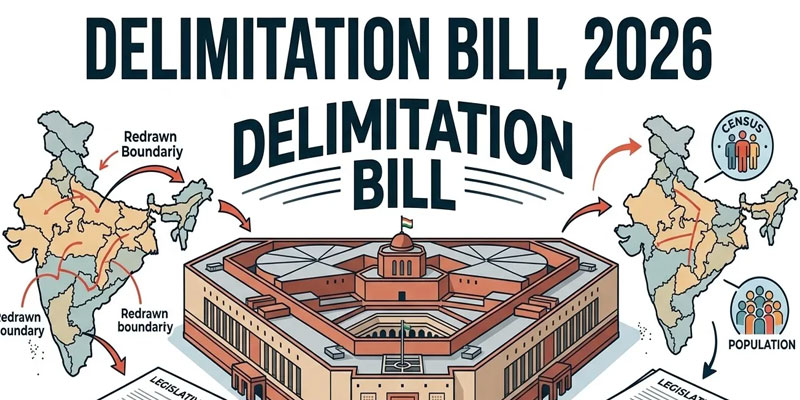
At the heart of the discussion are two key proposals: the Constitution (131st Amendment) Bill, 2026, and the Delimitation Bill, 2026, which together seek to expand the Lok Sabha from 543 to 850 seats and redraw constituency boundaries after decades.
The Scale Question: Can Parliament Function Efficiently?
One of Tharoor’s most immediate concerns was practical. An 850-member Lok Sabha, he argued, risks becoming unwieldy and chaotic. Parliamentary debate, already constrained by time and structure, could become even more fragmented.
While Birla assured members that procedural adjustments could accommodate the expansion, Tharoor’s warning points to a deeper issue: whether institutional efficiency is being sacrificed in the name of representational correction.
Why Call It ‘Political Demonetization’?
Tharoor’s most striking analogy likened delimitation to the 2016 demonetization exercise—an abrupt structural shift with far-reaching consequences. In his view, the proposed redrawing of constituencies disproportionately benefits northern states, many of which are electoral strongholds of the ruling party.
He argued that southern states, which have successfully implemented population control measures, stand to lose relative influence. For instance, states like Tamil Nadu and Kerala could see their proportional voice diluted despite better demographic management. Tharoor also questioned the linking of women’s reservation to delimitation, suggesting it serves as political cover for a broader restructuring.
An Alternative Model: Degressive Proportionality
Instead of strict population-based allocation, Tharoor proposed adopting a model of degressive proportionality—used in the European Union. Under this system, larger states receive more seats, but the ratio of citizens per representative increases with population size.
This ensures that smaller states are not overshadowed. For India, such a model could preserve representation for smaller states like Goa and those in the Northeast, while still acknowledging population differences. It offers a middle path between the principle of “one person, one vote” and the need to protect federal diversity.
A Wider Political Chorus
Tharoor’s concerns were echoed by P. V. Midhun Reddy, who cautioned that delimitation should strengthen national unity rather than weaken opposition voices. The broader opposition has also raised concerns about the absence of updated caste census data, warning that any redrawing without it risks deepening social and political inequities.
The government, for its part, has assured that no state will lose seats and that a Delimitation Commission will ensure fair consultations.
A Defining Test for India’s Federal Compact
The delimitation debate goes beyond numbers—it strikes at the core of India’s federal structure. As population patterns shift, the challenge lies in balancing democratic representation with regional equity.
Tharoor’s intervention underscores the risks of a purely arithmetic approach to representation. Without broad political consensus and careful design, delimitation could deepen regional divides rather than resolve them.
Ultimately, the path forward will require dialogue, transparency, and innovation—ensuring that India’s democracy evolves without undermining the delicate balance that holds its diverse union together.
(With agency inputs)