
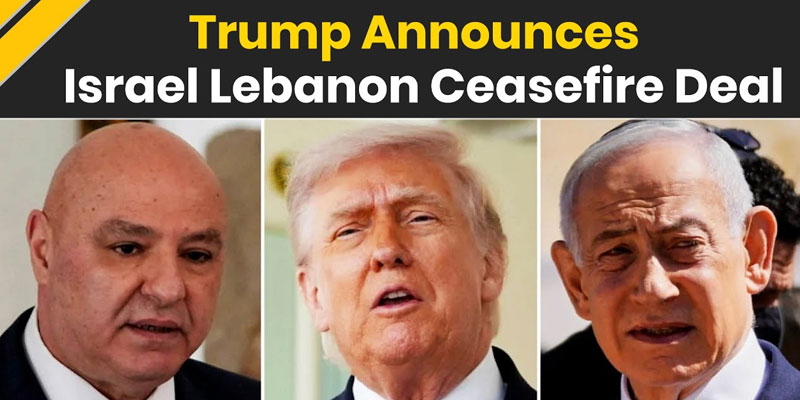
In a dramatic turn on April 15, 2026, US President Donald Trump announced a 10-day ceasefire between Israel and Lebanon, framing it as both a breakthrough and a testament to his personal diplomacy. The truce, reached after direct engagement with Lebanese President Joseph Aoun and Israeli Prime Minister Benjamin Netanyahu, came into force at 5 p.m. EST following weeks of intensifying cross-border violence. Trump quickly elevated the moment, calling it his “10th war” resolved globally—a claim that has sparked both attention and skepticism.
Terms of the Ceasefire: Stability with Conditions
The agreement attempts to halt six weeks of escalating hostilities between Israel and Hezbollah, which had reignited after a failed 2024 truce. Under the terms, Israel will retain troops within a 10-kilometer security zone in southern Lebanon, rejecting calls for a full withdrawal. In parallel, Lebanon has pledged to restrict Hezbollah’s armed presence south of the Litani River.
Netanyahu described the arrangement as a “historic opportunity,” contingent on dismantling the Iran-backed militant group. However, Hezbollah itself has not formally signed onto the agreement and continues to signal resistance to any long-term Israeli military presence. U.S. officials, including Vice President JD Vance and Secretary of State Marco Rubio, are expected to oversee implementation, with Trump planning to host both leaders in Washington for rare direct talks—the first of this scale since 1983.
The “10th War” Claim: Branding vs Reality
Trump’s declaration that this marks his “10th war” resolved builds on a broader narrative of himself as a global dealmaker. He has previously cited de-escalations in conflicts ranging from Israel-Hamas to Armenia-Azerbaijan and India-Pakistan. However, critics argue these instances were often temporary ceasefires rather than lasting peace agreements, with many regions still facing unresolved tensions.
This framing appears central to Trump’s post-reelection positioning as a “peace president,” emphasizing decisive intervention and personal negotiation. Yet, fact-checkers and foreign policy analysts caution that such claims risk oversimplifying complex, ongoing conflicts.
Early Violations Underscore Fragility
Within hours of the ceasefire taking effect, signs of strain emerged. Lebanese military sources reported Israeli shelling in southern villages, while Israel accused Hezbollah of probing its positions. Civilians remain wary, with many displaced Lebanese hesitant to return home amid fears of renewed fighting.
Hezbollah has described the ceasefire as a tactical “victory” while warning that any continued Israeli presence could trigger retaliation. These early breaches highlight the fragile nature of the agreement and raise doubts about whether the truce can extend beyond its initial 10-day window.
Strategic Stakes for the Region
For Israel, maintaining a buffer zone offers immediate security benefits but risks entrenching a longer conflict. Netanyahu has linked the move to broader concerns about Iran’s regional influence and nuclear ambitions. For Lebanon, the ceasefire provides temporary relief from cross-border violence but also places pressure on the state to assert control over Hezbollah.
From a U.S. perspective, Trump’s direct involvement signals a renewed attempt to reassert Washington’s role as a primary broker in Middle Eastern diplomacy. The broader objective appears to include weakening Iranian influence by pushing for Hezbollah’s disarmament through Lebanese state mechanisms.
A High-Risk Diplomatic Gamble
The 10-day ceasefire represents both an opportunity and a test. If it holds, it could open the door to meaningful negotiations and a recalibration of regional power dynamics. If it collapses, it risks triggering a wider and more destructive conflict.
Ultimately, the success of this initiative will depend less on bold declarations and more on sustained compliance, credible enforcement, and the willingness of all parties—including those not formally at the table—to step back from escalation.
(With agency inputs)