
A Sudden Policy Shift with Global Ripples
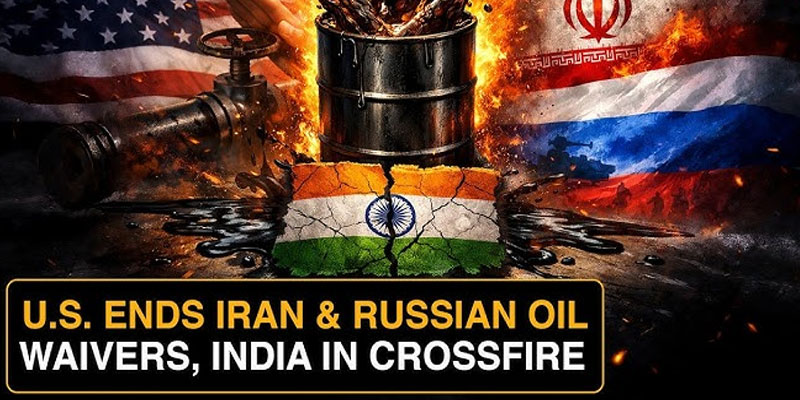
In a notable reversal, the United States extended its sanctions waiver for Russian oil purchases on April 17, 2026, offering temporary relief to global energy markets. Issued through the Office of Foreign Assets Control (OFAC), the waiver allows imports of Russian crude loaded before the specified deadline to continue until May 16. This decision comes just days after US Treasury Secretary Scott Bessent had indicated that the earlier waiver, which expired on April 11, would not be renewed. The abrupt U-turn reflects mounting pressure from major buyers like India and China, especially as supply disruptions from West Asia tightened global oil availability.
Why Washington Changed Its Stance
The initial refusal to extend the waiver was based on expectations that oil markets had stabilized following disruptions linked to the US-Iran conflict. However, persistent supply constraints—particularly due to reduced output from Gulf producers—forced a rethink. By allowing limited continuation of Russian oil flows without enabling fresh contracts, Washington appears to be balancing its geopolitical stance against Russia with the practical need to prevent a global supply shock. The waiver notably excludes transactions involving sanctioned regions such as Crimea and does not permit new loadings, underscoring its temporary and controlled nature.
How India’s Russian Oil Imports Shifted After March 2026
India’s oil import patterns saw a dramatic shift following the initial waiver in early March 2026. In February, imports from Russia stood at just over 1 million barrels per day (bpd), accounting for around 20% of total crude intake—a decline from earlier highs as India diversified sources.
With the waiver in place, March witnessed a sharp surge. Imports nearly doubled to between 1.98 and 2 million bpd, reaching a nine-month high and comprising roughly 44% of India’s total crude basket. This spike was driven by attractive pricing on Russian grades such as Urals and Sokol, as well as a sudden drop in West Asian supplies due to geopolitical tensions. State-run refiners significantly increased purchases, capitalizing on the opportunity to secure high-margin crude.
In April, imports moderated slightly to about 1.57 million bpd due to refinery maintenance and the temporary lapse of the waiver. However, the extension announced on April 17 has helped stabilize flows, ensuring continuity at a time when alternative supplies remain uncertain.
Economic Gains and Strategic Cushion for India
For India, the waiver extension offers both economic and strategic advantages. Discounted Russian crude helps contain the country’s annual import bill—estimated at around $130 billion—while also stabilizing domestic fuel prices and inflation. Major refiners such as Reliance Industries and Indian Oil Corporation have leveraged these imports to optimize refining margins.
At a broader level, the continued availability of Russian oil provides a buffer against disruptions in the Strait of Hormuz and other critical supply routes, enhancing India’s short-term energy security.
Balancing Opportunity with Long-Term Risks
Despite the immediate benefits, the situation underscores the risks of overdependence on a single supplier. The temporary nature of the waiver means that uncertainty will persist beyond May 16. Any escalation in geopolitical tensions or a decision by the US to tighten sanctions again could sharply increase costs and disrupt supply chains.
A Temporary Window, not a Permanent Solution
The US decision to extend the Russian oil waiver offers India valuable breathing room during a period of global energy volatility. However, it is ultimately a short-term fix rather than a lasting solution. While India has effectively leveraged discounted crude to stabilize its economy, the episode reinforces the importance of diversification, strategic reserves, and long-term energy planning. As geopolitical uncertainties continue to shape oil markets, India’s ability to balance opportunity with resilience will determine its energy security in the years ahead.
(With agency inputs)