ECI Launches Massive Electoral Roll Verification Drive Nationwide
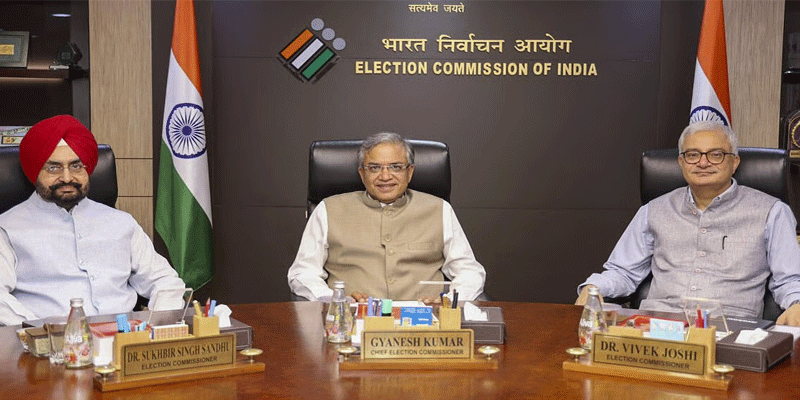
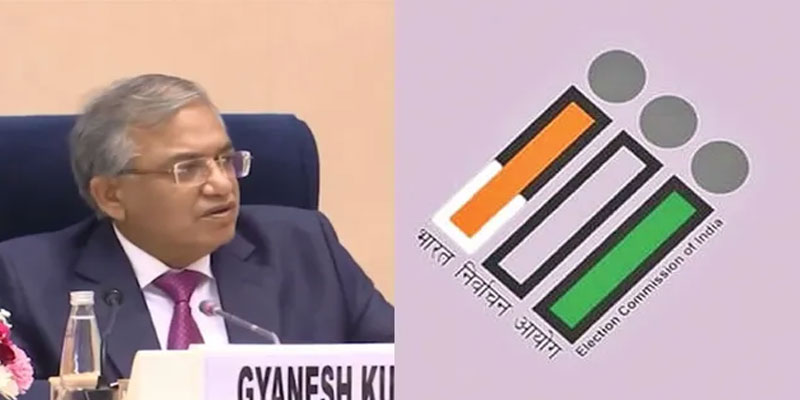
The Election Commission of India has announced that Phase III of the Special Intensive Revision (SIR) of electoral rolls will begin on May 30 across 16 states and three Union Territories, marking one of the largest voter verification exercises undertaken in recent years. Chief Election Commissioner Gyanesh Kumar said the exercise is aimed at ensuring that only eligible voters remain on electoral rolls and that voter lists are accurate, updated and free from duplication or ineligible entries.
The large-scale revision exercise will involve door-to-door verification of more than 36 crore electors and is being conducted under the constitutional powers of the Election Commission and provisions of the Representation of the People Act, 1950.
States and Regions Covered in Phase III
The third phase of the SIR will cover Andhra Pradesh, Arunachal Pradesh, Haryana, Punjab, Telangana, Karnataka, Maharashtra, Jharkhand, Odisha, Uttarakhand, Meghalaya, Manipur, Mizoram, Nagaland, Sikkim and Tripura. The Union Territories of Chandigarh, Dadra and Nagar Haveli and Daman and Diu, and Delhi are also included.
Once this phase is completed, almost the entire country will come under the updated electoral verification framework, except Himachal Pradesh, Jammu and Kashmir, and Ladakh, where separate schedules are expected due to weather conditions and ongoing census-related operations.
How the Verification Process Will Work
The Election Commission has deployed over 3.94 lakh Booth Level Officers (BLOs) for house-to-house enumeration. They will be assisted by around 3.42 lakh Booth Level Agents (BLAs) nominated by political parties, reflecting an attempt to maintain transparency and cross-verification during the exercise.
The process will include physical verification, pre-filled forms and scrutiny of older voter records. Electors may be required to provide documents related to residence and citizenship to verify eligibility. The Commission says the objective is to identify duplicate entries, remove names of deceased persons, delete records of individuals who have permanently shifted, and prevent inclusion of non-citizens while ensuring genuine voters are not excluded.
The exercise is also being coordinated with the ongoing house-listing phase of the national Census to optimise administrative resources and field operations.
Timeline and Administrative Planning
Preparatory work, including training and printing of forms, will continue from May 20 to May 29. Door-to-door verification will then take place between May 30 and June 28, after which draft electoral rolls will be published for public scrutiny.
For Odisha, Mizoram, Sikkim and Manipur, July 1, 2026, has been fixed as the qualifying date for voter inclusion.
The Commission noted that earlier phases of the SIR had already covered 13 states and Union Territories, involving more than 59 crore electors through the deployment of over 6.3 lakh BLOs and 9.2 lakh BLAs.
Political Debate and Institutional Concerns
The exercise has triggered political debate, with leaders from the Indian National Congress expressing concern that the process could potentially lead to selective deletion of voters. Opposition leaders have demanded safeguards to prevent wrongful exclusions and ensure transparency.
The Election Commission, however, has firmly rejected such allegations and clarified that the SIR is purely a statutory electoral-roll revision exercise, not a citizenship verification programme or an extension of the National Register of Citizens process.
A Critical Test for Electoral Integrity
The nationwide SIR exercise represents a significant institutional effort to modernise and clean electoral rolls at scale. If implemented fairly and transparently, it could strengthen confidence in the electoral process and reduce long-standing concerns over duplicate and inaccurate voter entries.
However, the credibility of the exercise will ultimately depend on balancing accuracy with inclusiveness. Ensuring that legitimate voters are protected from accidental exclusion will remain the most important test of the Election Commission’s massive verification drive.
(With agency inputs)