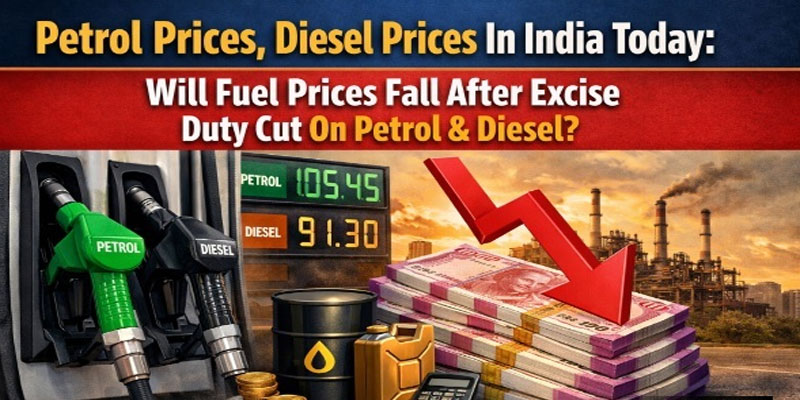
Petrol and diesel prices across India climbed sharply on Friday after the Centre approved a ₹3 per litre hike, ending a four-year freeze on retail fuel prices. The increase comes at a time when global crude oil prices have remained above $100 per barrel for several days, intensifying pressure on domestic oil marketing companies (OMCs). In major cities, the revision immediately pushed fuel prices beyond the ₹100 mark once again, reviving public concern over inflation and household expenses.
In New Delhi, petrol is now priced at ₹97.77 per litre while diesel costs ₹90.67. Kolkata saw petrol cross ₹108 per litre, while Mumbai’s petrol price moved above ₹106 per litre. Simultaneously, compressed natural gas (CNG) prices in the Delhi-NCR region were raised by ₹2 to ₹79.09 per kilogram, widening the impact on commuters and transport operators.
Why the Government Raised Fuel Prices
The Centre has defended the increase as a necessary “market-linked correction” rather than a sudden burden on consumers. According to the Petroleum Ministry, state-run OMCs are currently losing nearly ₹1,000 crore every day because international crude prices are far above domestic retail rates. Officials estimate cumulative under-recoveries at nearly ₹1.98 lakh crore.
The government argues that the ₹3 increase represents only a fraction of the actual rise required to fully offset international oil prices after the escalation of tensions in West Asia. Authorities have also emphasized that there is no shortage of fuel supply, no rationing, and no immediate threat to energy security.
Analysts point out that if these losses continue unchecked, OMCs could see their annual profits wiped out within a single quarter. The Centre therefore faces limited policy choices — either allow gradual retail price hikes or reduce taxes to cushion consumers.
Election Timing Sparks Political Debate
The fuel price revision has drawn intense scrutiny because it came just 16 days after Assembly elections concluded in Assam, Kerala, Tamil Nadu and West Bengal. Opposition parties have accused the government of deliberately postponing the hike during the election period to avoid voter backlash.
Leaders in Kerala and Tamil Nadu argued that the Centre temporarily absorbed OMC losses during campaigning and shifted the burden to consumers once polling ended. The BJP-led government has rejected these allegations, maintaining that the increase was unavoidable due to extraordinary global crude prices and mounting fiscal pressure.
Public Anxiety and Economic Impact
Public reaction has been largely marked by frustration and anxiety over rising living costs. Daily commuters, two-wheeler users and small transport operators fear the hike will increase monthly expenses significantly. Many urban consumers worry that higher transport and logistics costs will eventually push up prices of vegetables, groceries and essential goods.
Economists also warn that sustained high fuel prices can contribute to inflation, weaken consumer spending and widen the fiscal deficit. Small businesses dependent on road transport are expected to face sharper operational costs, while middle-class households may experience reduced disposable income.
A Difficult Balancing Act Ahead
The latest hike signals that the government is prepared to gradually pass on international oil shocks to consumers if crude prices remain elevated. While the increase has been presented as a calibrated correction rather than a full pass-through, it establishes the possibility of further revisions in the coming months.
The episode also highlights the urgent need for a more transparent and predictable fuel-pricing mechanism. Whether through automatic price adjustments, temporary subsidies or targeted tax relief, policymakers may have to strike a balance between protecting consumers and safeguarding the financial stability of OMCs.
(With agency inputs)