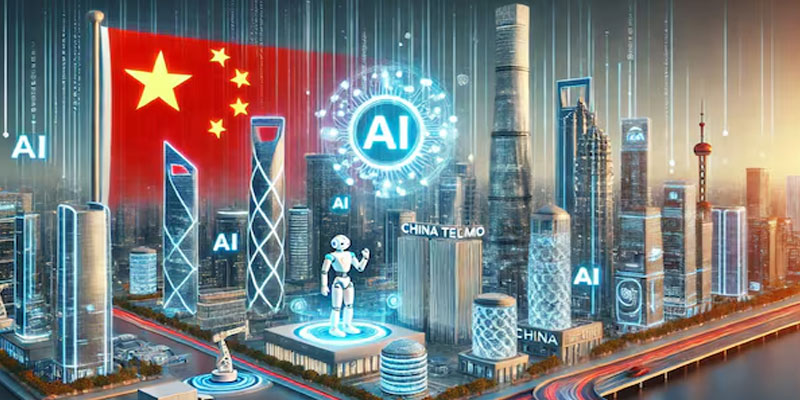
The global artificial intelligence race is entering a new phase where geopolitics, regulation, and economic strategy are reshaping how nations deploy advanced technologies. Recent developments reveal a widening divide between Western corporate AI strategies and China’s state-driven approach.
Major technology companies such as Google and Microsoft have confirmed they will continue offering AI models developed by Anthropic for commercial and civilian purposes. However, both firms have drawn a clear boundary around defense-related applications.
This decision follows the classification of Anthropic as a potential “supply chain risk” by the United States Department of Defense. Such a designation is unusual and signals rising security concerns surrounding AI technologies used in sensitive government environments.
At the heart of the issue lies the “dual-use dilemma.” Artificial intelligence models can power everyday enterprise applications such as customer service automation, marketing analysis, and productivity tools. Yet the same systems can also optimize military logistics, cyber operations, and intelligence analysis.
For large cloud providers and AI infrastructure companies, this creates a strategic balancing act. They must maintain partnerships with cutting-edge AI labs while also protecting their eligibility for lucrative defense contracts and maintaining regulatory compliance.
By distancing themselves from defense projects involving Anthropic, Google and Microsoft appear to be prioritizing their civilian AI ecosystems and commercial innovation pipelines over direct involvement in military AI initiatives in this instance.
This situation reflects a broader shift in Western technology governance. Governments are increasingly scrutinizing AI supply chains, model transparency, and national security implications, particularly as AI becomes embedded in critical infrastructure and defense systems.
For technology companies, participation in defense AI programs offers significant revenue opportunities but also introduces political scrutiny, ethical debates, and regulatory risk. As a result, parts of the Western AI sector are gradually separating commercial AI development from military integration.
Meanwhile, China is pursuing a dramatically different strategy. Beijing is positioning artificial intelligence not only as a technological priority but also as a key instrument for economic stabilization.
China faces a major labor challenge this year, with roughly 12.7 million university graduates entering the workforce amid slower economic growth. To absorb this talent pool, policymakers are embedding AI across manufacturing, services, robotics, and digital administration.
By integrating AI across traditional industries and expanding research investments, China hopes to transform artificial intelligence into a large-scale job creator rather than a disruptive force.
The emerging divide highlights two competing models of AI governance: a Western framework shaped by corporate risk management and regulatory oversight, and China’s centralized strategy of deploying AI as a pillar of national economic and technological power.