A Costly Trade War Comes Home
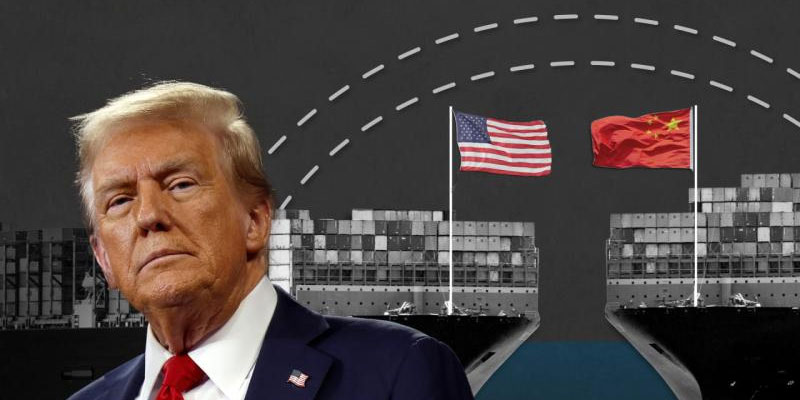
Months after the United States rolled out a fresh wave of import tariffs under Donald Trump’s trade revival strategy, evidence is piling up those American companies and consumer—not foreign exporters—are footing the bill. Despite the president’s claims that other nations would bear the cost of protectionism, rising retail prices, squeezed profit margins, and shifting supply chains suggest a more painful reality.
What began as an effort to protect domestic manufacturing and punish unfair trade practices has instead become a domestic inflation accelerator, complicating the Federal Reserve’s already delicate balancing act between growth and price stability.
Who’s Really Paying?
According to a detailed study by Harvard University economist Alberto Cavallo and his colleagues, the price of imported goods has risen by about 4% since tariffs took effect in March, while U.S.-made products have gone up roughly 2%. The difference, researchers say, shows that companies are passing at least part of the cost to consumers while absorbing the rest to stay competitive.
While the White House insists that Americans are only facing a “transition period,” and that the costs will eventually shift to foreign exporters, economists and business data tell another story. Exporters in China, Germany, Mexico, Turkey, and India have actually raised their prices in dollars, compensating for the weaker greenback and ensuring that U.S. buyers bear most of the burden.
Tariffs Trigger Ripple Effects
The effects of Trump’s new trade regime—raising average import taxes from 2% to nearly 17%—are far-reaching. Major companies, from Procter & Gamble and EssilorLuxottica to Swatch, have already increased product prices to offset costs.
In Europe, a Reuters tracker found that 72% of firms across the region, the Middle East, and Africa have hiked prices since the U.S. tariffs began. Meanwhile, e-commerce platforms like Amazon and Shein are seeing price spikes on goods made in China, including clothing, gadgets, and electronics.
China’s “anti-involution” industrial policy—which discourages cutthroat competition by limiting production—could make matters worse by reducing global supply of items like solar equipment and machinery, adding more fuel to inflationary pressures.
The Fed’s Dilemma
For the Federal Reserve, the situation is a thorny one. The central bank’s recent decision to cut interest rates was meant to support a cooling job market, but higher import costs are threatening to reignite inflation.
A Boston Fed analysis estimates that tariffs could raise core inflation by up to 0.75 percentage points, while Fed Chair Jerome Powell acknowledged that tariffs account for roughly 30–40 basis points of the latest 2.9% core inflation figure.
Not everyone at the Fed agrees. Stephen Miran, a Trump appointee now serving as governor, insists that the impact is “relatively minor,” calling it “a small shift in a few goods categories.” However, independent research from the Peterson Institute for International Economics suggests the opposite: inflation could be 1 percentage point higher over the next year because of tariffs.
Global Trade Takes a Hit
Beyond America’s borders, the ripple effects are unmistakable. As U.S. households curb spending, demand for imports is slowing, hurting exporters worldwide. The European Union’s exports to the U.S. dropped 4.4% in July, and Germany—Europe’s export engine—saw a staggering 20% decline in August.
The World Trade Organization has slashed its forecast for global trade growth to just 0.5%, while data from Germany’s Kiel Institute confirms a clear drop in U.S. shipment volumes. Analysts at Dutch bank ING project a 17% decline in EU exports to the U.S. over the next two years, trimming 0.3% from the bloc’s GDP.
Economist Ruben Dewitte of ING summarized the outlook bluntly: “The full effect of U.S. tariffs hasn’t shown up yet—but it will become far more visible in the coming months.”
Economic Unease Creeps In
Back home, the American electorate is growing restless. While Trump’s supporters praise his “America First” stance, many small business owners and working-class families are feeling the pinch of higher prices on everyday goods—from coffee and clothing to electronics.
For suburban and swing-state voters, the debate over tariffs is shifting from ideology to impact. Rising costs at grocery stores and online retailers are chipping away at disposable income, potentially influencing the political mood ahead of the next election. Economists warn that if inflation lingers and wage growth stalls, public patience with tariff-driven policy could fade quickly.
Paying the Price for Protectionism
Trump’s tariff strategy was built on the promise of revitalizing American industry and penalizing foreign competitors. Instead, the evidence suggests that U.S. consumers and companies are footing the bill, while inflationary pressures mount and global trade slows.
As America recalibrates its economic course, the key question remains: can protectionism deliver long-term resilience without inflicting short-term pain? For now, the numbers suggest the opposite—the U.S. economy is eating its own tariffs, and the aftertaste may linger well into the election season.
(With agency inputs)