India Fast-Tracks Massive Indigenous Drone Procurement Drive
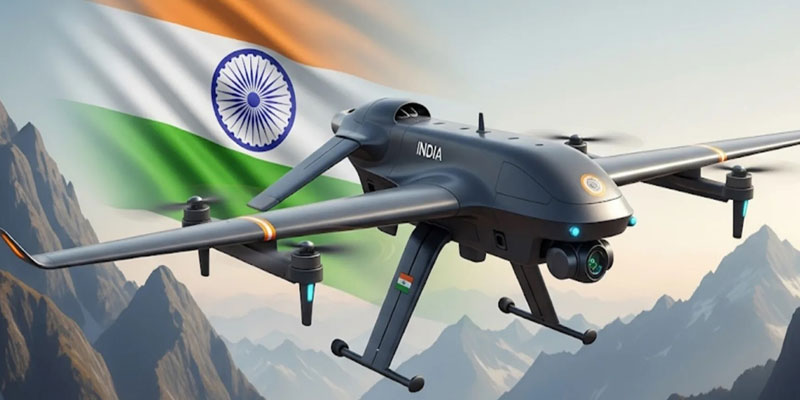
India is moving ahead with its largest-ever military drone procurement programme, with the Army planning to acquire indigenous drones worth over ₹20,000 crore under fast-track procedures. The ambitious initiative reflects a major transformation in India’s defence strategy, where low-cost unmanned systems are increasingly being viewed as decisive battlefield assets. Deliveries are expected within the next 18 to 24 months, highlighting the urgency with which the armed forces are adapting to evolving warfare requirements.
The move also reinforces the government’s broader Atmanirbhar Bharat vision by prioritizing domestically designed and manufactured systems over foreign dependence.
Lessons from Modern Warfare
The growing importance of drones in recent conflicts has fundamentally altered military planning worldwide. Wars in Ukraine and West Asia have demonstrated how relatively inexpensive drones can neutralize costly military assets, reshape battlefield tactics and provide real-time intelligence with unprecedented efficiency.
India’s own operational experiences, particularly during Operation Sindoor and post-2025 tensions with Pakistan, further accelerated the push toward drone-centric warfare capabilities. Following those developments, the Army had already placed orders for loitering munitions and surveillance drones from Indian companies, laying the foundation for the much larger procurement now being planned.
Unlike traditional defence acquisitions that often take years to materialize, the current programme is being processed under fast-track procedures to meet urgent operational needs.
A New Battlefield Strategy
The procurement plan covers a wide range of drone systems designed for multiple battlefield roles.
First-person view (FPV) drones will support close-combat precision strikes, while kamikaze or loitering drones are intended for attacks on high-value enemy targets. Surveillance drones will enhance reconnaissance and target identification capabilities, and logistics drones will assist in delivering supplies to frontline troops in difficult terrain.
The Army increasingly views drones as “force multipliers” capable of improving operational effectiveness without significantly increasing manpower or costs. The long-term objective is reportedly to integrate drones deeply into infantry operations, potentially ensuring that frontline units have dedicated drone capabilities at the tactical level.
This reflects a broader shift toward technology-driven and network-centric warfare.
Indigenous Manufacturing at the Core
A defining feature of the programme is its emphasis on domestic production. The procurement will be executed under the Indigenously Designed, Developed and Manufactured (IDDM) category, which mandates substantial indigenous content.
India’s drone ecosystem has expanded rapidly in recent years, with more than 600 companies now involved in drone manufacturing and related technologies. Defence-focused firms such as IdeaForge, Hindustan Aeronautics Limited, Adani Defence & Aerospace and NewSpace Research & Technologies are expected to play significant roles in the project.
Government initiatives such as the Production-Linked Incentive (PLI) scheme have also accelerated the sector’s growth, helping India move steadily from drone importer to emerging manufacturing hub.
Building Operational Readiness
Alongside procurement, the Army is investing heavily in drone warfare training. Personnel are being trained to operate diverse drone platforms, ensuring that technological acquisitions translate into battlefield readiness rather than remaining underutilized assets.
This parallel focus on capability development reflects recognition that modern warfare increasingly depends not only on acquiring advanced systems but also on integrating them effectively into military doctrine and operations.
India’s Drone Warfare Transformation
India’s ₹20,000-crore drone procurement marks a defining moment in the modernization of its armed forces. More than a large defence purchase, it represents a strategic shift toward self-reliance, technological adaptation and future-ready warfare capabilities. If implemented successfully, the initiative could significantly strengthen India’s military preparedness while positioning the country as a major global player in indigenous drone manufacturing and defence innovation.
(With agency inputs)