RBI’s Market-Driven Approach Gets IMF Endorsement
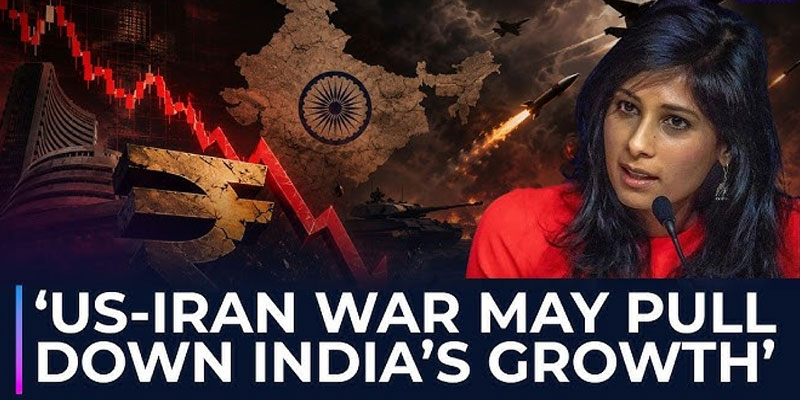
Former International Monetary Fund (IMF) First Deputy Managing Director Gita Gopinath has strongly supported the Reserve Bank of India’s strategy of allowing the rupee to adjust according to economic fundamentals rather than aggressively defending a fixed exchange rate. Speaking amid heightened geopolitical tensions in West Asia and continued global market volatility, she cautioned that excessive intervention in currency markets could distort investor confidence and discourage foreign capital inflows. Her remarks reinforce the view that exchange-rate flexibility remains essential for emerging economies confronting uncertain global financial conditions and volatile investment flows.
Why the Rupee Debate Matters
The Indian rupee has faced persistent pressure in recent months due to rising global uncertainties, geopolitical instability and fluctuating energy prices. Traditionally, central banks intervene in currency markets by using foreign exchange reserves to stabilize their currencies and limit excessive volatility.
India possesses foreign exchange reserves exceeding $700 billion, giving the RBI substantial capacity to intervene when necessary. However, policymakers have increasingly preferred calibrated intervention rather than rigidly defending any specific exchange rate level.
Gopinath argued that exchange-rate flexibility acts as a natural economic stabilizer. Allowing the rupee to depreciate gradually can help reduce trade imbalances by making imports costlier while simultaneously improving export competitiveness. In contrast, artificially maintaining currency strength through sustained intervention risks depleting reserves and weakening market credibility.
Why Excessive Intervention Could Backfire
According to Gopinath, defending an artificial exchange rate may create more problems than solutions. She emphasized that there is currently no evidence of uncontrolled inflation or financial instability in India that would justify aggressive intervention.
Her core argument is that markets respond more positively to transparent and predictable policies. Foreign investors, particularly institutional investors, prefer economies where exchange rates reflect underlying economic realities rather than administrative management. Excessive intervention, she warned, could signal policy uncertainty and discourage long-term investment.
The issue becomes especially significant at a time when foreign institutional investment flows into India have shown signs of weakness. Rather than focusing solely on managing currency depreciation, Gopinath believes India should address the broader factors influencing investor confidence.
The Real Challenge: Attracting Foreign Capital
Gopinath stressed that India’s primary concern is not the size of its current account deficit but the need to attract stronger and more sustained foreign capital inflows.
She highlighted the importance of improving the investment climate through structural reforms, ease-of-doing-business measures and policy consistency. In her assessment, reforms such as the Goods and Services Tax (GST) have already strengthened economic formalization and improved taxation efficiency.
At the same time, she identified artificial intelligence (AI) as a major opportunity for India. Speaking at global economic forums, Gopinath described AI as one of the most transformative technological developments of the modern era, capable of significantly enhancing productivity and economic growth.
For India, leveraging its technological talent pool and building a supportive regulatory ecosystem around AI could strengthen its appeal to global investors seeking long-term growth opportunities.
Strategic Importance of the RBI’s Approach
Gopinath’s endorsement carries considerable weight given her experience at the IMF and her expertise in international macroeconomics. Her support suggests growing confidence in India’s decision to prioritize market-driven adjustment over excessive currency management.
Recent policy initiatives, including measures aimed at encouraging foreign portfolio investment in government securities, align with her broader recommendation that India focus on improving structural competitiveness rather than defending exchange rates artificially.
Building Long-Term Economic Resilience
Gita Gopinath’s remarks offer an important reminder that economic resilience depends not merely on stabilizing currencies but on strengthening underlying fundamentals. By allowing the rupee to adjust naturally while pursuing structural reforms and attracting global investment, India can build a more adaptable and credible economic framework. In an increasingly uncertain global environment, maintaining policy flexibility and investor confidence may prove far more valuable than defending any fixed currency level.
(With agency inputs)