India Pushes Higher Ethanol Fuel Adoption
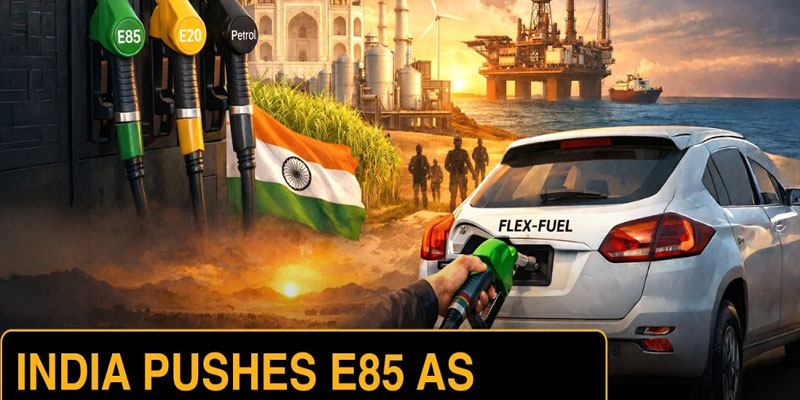
India is set to expand E85 fuel distribution stations in a phased manner as part of its broader push toward cleaner and more self-reliant mobility solutions. Union Petroleum Minister Hardeep Singh Puri announced plans to establish nearly 100 E85 fuel stations across key urban corridors such as NCR, Mumbai, Pune and Nagpur, marking a major step beyond the country’s existing E20 ethanol-blending programme. The move is aimed at accelerating the adoption of flex-fuel vehicles capable of operating on significantly higher ethanol blends.
The initiative reflects India’s growing focus on reducing fossil fuel dependence, strengthening energy security and promoting sustainable transportation through alternative fuels.
India’s Ethanol Transition
India has steadily expanded ethanol blending over the past few years as part of its strategy to cut crude oil imports and lower vehicular emissions. The country has already achieved nationwide availability of E20 fuel, which contains 20 per cent ethanol blended with petrol.
The proposed expansion into E85 and eventually E100 fuels marks the next phase of this transition. E85 fuel consists of 85 per cent ethanol and 15 per cent petrol, offering a cleaner-burning alternative to conventional fuels. To support this shift, the government has proposed amendments to the Central Motor Vehicles Rules to formally recognize higher ethanol-blended fuels and facilitate testing and approval of compatible vehicles.
The rollout of dedicated fuel infrastructure is considered essential for building consumer confidence and enabling large-scale adoption of flex-fuel technology.
Hero MotoCorp Launches Flex-Fuel Motorcycles
India’s transition toward higher ethanol mobility received a major boost with Hero MotoCorp launching its first flex-fuel motorcycles — the Splendor+ Flex Fuel and HF Deluxe Flex Fuel.
Designed to operate on fuel blends ranging from E20 to E85, the motorcycles will initially be introduced in Delhi and selected regions of Maharashtra, coinciding with the rollout of E85 fuel stations. The launch is particularly significant because India is the world’s largest two-wheeler market, with annual sales exceeding 30 million units.
The move positions India among the few countries attempting mass-market adoption of flex-fuel two-wheelers at scale.
Maruti Suzuki Unveils India’s First Flex-Fuel WagonR
At the same time, Maruti Suzuki has unveiled India’s first flex-fuel WagonR capable of running on up to 100 per cent ethanol. The upcoming model, expected to enter production from late 2025, represents a major milestone for India’s passenger vehicle segment.
Equipped with a 1.2-litre engine compatible with E20-E85 fuel blends, the WagonR Flex Fuel demonstrates how alternative fuel technology is gradually moving from niche experimentation to mainstream automotive production.
Together, the launches by Hero MotoCorp and Maruti Suzuki indicate growing industry confidence in ethanol-based mobility solutions.
Environmental and Economic Significance
The government views flex-fuel adoption as both an environmental and economic strategy. Union Road Transport Minister Nitin Gadkari has stated that ethanol-based fuels could reduce carbon monoxide emissions by up to 77 per cent.
Equally important are the economic benefits. India imports more than 85 per cent of its crude oil requirements, making fuel imports a major burden on foreign exchange reserves. Greater ethanol usage could generate annual savings estimated at nearly ₹1.44 lakh crore while also supporting domestic agriculture through increased demand for sugarcane and other ethanol feedstocks.
Towards Cleaner and Self-Reliant Mobility
India’s E85 expansion and the growing adoption of flex-fuel vehicles mark a significant shift in the country’s transportation and energy strategy. By combining infrastructure development, regulatory reforms and industry participation, the government is attempting to create a complete ecosystem for ethanol-based mobility. If implemented effectively, the initiative could reduce import dependence, support farmers, cut emissions and position India as a global leader in alternative fuel transportation.
(With agency inputs)