Union Education Minister Pralhad Joshi has ordered a comprehensive overhaul of the National Testing Agency (NTA), directing a complete audit of examination processes, tighter security around confidential operations and major administrative restructuring after a series of controversies culminating in the recent UGC-NET 2026 fiasco. The reforms include removing officials, hiring specialists, strengthening question-paper security and reviewing every stage of exam administration. The move marks the government's strongest attempt yet to restore confidence in India's high-stakes testing system, which conducts examinations for millions of students each year.
From Trusted Testing Body to Crisis Mode
Established in 2017, the NTA was created to conduct transparent and efficient national-level entrance examinations such as NEET, JEE Main, CUET and UGC-NET. However, repeated allegations of paper leaks, administrative lapses and question-paper errors have steadily eroded public confidence. What began as isolated concerns has evolved into a broader institutional credibility crisis, forcing successive rounds of investigations, judicial scrutiny and reform committees.
UGC-NET 2026 Becomes the Immediate Trigger
The latest controversy erupted after the NTA announced that the UGC-NET June 2026 examinations for English, Commerce and Sociology would be conducted again in September without charging additional fees.
An expert committee found multiple flaws in the papers, including:
· Factual inaccuracies.
· Typographical and translation mistakes.
· Misspelled scholars' names.
· Incorrect book titles.
· Poorly framed questions.
· Repetition of questions from previous examinations.
The errors sparked widespread criticism from students and opposition parties, who questioned how such basic quality-control failures could occur in a national eligibility examination affecting lakhs of candidates.
NEET Controversies Deepened the Crisis
The UGC-NET episode follows two years of serious controversies surrounding NEET-UG.
In 2024, allegations of paper leaks and irregularities triggered nationwide protests, a CBI investigation and the formation of a seven-member reform committee headed by former ISRO chairman K. Radhakrishnan.
The crisis escalated further in 2026, when the May 3 NEET-UG examination was cancelled just days later over integrity concerns. Subsequent CBI investigations identified an NTA-linked expert as the source of the leaked Chemistry paper, leading to the arrest of three experts involved in question-paper preparation.
The Supreme Court also delivered a sharp rebuke, observing that the agency had failed to learn from the lessons of the 2024 controversy.
Political Fallout and Organisational Changes
The repeated failures carried significant political consequences. The controversies contributed to nationwide protests, intensified scrutiny of examination governance and led to leadership changes within the NTA.
The agency has witnessed three Director Generals within two years, while dozens of officials have reportedly been removed during administrative restructuring. Meanwhile, a high-powered examination reform task force led by Nandan Nilekani has also been tasked with recommending long-term improvements.
Joshi's Blueprint for Reform
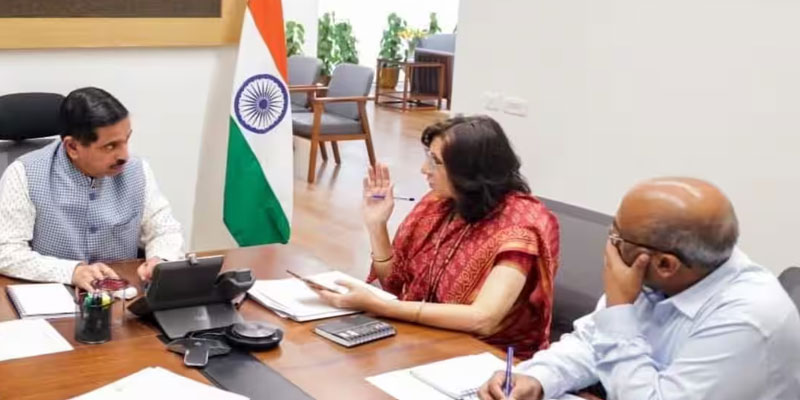
Following a high-level review meeting, the education minister outlined a multi-layered reform agenda aimed at rebuilding institutional credibility.
The key measures include:
· Comprehensive audit of all examination processes.
· Stricter confidential handling of question papers.
· Recruitment of specialised professionals.
· Enhanced round-the-clock security systems.
· Review of outsourcing practices.
· Greater use of biometric verification and computer-based examinations.
Many of these steps revisit earlier recommendations of the Radhakrishnan Committee while seeking stronger implementation.
Restoring Trust Beyond Administrative Reform
The NTA's challenge extends beyond fixing operational weaknesses—it must restore public faith in examinations that shape millions of academic and professional careers. While audits, security upgrades and staffing reforms represent important corrective steps, their success will ultimately depend on consistent execution and institutional accountability. For India's education system, rebuilding confidence in fair and credible examinations has become not just an administrative necessity but a national priority.
(With agency inputs)