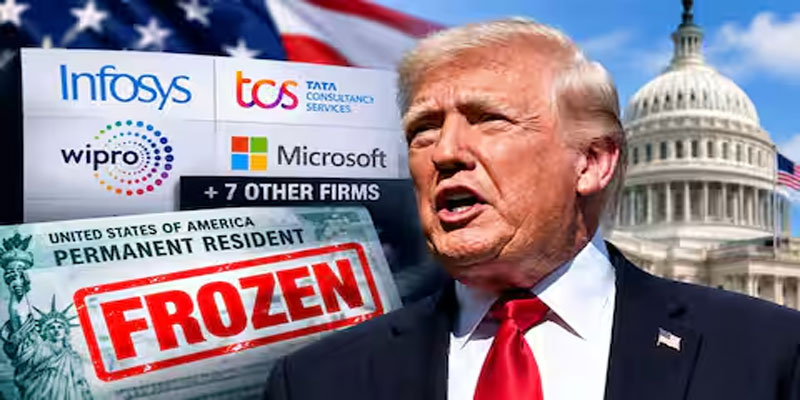
The Trump administration has placed India among more than 40 countries allegedly forming a "shadow transshipment network" that enables Chinese exporters to bypass US tariffs through rerouting, relabelling, and limited processing of goods. Detailed in a 25-page White House report titled The Great Transshipment Scam, the allegations have injected a fresh compliance challenge into India-US trade ties, even as both countries continue negotiating broader trade and market-access agreements.
A New Front in the US-China Trade War
The allegations build on Washington's long-running tariff strategy against China, introduced in 2018 to reduce dependence on Chinese manufacturing and protect American industries. The latest report argues that rather than shipping directly to the United States, Chinese exporters increasingly route goods through third countries to disguise their true origin.
How the Alleged Transshipment Network Operates
According to the White House, Chinese manufacturers employ several techniques to alter the apparent origin of products without substantially changing their Chinese content.
These methods include:
· Minor processing or assembly in third countries.
· Relabelling and repackaging products.
· Re-invoicing shipments through intermediary firms.
· Routing goods through alternative ports to obtain different certificates of origin.
Why India Figures Prominently
India has been placed in Tier 1, described as "Diversified Scale Leaders," alongside Canada, the European Union, Japan, Mexico, South Korea, and Taiwan.
The report suggests that India's large manufacturing ecosystem makes it vulnerable to becoming a conduit for transshipment rather than accusing the country of systematic state-backed tariff evasion.
It specifically identifies the Pune-Gujarat-Chennai manufacturing corridor, alleging that components such as pumps and compressors passing through this industrial belt could ultimately affect American supply chains serving manufacturing centres including Cincinnati, Dayton, and Columbus.
Separately, US Commerce Department estimates cited in media reports identify Mexico, India, and Vietnam as the three largest transshipment hubs in 2025, allegedly accounting for around $67 billion in rerouted goods.
Tougher Enforcement Ahead
The White House plans to strengthen enforcement through technology-driven customs surveillance and stricter trade rules.
Proposed measures include:
· AI-based systems to detect suspicious origin patterns.
· Enhanced documentary verification.
· Stricter rules-of-origin provisions in future trade agreements.
· Retrospective duties and penalties for mis declared shipments.
These changes could increase compliance costs for Indian exporters, particularly in machinery, engineering goods, and industrial components.
A Delicate Test for India-US Trade Relations
The timing of the report is significant, arriving while India and the United States continue negotiating trade arrangements aimed at expanding bilateral commerce.
Although the report acknowledges that Tier 1 economies are not necessarily engaging in deliberate tariff evasion, it argues that their complex supply chains create opportunities for origin masking. For India, the immediate challenge is maintaining the credibility of "Made in India" exports through stronger traceability, customs oversight, and supply-chain transparency. As global manufacturing networks become increasingly interconnected, rigorous origin verification may prove just as important as competitive production in sustaining India's export ambitions.
(With agency inputs)