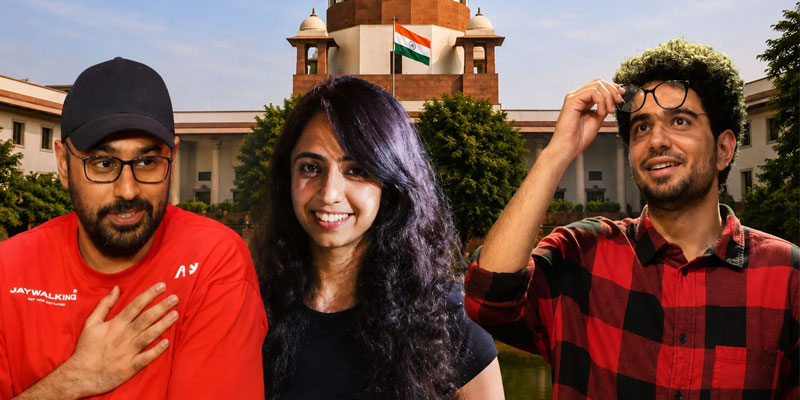
The Supreme Court on Friday brought the curtain down on comedian Samay Raina's year-long legal battle by quashing all FIRs and criminal proceedings against him and four other comedians over insensitive remarks about persons with disabilities on the YouTube show India's Got Latent. The court ruled in their favour after noting that they had fully complied with its earlier directions to apologise, conduct awareness programmes, and raise support for persons with disabilities. At the same time, the bench made it clear that it will separately examine the larger issue of regulating harmful online content while balancing free speech with dignity.
From Comedy Show to Courtroom
The controversy originated after an episode of India's Got Latent featured jokes and comments that were alleged to ridicule persons with disabilities, including references to the high cost of treating Spinal Muscular Atrophy (SMA) and other rare genetic disorders.
The SMA Cure Foundation approached the Supreme Court, arguing that the remarks were offensive and undermined the dignity of individuals living with rare diseases. Multiple FIRs were subsequently registered against Samay Raina and other performers across different jurisdictions, turning what began as an online controversy into a nationwide legal dispute.
Court's Earlier Stand Was Firm
During earlier hearings, the Supreme Court had taken a stern view of what it described as "crass jokes" and criticised the comedians for crossing the line between humour and insensitivity.
The court directed them to issue unconditional apologies, organise awareness programmes for persons with disabilities, and raise funds for related causes. At one stage, it also imposed a ₹3 lakh fine over non-compliance with certain directions, signalling that accountability would accompany freedom of expression.
Compliance Changed the Outcome
The turning point came when the court found that the comedians had made genuine efforts to fulfil its directives.
Besides Samay Raina, the relief extends to Vipul Goyal, Balraj Paramjeet Singh Ghai, Sonali Thakkar (Sonali Aditya Desai), and Nishant Jagdish Tanwar.
Their compliance included:
· Organising a chess tournament for persons with disabilities in March.
· Supporting awareness campaigns for people living with SMA and other rare diseases.
· Working closely with the petitioner NGO to design future programmes.
· Seeking informed participation from SMA patients in upcoming initiatives.
The bench observed that the respondents had engaged constructively with disability rights organisations and demonstrated a sincere effort to promote dignity and inclusion.
A Bigger Debate Still Remains
While closing the case against the five comedians, the Supreme Court deliberately left a larger constitutional question unresolved.
Chief Justice Surya Kant, along with Justice Joymalya Bagchi and Justice V. Mohan, indicated that the court would continue hearing issues relating to offensive online content affecting persons with disabilities.
The bench is expected to examine possible safeguards, consult stakeholders, and consider guidelines that can encourage responsible digital expression without unnecessarily restricting free speech.
Restorative Justice Sets an Important Precedent
The verdict marks a significant shift from punishment to restorative justice. Instead of allowing criminal proceedings to continue indefinitely, the Supreme Court recognised that meaningful corrective action can serve the public interest more effectively than prolonged litigation. Yet its decision also sends a wider message: comedy and creative freedom carry social responsibility, particularly when vulnerable communities are involved. As India grapples with the challenges of digital content regulation, the ruling could become an important precedent in defining how accountability, dignity, and free expression coexist in the online age.
(With agency inputs)