Shockwaves Through Communities
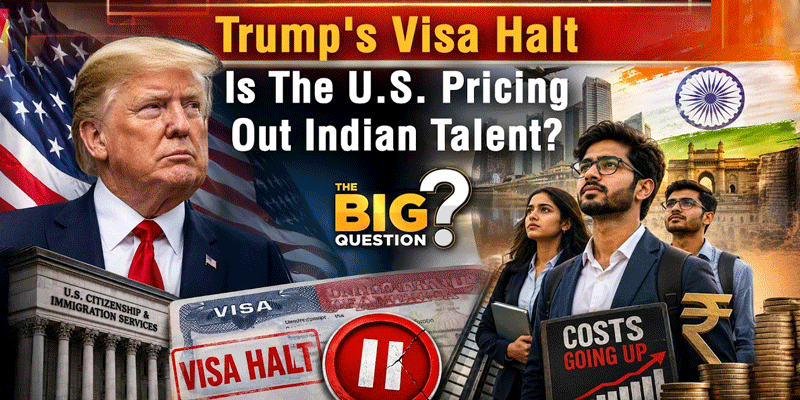
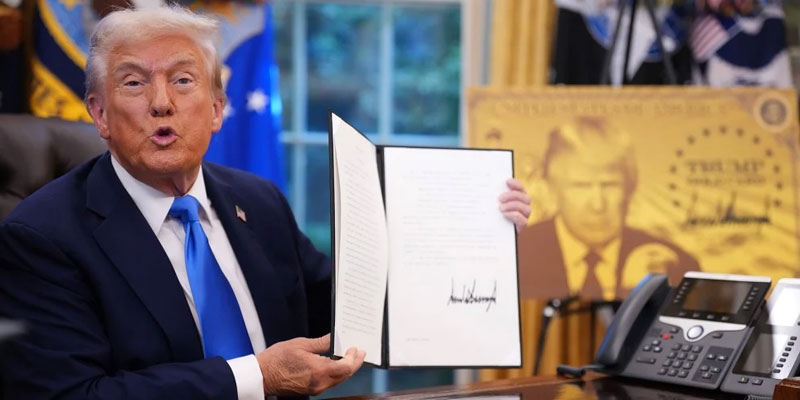
When the Trump administration unveiled a $100,000 fee for new H-1B visa applications, panic rippled far beyond corporate boardrooms. For doctors, researchers, and skilled workers whose careers and communities depend on the visa program, the change felt like a door abruptly slammed shut. Families worried about being uprooted, hospitals feared losing physicians, and tech firms scrambled to rethink hiring. Now, with the White House signaling that doctors might be exempt, hope has surfaced amid deep uncertainty.
For decades, the H-1B program has been a lifeline for professionals from around the world, particularly India, which accounts for nearly three-quarters of approvals. Around 700,000 workers and half a million dependents live in the U.S. under its protections. A sudden fee hike from $215 to $100,000 threatens to upend their lives. For young doctors training in rural America or IT specialists supporting children in U.S. schools, the policy is more than paperwork—it determines whether their families can stay or must leave.
The Human Face of a Doctor Shortage
Nowhere is the anxiety sharper than in healthcare. More than 76 million Americans live in regions with too few primary care doctors. International graduates, often on H-1B visas, step into these gaps. AMA President Bobby Mukkamala warned that the new fee risks “shutting off the pipeline of highly trained physicians that patients depend on.” In small towns, losing even a single doctor can mean traveling hours for care. For medical residents who left their families abroad to serve these communities, the uncertainty is deeply personal.
Tech Workers and Their Families
Beyond hospitals, the tech sector—where nearly 60 percent of H-1B approvals land—faces a similar dilemma. Many Indian engineers, designers, and programmers describe sleepless nights, unsure whether future applications will be financially feasible. Children in American schools wonder if they’ll have to return to countries they barely remember. Employers, too, face tough choices: paying steep costs to retain global talent or scaling back innovation.
The Administration’s Justification
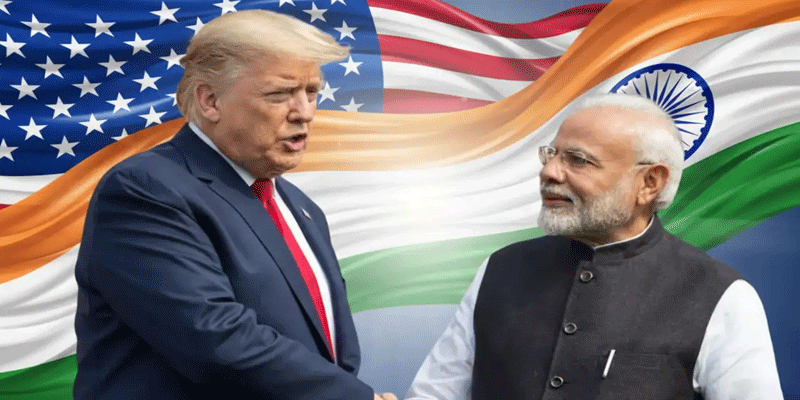
Officials argue the fee is about fairness. President Trump insists companies have abused the program to undercut wages, calling it a threat to American workers. Commerce Secretary Howard Lutnick framed the fee as a filter to eliminate “low-wage” applicants, while raising billions for the U.S. Treasury. For policymakers, it is about national interest. But for families and communities, it feels like livelihoods are caught in a political crossfire.
Glimmers of Hope: Possible Exemptions
White House spokesperson Taylor Rogers confirmed that the proclamation allows waivers for workers deemed vital to the nation, including physicians and medical residents. That reassurance offers a ray of hope for hospitals already stretched thin. Yet many worry exemptions will be uneven, leaving other professions—universities, nonprofits, and IT—struggling under the weight of the new policy.
People Behind the Policy
The $100,000 H-1B fee is more than a line in a proclamation; it is a decision that reaches into living rooms, classrooms, and clinics across America. It may raise revenue and satisfy protectionist goals, but it also risks breaking trust with the very professionals who heal, teach, and innovate. Exempting doctors is a welcome step, but broader compassion is needed. Striking a balance between safeguarding American jobs and sustaining the flow of global talent will determine not only economic outcomes, but also the well-being of countless families and communities who have come to call America home.
(With agency inputs)