A Sudden Wartime Shake-Up
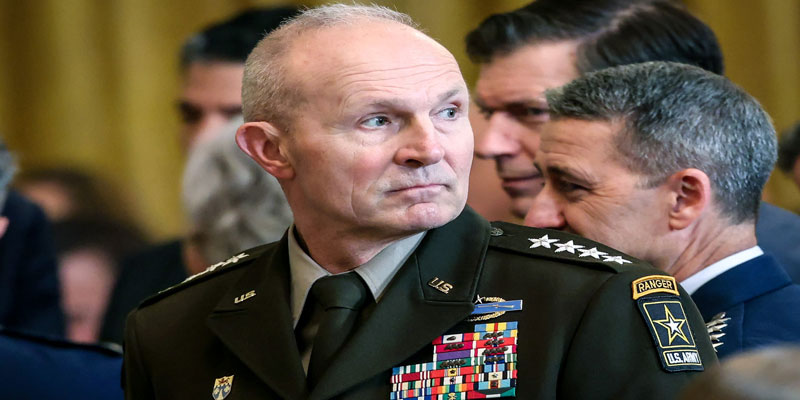
In a dramatic and controversial move, President Donald Trump has removed U.S. Army Chief of Staff General Randy George along with two other senior generals amid the ongoing Iran war. The decision, executed by Defense Secretary Pete Hegseth, marks one of the most visible wartime leadership purges in recent American military history. Officially described as a “retirement,” General George’s abrupt exit—after serving since August 2023—comes without a clear public explanation. His removal, alongside a broader pattern of high-level dismissals since Trump’s return to office, signals a decisive shift in how the administration is consolidating military leadership during an active conflict.
Leadership Overhaul and Rising Insiders
General George’s departure appears less routine and more indicative of deeper tensions between uniformed leadership and political authority. Reports suggest disagreements over the pace, scale, and legal boundaries of escalating strikes against Iran-linked targets, especially amid scrutiny of attacks affecting civilian infrastructure.
In his place, Lieutenant General Christopher LaNeve has been elevated as acting Army Chief of Staff. His rise has been strikingly rapid—from a two-star general just two years ago to the Army’s top uniformed position during wartime. LaNeve’s proximity to Hegseth and alignment with the administration’s strategic vision reflect a broader pattern: prioritising trusted insiders who can execute directives with minimal friction. While this may enhance operational cohesion in the short term, it raises questions about the long-term institutional balance within the military.
Geopolitical Implications: Power Projection and Signalling
At a geopolitical level, the purge strengthens centralized control over U.S. war-fighting strategy. With the White House exerting tighter influence over military decision-making, the administration appears poised to pursue a more aggressive posture against Iran. Trump’s rhetoric—promising overwhelming force—suggests maximalist objectives, which the reshaped leadership is expected to implement swiftly.
This internal restructuring also serves as an external signal. To Iran, it projects a willingness to escalate without hesitation, reinforcing deterrence through unpredictability. To regional allies such as Israel and Gulf states, it indicates strong U.S. commitment—but one closely tied to Trump’s political calculus. However, such moves may simultaneously unsettle partners who rely on consistency and institutional continuity in U.S. military policy.
Institutional Strain: Civil–Military Balance at Risk
The removal of a sitting Army chief during active conflict, without transparent justification, underscores growing concerns about the politicisation of military leadership. The U.S. tradition of an apolitical, professional armed force may be under strain, as leadership changes appear increasingly driven by alignment with political objectives rather than purely strategic or operational considerations.
This shift risks fostering a “compliance culture” within the chain of command, where dissenting professional advice may be side-lined. Over time, such dynamics could weaken institutional resilience, complicate decision-making, and affect the credibility of U.S. military leadership globally.
Strategic Takeaways: An India-Centric Lens
For India, this episode highlights three critical trends.
· First, leadership churn is emerging as a tool of wartime strategy among major powers, potentially affecting long-term military partnerships.
· Second, escalating operations that attract legal scrutiny could erode the U.S.’s standing as a rules-based actor—an important consideration for India’s diplomatic balancing.
· Third, the volatility of U.S. domestic politics reinforces the need for strategic autonomy, encouraging India to diversify defence relationships and reduce overdependence on any single partner.
Command in the Age of Political Warfare
The removal of General Randy George is more than a personnel decision—it is a reflection of how modern conflicts blur the line between military command and political authority. By centralizing control and prioritizing loyalty, the Trump administration is reshaping both the conduct of the Iran war and the institutional character of the U.S. Army. While this may deliver short-term decisiveness, it carries long-term risks for civil–military balance, alliance stability, and global perceptions of American power. In an era where wars are fought as much through narratives and leadership as through weapons, the consequences of such decisions will extend far beyond the battlefield.
(With agency inputs)