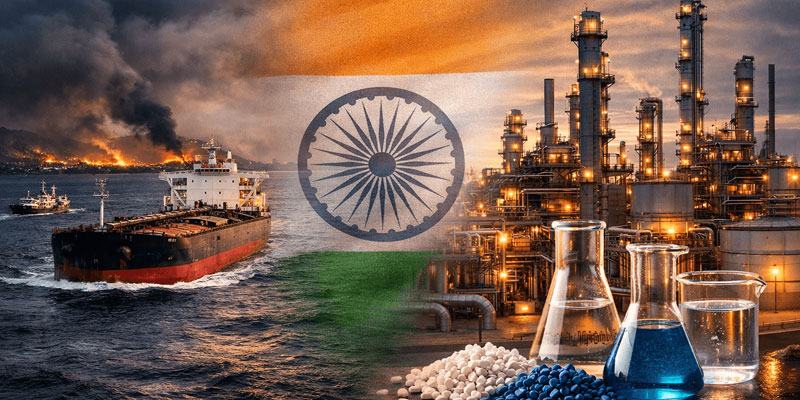
In a swift policy response to escalating tensions in West Asia, India has waived customs duty on 40 key petrochemical products until June 30, 2026. Triggered by disruptions linked to the US–Iran conflict, the move aims to stabilise supply chains and prevent a surge in input costs across industries. Framed as a temporary but targeted intervention, it reflects New Delhi’s effort to cushion the domestic economy from global volatility.
A Timely Response to Global Disruptions
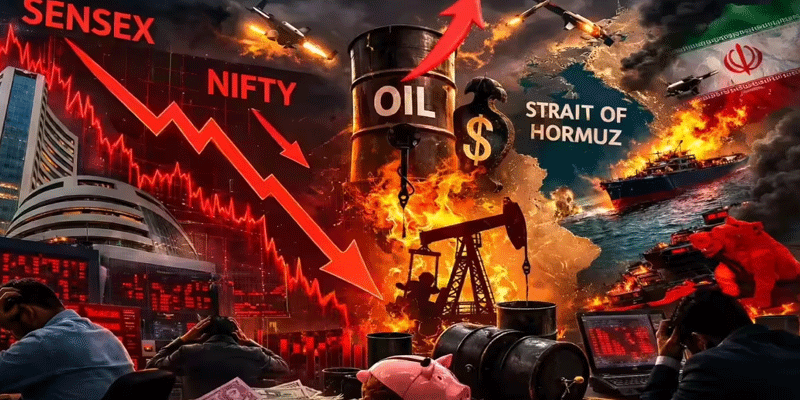
The ongoing conflict involving Iran and the United States has strained critical energy routes, particularly around the Strait of Hormuz. Rising crude prices, shipping risks, and supply bottlenecks have had a cascading effect on petrochemical feedstocks. For India, which relies heavily on imports for such inputs, the risk of cost escalation is immediate and significant. By eliminating customs duties, the government has effectively lowered the landed cost of essential materials, ensuring uninterrupted supply for domestic industries.
Benefits Across Key Sectors
The decision has wide-ranging implications across multiple sectors. Petrochemicals form the backbone of industries such as plastics, textiles, pharmaceuticals, packaging, and automotive manufacturing. By reducing input costs for polymers, resins, and intermediates, the duty waiver helps manufacturers maintain stable production costs. This, in turn, prevents a sharp rise in prices of everyday goods—from packaged food and garments to medicines and auto components. The move is therefore not just industry-focused but also consumer-centric, aiming to shield households from inflationary spillovers.
Inflation Control and Economic Stability
One of the primary objectives of the policy is to contain inflation. Rising input costs often translate into higher producer prices, which eventually pass on to consumers. By intervening at the upstream level, the government is attempting to break this chain early. This proactive approach helps stabilise wholesale and retail prices, supporting broader macroeconomic stability. It also complements other measures, such as managing fuel supplies and diversifying import sources, to maintain economic resilience during external shocks.
Short-Term Relief, Long-Term Signals
While the benefits are immediate, the policy is clearly time-bound, signalling that it is not a structural shift in trade policy. Instead, it serves as a temporary shock absorber during a period of heightened global uncertainty. At the same time, the move underscores the need for long-term strategies—such as expanding domestic petrochemical capacity, diversifying supply sources, and improving energy efficiency—to reduce dependence on volatile external markets.
Balancing Crisis Management with Strategic Vision
India’s customs duty waiver on petrochemicals highlights a pragmatic approach to crisis management—swift, targeted, and economically grounded. By cushioning industries and consumers from global shocks, the government is buying time to navigate uncertainty. However, the real challenge lies beyond this temporary relief: building a more self-reliant and resilient industrial ecosystem. In doing so, India can not only weather current disruptions but also strengthen its position against future geopolitical and economic shocks.
(With agency inputs)