A Major Defence Boost for India
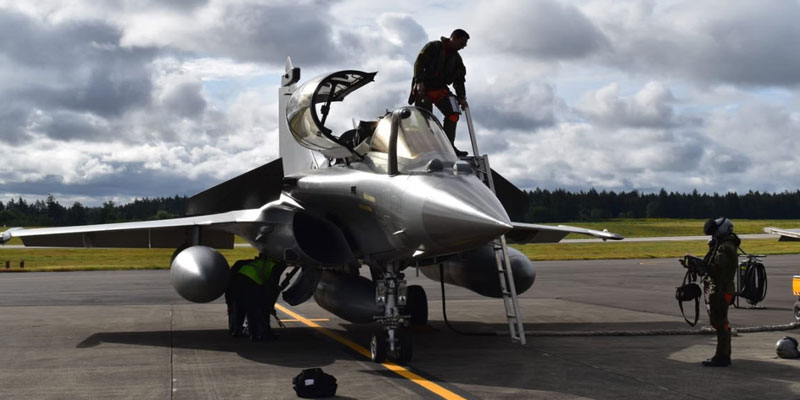
India has moved forward with a massive plan to acquire 114 additional Rafale fighter jets after the government cleared a ₹3.25 lakh crore procurement proposal. The decision, approved by the Defence Acquisition Council, represents one of the largest military aviation purchases in the country’s history and aims to strengthen the Indian Air Force’s (IAF) combat readiness at a time of evolving regional threats. With the new order, India’s Rafale fleet will expand significantly, building on earlier inductions and signaling a renewed push toward modernization and domestic manufacturing.
Timing and the French President’s Visit
The deal’s progression coincides with an important diplomatic window. French President Emmanuel Macron is scheduled to visit India in mid-February, where defence cooperation and technology partnerships are expected to dominate discussions. While formal agreements may still require final negotiations, the timing underscores the depth of the India–France strategic partnership.
Beyond aircraft procurement, the visit is likely to focus on broader defence collaboration, including engine technology, naval systems, and joint research initiatives. The Rafale deal thus functions not only as a military purchase but also as a symbol of expanding bilateral ties between Paris and New Delhi.
Addressing Squadron Shortfalls and Modernization Needs
India’s fighter squadron strength has long remained below the sanctioned level of 42. Aging aircraft and delayed indigenous programs have created gaps in air combat capability. The acquisition of 114 Rafales is intended to narrow that gap and provide the IAF with advanced multi-role platforms capable of operating in diverse theatres.
A significant portion of the jets is expected to be manufactured in India through partnerships with domestic industry, aligning with the “Make in India” initiative. This local production component aims to boost technology transfer, create jobs, and strengthen the country’s aerospace ecosystem. Initial deliveries of fully built aircraft are expected to bridge immediate operational requirements while local manufacturing ramps up.
Strategic Impact on India–China Border Dynamics
The Rafale expansion carries notable implications for India’s military posture along the Line of Actual Control (LAC) with China. Since the 2020 border standoff, both sides have reinforced infrastructure and deployed advanced aircraft in high-altitude regions. Additional Rafales will enhance India’s ability to conduct precision strikes, maintain air superiority, and respond rapidly to contingencies in mountainous terrain.
Equipped with long-range air-to-air missiles and advanced electronic warfare systems, the aircraft offer improved deterrence against potential incursions. Their presence in forward bases could help offset China’s growing airpower deployments in Tibet and nearby regions. By strengthening aerial capabilities, India aims to reinforce deterrence and maintain stability along a contested frontier while also preparing for a possible two-front scenario involving both China and Pakistan.
Economic and Technological Implications
Beyond security considerations, the deal is expected to generate economic benefits through local manufacturing, maintenance facilities, and supply chain development. Defence analysts view it as a catalyst for deeper industrial cooperation and technology absorption, potentially benefiting future indigenous fighter programs.
Balancing Diplomacy and Deterrence
The approval of the Rafale acquisition marks a decisive step in India’s military modernization and strategic planning. Timed alongside high-level diplomatic engagement with France, the deal highlights the intersection of defence procurement and international partnerships.
As India navigates complex regional security challenges, particularly along the China border, the expanded Rafale fleet is intended to strengthen deterrence while supporting long-term self-reliance in defence production. The success of the initiative will depend on timely deliveries, effective technology transfer, and sustained cooperation with partners. Ultimately, the agreement reflects India’s effort to balance diplomatic outreach with credible military preparedness in an increasingly uncertain geopolitical environment.
(With agency inputs)