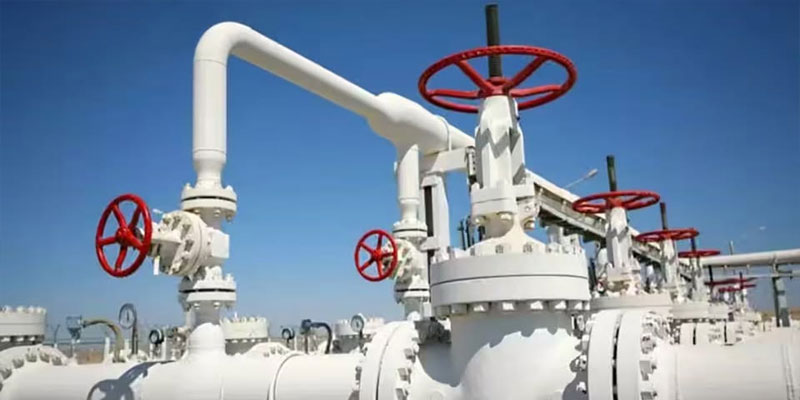
Indian Oil’s planned $255.6 million investment in the Kochi–Thoothukudi natural gas pipeline marks another significant step in expanding southern India’s gas infrastructure. The 424.65-km project will connect Kochi in Kerala with Thoothukudi in Tamil Nadu through Kanyakumari, creating a new transmission corridor for natural gas and strengthening links between LNG supplies and growing industrial demand.
A New Gas Artery Across Southern India
Indian Oil Corporation (IOC) has approved an investment of ₹2,448.70 crore to develop, build and operate the Kochi–Kanyakumari–Thoothukudi Natural Gas Pipeline. The project has been authorised by the Petroleum and Natural Gas Regulatory Board (PNGRB), which identifies IOC as the authorised entity for laying, building, operating and expanding the pipeline.
The pipeline will originate at the Kochi LNG Terminal and extend to Thoothukudi, passing through Kanyakumari. Its total system capacity will be 6.84 million standard cubic metres per day (MMSCMD), including 1.71 MMSCMD of common-carrier capacity.
₹2,449 Crore Investment with Wider Impact
The investment is more than a pipeline-construction project; it is intended to create a stronger gas supply backbone for Kerala and southern Tamil Nadu.
Key features include:
· Investment: ₹2,448.70 crore, or about $255.6 million.
· Length: Approximately 424.65 km.
· Capacity: 6.84 MMSCMD.
· Common-carrier capacity: 1.71 MMSCMD.
· Route: Kochi–Kanyakumari–Thoothukudi.
· Primary source: Regasified LNG from the Kochi LNG terminal.
The pipeline is expected to support city gas distribution networks, industrial consumers, power plants and other downstream users. It will also strengthen connections with existing gas infrastructure in southern India.
Strengthening Southern India’s Energy Network
PNGRB had earlier described the project as a crucial link between the Kochi LNG terminal and IOC’s existing pipeline network at Thoothukudi. The regulator said the corridor would improve access to natural gas in underserved areas and particularly support expansion of city gas distribution.
For industries, reliable pipeline-based gas can provide an alternative to fuel transported by road or other modes. It can also help expand access to PNG and CNG for households, commercial establishments and transport users as distribution networks develop.
Supporting India’s Broader Gas Transition
The investment comes as India seeks to expand natural gas infrastructure and increase the role of gas in its energy mix. A wider pipeline network is essential for moving imported LNG and other gas supplies efficiently to industrial and urban demand centres.
For IOC, the project also strengthens its presence across the natural-gas value chain, complementing its existing pipeline infrastructure and refining and marketing operations.
A Strategic Energy Link for Southern India
The Kochi–Thoothukudi pipeline can become an important piece of southern India’s evolving gas network. By connecting an LNG source with industrial, urban and power-sector demand centres, the ₹2,449-crore project has the potential to improve regional gas availability, strengthen energy connectivity and support the gradual diversification of India’s fuel basket.
(With agency inputs)