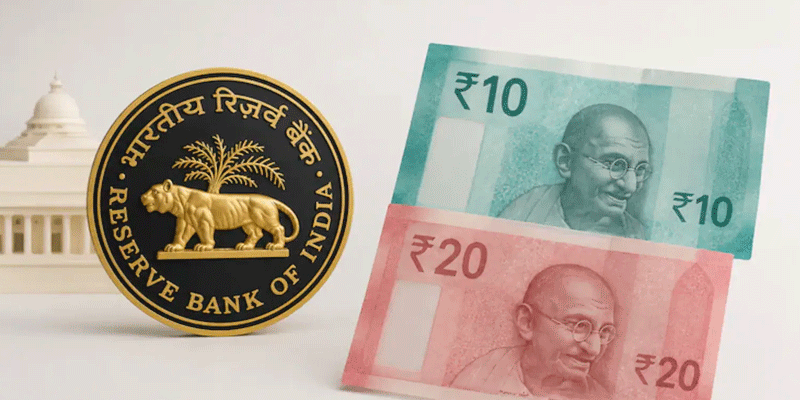
India’s currency ecosystem is preparing for a significant experiment, with the government approving the RBI’s proposal to conduct field trials of polymer ₹10 and ₹20 banknotes. The initiative could eventually reshape how physical currency is produced, secured and circulated.
Under the proposed trial, RBI plans to issue 100 crore ₹10 notes and 100 crore ₹20 notes, representing 200 crore polymer banknotes worth approximately ₹3,000 crore. Existing paper notes will continue as legal tender; the pilot does not mean their immediate replacement.
Durability is the primary driver. ₹10 and ₹20 notes circulate extensively and deteriorate quickly. Polymer notes can potentially last two to four times longer, while offering greater resistance to water, dirt and tearing. Their longer lifecycle could offset higher initial manufacturing costs.
Polymer also creates opportunities for advanced anti-counterfeiting technologies, including transparent windows and sophisticated security features. Countries including Australia, Canada, the UK, New Zealand and Singapore already use polymer currency.
Interestingly, the experiment comes as India modifies the economics of digital payments. The introduction of 0.4% MDR on certain merchant UPI transactions above ₹2,000 has raised concerns that some merchants could favour cash for higher-value transactions, although consumers themselves are not being charged.
This creates a fascinating transition: India could simultaneously strengthen UPI, digital rupee and physical currency infrastructure. If polymer trials succeed, an entirely new ecosystem could emerge around substrates, security printing, authentication, recycling and currency-processing technologies. Rather than disappearing, cash itself may be getting a technology upgrade.