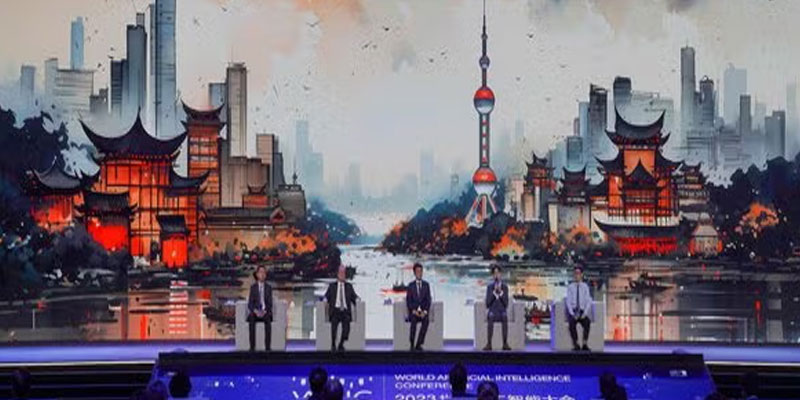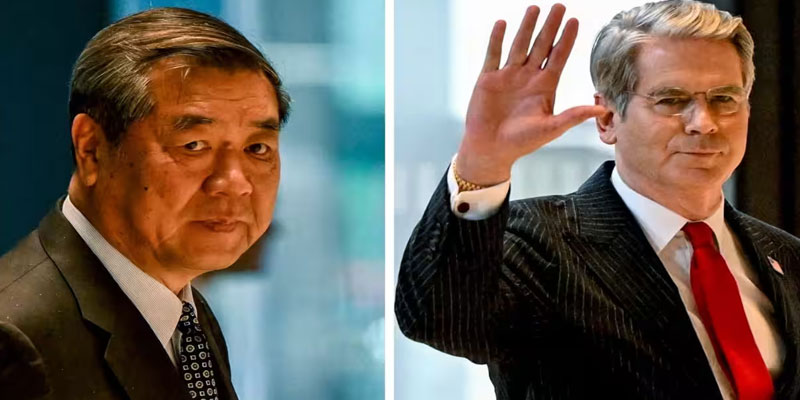
Washington and Beijing are exploring a new mechanism to communicate about serious artificial-intelligence risks that could have national-security implications. The proposal, put forward by US Treasury Secretary Scott Bessent during talks with Chinese Vice Premier He Lifeng in New York, comes as the two countries seek to manage growing competition over AI while simultaneously addressing trade, tariffs and critical-mineral supply chains ahead of the expected Trump–Xi summit.
A New Channel for Managing AI Risks
US Treasury Secretary Scott Bessent and Chinese Vice Premier He Lifeng concluded roughly eight hours of discussions on September 20. Washington proposed a bilateral AI dialogue incorporating a notification mechanism for incidents serious enough to raise national-security concerns.
Bessent said greater transparency between the world's two leading AI powers could help address shared risks. The mechanism remains a proposal: officials have not publicly established precise thresholds for notification, operational procedures or how quickly either government would have to respond. China has acknowledged discussions on AI, but its detailed response to the proposal remains unclear.
What The Proposed Mechanism Could Address
The proposed framework is intended to create a direct communication channel when AI-related developments cross into the national-security domain. Potential areas of concern could include serious model misuse, cyber-related incidents or other developments capable of creating risks beyond ordinary commercial competition.
Its significance lies less in regulating AI development itself and more in reducing uncertainty during a crisis. US officials have also clarified that discussions on advanced AI-chip export controls were not part of this particular mechanism.
The broader idea involves:
· Incident notification when AI-related events reach a national-security threshold.
· Greater transparency between Washington and Beijing.
· Structured bilateral dialogue on common AI risks.
· Crisis communication to limit the possibility of miscalculation.
· AI Dialogue Runs Alongside Trade Negotiations
The AI proposal was only one part of the New York discussions. Bessent and US Trade Representative Jamieson Greer also addressed tariffs, critical minerals and implementation of earlier trade understandings.
Greer said the two sides were working to operationalise a Board of Trade mechanism focused on potentially reducing tariffs on non-sensitive goods, including consumer products, agricultural items, energy and medical devices. Meanwhile, rare-earth supplies remained an unresolved issue.
The discussions come as the existing US-China trade truce approaches its November 10 expiry, adding urgency to negotiations before the leaders' meeting.
A Narrow Bridge Amid Strategic Competition
The proposed AI mechanism illustrates an attempt to separate certain areas of shared risk from the wider US-China strategic rivalry. Both countries are competing intensely over advanced technology while remaining economically interconnected.
For Washington and Beijing, establishing even limited communication on potentially dangerous AI incidents could provide an additional layer of crisis management without resolving their fundamental disagreements over technology, trade and national security.
From AI Rivalry to Rules for Managing Risk
The proposal does not represent an AI agreement yet. Its importance will depend on whether the two governments can define common thresholds, establish reliable notification procedures and sustain dialogue when strategic tensions rise. If those elements emerge, the initiative could provide a practical framework for managing some of the risks created by increasingly powerful AI systems while broader US-China competition continues.
(With agency inputs)