Bigger Threat Looms as Jaish Expands Recruitment to Women
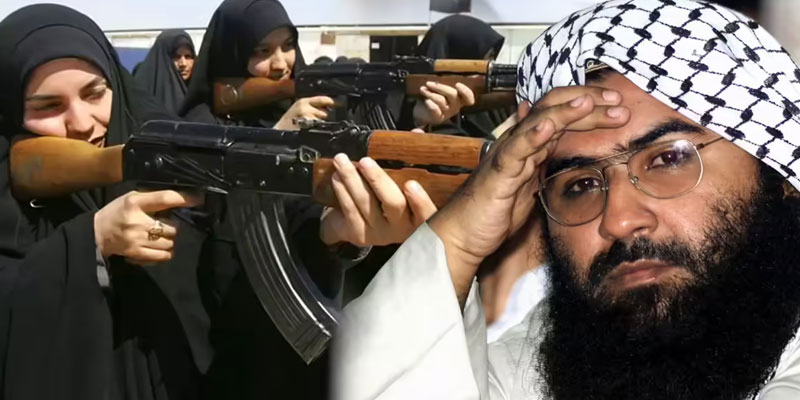
In a disturbing new development, Pakistan-based terror outfit Jaish-e-Mohammed (JeM) has launched a dedicated online training program for women, marking a significant evolution in its recruitment and radicalisation strategy. The extremist group blacklisted by the United Nations, led by Masood Azhar, is reportedly establishing a female wing called Jamat ul-Muminat, using digital platforms to attract members under the guise of religious education.
According to intelligence inputs cited by NDTV, this latest initiative—titled “Tufat al-Muminat”—aims to indoctrinate women, raise funds, and integrate them into JeM’s growing network. The move has raised alarm among global security agencies, who fear that JeM is now mirroring tactics used by groups like ISIS, Hamas, and the LTTE, all of which have exploited female recruits to advance militant objectives.
Inside the Online ‘Jihadi’ Course
The Tufat al-Muminat course is set to begin on November 8, with daily 40-minute online lessons conducted by women related to top JeM leaders, including Masood Azhar’s own sisters. Each participant is reportedly required to pay 500 Pakistani rupees as a “donation” and fill out an online registration form.
The lessons—disguised as religious lectures—will reportedly teach women their supposed “duties” toward jihad and the protection of Islam. Intelligence officials believe this is part of a broader effort to train women for logistical roles, propaganda dissemination, and potentially even suicide operations.
The online structure allows JeM to operate beyond traditional boundaries, capitalising on Pakistan’s conservative environment, where women’s mobility is restricted. “This is how terror is going digital,” said a counter-terror official, noting that the group’s fee-based system also serves as a front for raising illicit funds, despite Pakistan’s promises to comply with FATF regulations.
Leadership and Family Ties: Azhar’s Sisters Take Charge
The new female division of JeM is reportedly led by Sadiya Azhar, the younger sister of Masood Azhar, with support from her sibling Safia Azhar and Afreera Farooq, the widow of Umar Farooq, a key conspirator in the 2019 Pulwama terror attack.
Sadiya’s husband, Yusuf Azhar, a senior JeM commander, was killed earlier this year during India’s Operation Sindoor—a retaliatory strike targeting JeM’s base in Bahawalpur after the Pahalgam terror attack. The family’s direct involvement underscores JeM’s determination to maintain its leadership structure even amid operational losses.
JeM’s women’s wing was formally announced by Masood Azhar on October 8 at Markaz Usman-o-Ali in Bahawalpur, followed by another mobilisation event “Daktarin-e-Islam” on October 19 in Pakistan-occupied Kashmir. These gatherings, officials say, were intended to attract both the relatives of JeM operatives and vulnerable women from poor communities.
Why Women Are the New Targets
Experts believe JeM’s pivot toward women stems from both necessity and strategy. Following India’s military operations and tighter counterterrorism measures, the group’s male operatives have come under intense surveillance. Women, on the other hand, can move and communicate with fewer restrictions, making them ideal for courier, fundraising, and propaganda roles.
“JeM has realised that women can slip through security nets more easily,” a senior counter-terror officer said. “Their inclusion marks a calculated expansion of the group’s operational playbook.”
Historically, JeM, rooted in Deobandi ideology, barred women from participating in armed jihad. However, recent intelligence suggests that Masood Azhar and his brother Talha al-Saif have approved female involvement, signaling a shift toward a more inclusive yet dangerous militant framework inspired by global terror models.
A Dangerous Digital Shift
The launch of JeM’s online jihadi course for women represents a troubling escalation in how extremist groups are adapting to modern constraints. By exploiting technology and gender roles, Jaish-e-Mohammed is broadening its recruitment base while evading traditional counterterrorism scrutiny.
For security agencies worldwide, this move serves as a stark reminder that the battle against terrorism is increasingly being fought online—not just in war zones. As JeM transforms its methods to include women and digital spaces, international cooperation and intelligence sharing will be crucial to counter this new, gender-inclusive face of extremism.
(With agency inputs)