Assembly March Signals Escalating Student Anger
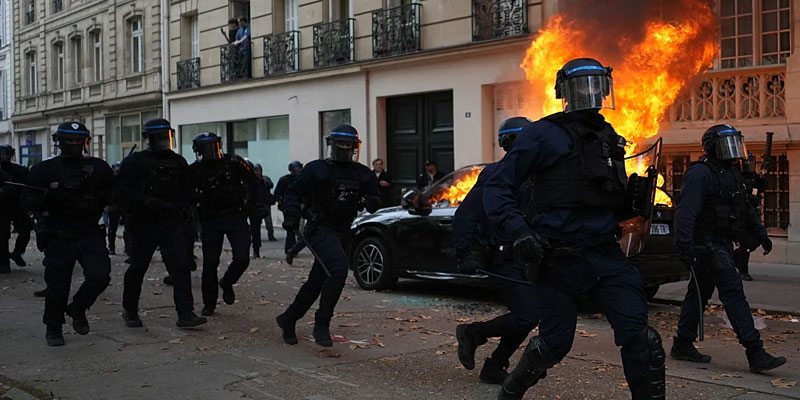
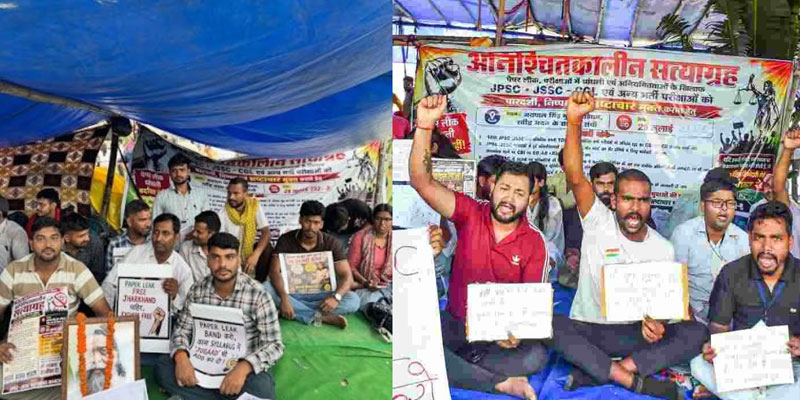
Jharkhand’s prolonged student agitation over alleged irregularities in government recruitment examinations entered a decisive phase on Monday, August 10, as thousands of aspirants marched towards the state Assembly in Ranchi. The mobilisation followed the failure of the sixth round of talks between student representatives and the Hemant Soren government. Security was tightened along the roughly four-kilometre route, with more than 1,500 personnel deployed. Protesters also breached barricades near the old Assembly premises while insisting that their movement would remain peaceful.
From Exam Disputes to a Wider Trust Deficit
At the heart of the agitation are allegations concerning recruitment examinations conducted by the Jharkhand Public Service Commission (JPSC) and Jharkhand Staff Selection Commission (JSSC). Aspirants have raised questions over the 14th JPSC Combined Civil Services preliminary examination, including the publication of merit lists, category-wise cut-offs and alleged discrepancies involving OMR answer sheets. While not every document circulating online has been independently verified, the allegations have generated investigations and intensified scrutiny of the recruitment process.
The JSSC Combined Graduate Level (CGL) examination has emerged as an equally contentious issue. The examination was cancelled following allegations of a paper leak in 2024 and subsequently re-conducted. Despite subsequent legal developments allowing the results to proceed subject to investigation, protesting aspirants continue to demand its cancellation and an independent probe.
Their demands extend beyond individual examinations: disclosure of OMR and response sheets, category-wise cut-offs, action against officials or agencies found responsible, cancellation of several disputed examinations and a predictable recruitment calendar based on transparent national-level models.
Government Offers Concessions, But CBI Demand Stalls Talks
The government maintains that it has accepted about 98 per cent of the students’ demands and has agreed to cancel three examinations, including the 14th JPSC preliminary test. However, negotiations collapsed over two crucial issues—the students’ insistence on a CBI investigation and cancellation of the JSSC-CGL examination. The government has pointed instead to existing CID and Enforcement Directorate inquiries and indicated that judicial monitoring could be considered.
The health of student leader Devendra Nath Mahto has added urgency. On a nine-day hunger strike, he joined Monday’s march in an ambulance after reportedly losing 10.5 kg. His deteriorating condition has become a powerful symbol of the protesters’ determination.
A Student Movement Gains Political and Public Support
The agitation has increasingly acquired a political dimension. BJP leaders, including Opposition leader Babulal Marandi, have demanded a CBI probe, while other political and public figures have expressed solidarity. The involvement of personalities from outside conventional politics has further widened the movement’s visibility. Yet the central issue remains larger than partisan politics.
The Real Test Is Recruitment Credibility
Jharkhand’s student agitation reflects a fundamental crisis of confidence in public recruitment. For thousands of aspirants, competitive examinations represent years of preparation and a pathway to economic security. Any suspicion of leaks, opaque evaluation or administrative inconsistency therefore carries consequences far beyond one examination.
The government’s challenge is not simply to end the march, but to restore credibility through verifiable transparency, independent scrutiny and predictable recruitment. The Assembly march has transformed an examination dispute into a test of institutional accountability—and resolving it convincingly may matter as much as the recruitment itself.
(With agency inputs)