Islamabad Blames India as Political Turmoil Engulfs PoK Elections
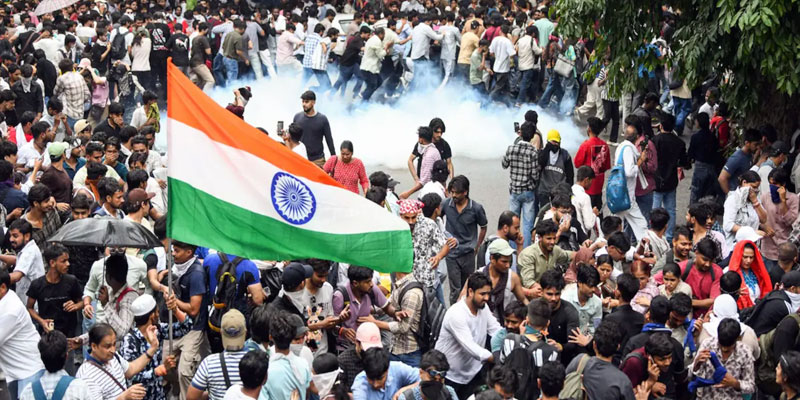
Pakistan has accused India of orchestrating unrest surrounding the ongoing Pakistan-occupied Kashmir (PoK) Assembly elections, alleging that the protests are part of an "Operation Sindoor 2.0" aimed at disrupting the electoral process. The allegation was made by Prime Minister Shehbaz Sharif's adviser Rana Sanaullah, who claimed that boycott calls and demonstrations were intended to prevent polling in the region. However, he offered no evidence to substantiate the charge. The remarks come amid widespread protests, allegations of electoral manipulation and a heavy security crackdown, adding another layer of tension to the already strained India-Pakistan relationship.
What Was Operation Sindoor?
Operation Sindoor was India's cross-border military operation launched on May 7, 2025, targeting nine locations associated with terrorist groups in Pakistan and Pakistan-occupied Kashmir. New Delhi described the strikes as a precision counter-terrorism operation conducted in response to the April 22, 2025, Pahalgam terror attack, in which 26 civilians lost their lives.
The Indian government maintained that the operation was carefully calibrated, targeting terrorist infrastructure rather than Pakistan's conventional military assets. It presented the strikes as a measured, non-escalatory response intended to deter future cross-border terrorism while avoiding broader military confrontation.
Operation Sindoor: Key Facts
· Conducted by India on May 7, 2025, following the Pahalgam terror attack.
· Targeted nine terrorist-linked locations in Pakistan and Pakistan-occupied Kashmir.
· Described by India as a precision counter-terrorism mission.
· Focused on terror infrastructure instead of conventional military installations.
· Intended to demonstrate India's resolve to respond militarily to major terrorist attacks while limiting escalation.
· Triggered protests across Pakistan, including demonstrations in Islamabad, Karachi, Lahore and Peshawar.
· Since then, Pakistan has frequently invoked "Operation Sindoor" while alleging Indian interference and "hybrid warfare" in PoK, even without presenting direct evidence.
PoK Elections Amid Protests and Political Discontent
The 2026 Legislative Assembly elections in Pakistan-occupied Kashmir are being conducted in three phases between July 27 and August 10 for 45 directly elected seats. The elections have unfolded amid months of unrest led by the Joint Awami Action Committee (JAAC).
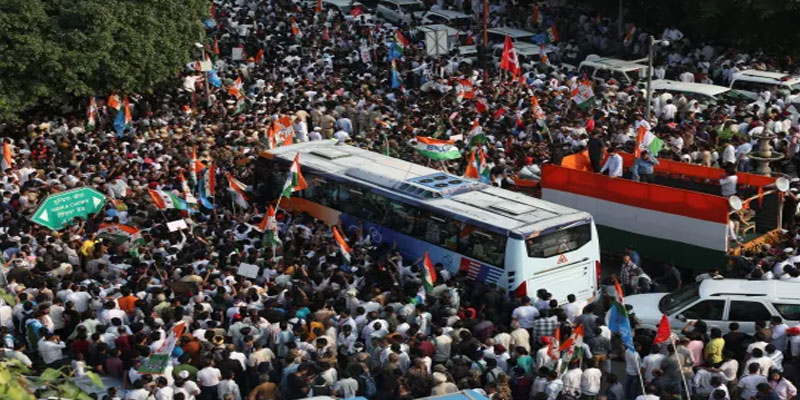
The protests intensified after the PoK Supreme Court upheld the constitutional validity of 12 Assembly seats reserved for Kashmiri refugees settled in Pakistan. Opposition groups argue that these reserved seats distort democratic representation and strengthen Islamabad's influence over the region. Demonstrations have reportedly resulted in more than 40 deaths, numerous arrests and repeated allegations of excessive force by security agencies.
India's Ministry of External Affairs has dismissed the elections as a "sham electoral exercise," arguing that the polls cannot legitimise Pakistan's control over the territory or conceal public protests and reported human rights concerns.
Latest Developments
On August 6, 2026, Rana Sanaullah claimed that the anti-election protests represented an "Operation Sindoor 2.0" allegedly backed by India to derail the electoral process. Despite the accusations, independent reports continue to attribute the protests primarily to local grievances over reserved seats, alleged rigging and the administration's security response.
Meanwhile, the ruling Pakistan Muslim League-N (PML-N) has emerged as the dominant force in the elections, with candidates backed by former Prime Minister Nawaz Sharif winning 24 of the 34 declared seats. The party now appears set to form the next regional government after nearly a decade. Opposition groups, however, continue to allege widespread rigging and claim that voting was conducted under heavy military presence.
Competing Narratives Deepen Regional Divide
The unfolding developments in Pakistan-occupied Kashmir highlight the sharp divergence between the narratives advanced by Islamabad and New Delhi. While Pakistan attributes the unrest to alleged external interference under the banner of "Operation Sindoor 2.0," many observers point to longstanding local political grievances, electoral disputes and dissatisfaction with governance as the principal drivers of the protests. As the PML-N moves towards forming the government despite allegations of irregularities, the controversy is likely to reinforce diplomatic tensions between India and Pakistan. Beyond the immediate electoral outcome, the episode underscores how domestic political unrest in disputed territories can quickly assume broader geopolitical significance, complicating efforts to maintain regional stability and constructive dialogue.
(With agency inputs)