193 MPs Submit Removal Notice Against Election Chief
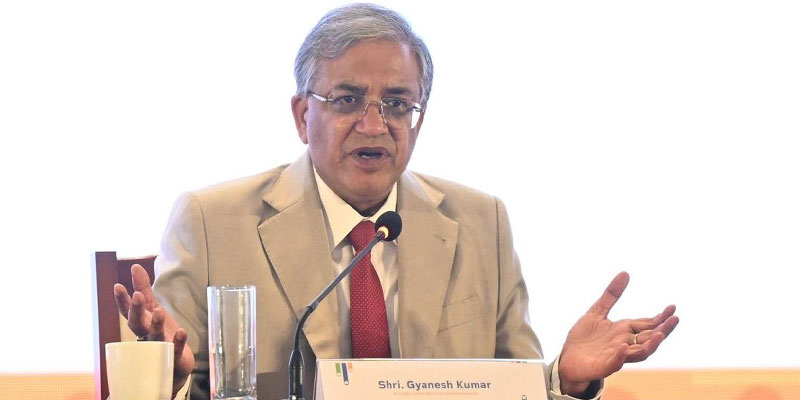
In a dramatic development in India’s political landscape, 193 Members of Parliament have submitted a formal notice seeking the removal of Chief Election Commissioner Gyanesh Kumar. The motion, submitted on March 12, 2026, includes signatures from 130 MPs in the Lok Sabha and 63 in the Rajya Sabha, surpassing the constitutional threshold required to initiate proceedings.
The notice has been backed by several opposition parties, including the Indian National Congress, Trinamool Congress, and Samajwadi Party, along with MPs from other regional groups and independents. If admitted by the presiding officers of Parliament, it could trigger an inquiry process under constitutional provisions governing the removal of the Chief Election Commissioner.
The move marks an unprecedented moment in India’s electoral history and highlights growing tensions between the opposition and the country’s election management body.
What Charges Are Listed Against CEC Gyanesh Kumar?
The removal notice reportedly lists seven allegations of misconduct against the Chief Election Commissioner, accusing him of actions that allegedly compromised the neutrality of the Election Commission.
One of the primary accusations is partisan conduct, with opposition leaders claiming that certain decisions taken by the commission appeared to favor the ruling party. Critics argue that these decisions undermined the perception of the commission as an impartial constitutional authority.
Another major allegation concerns the obstruction of investigations into electoral malpractice. The notice claims that requests to probe irregularities in certain elections were either delayed or blocked, preventing a full examination of potential wrongdoing.
The motion also raises concerns about mass disenfranchisement linked to voter list revisions. Opposition leaders allege that a large number of voters were removed from electoral rolls during a special revision exercise in the state of West Bengal. According to critics, these deletions disproportionately affected opposition supporters.
Additional allegations include irregularities related to electronic voting machines, voter list manipulation, and selective enforcement of election rules. Taken together, the opposition argues that these actions eroded public confidence in the integrity of the electoral process.
Why Is This the First Removal Notice Against a CEC?
This development is historically significant because it represents the first formal attempt to remove a Chief Election Commissioner in India’s history. Although the Constitution provides a mechanism for such action, it has never previously been invoked against a serving CEC.
The process is modeled on the removal procedure for Supreme Court judges. Under constitutional provisions, a motion must first secure the support of at least 100 Lok Sabha MPs or 50 Rajya Sabha MPs before it can be considered. Once admitted, an inquiry committee may be constituted, and removal would ultimately require a two-thirds majority vote in both Houses of Parliament.
While previous controversies involving the Election Commission—such as debates over voting machines or campaign conduct—have sparked political criticism, they never escalated to a formal parliamentary motion seeking the removal of the chief election authority.
Political Stakes Ahead of Key Elections
The timing of the move is significant as several major state elections approach, including contests in Bihar, West Bengal, and Tamil Nadu. Opposition leaders say the motion is intended to safeguard the credibility of the electoral process ahead of these polls.
However, the ruling coalition has dismissed the notice as politically motivated, arguing that it is an attempt to undermine an independent constitutional body. Given the current parliamentary arithmetic, the motion faces significant hurdles in securing the two-thirds majority required for removal.
A Test for Democratic Institutions
Regardless of its eventual outcome, the motion against Gyanesh Kumar marks a defining moment in India’s parliamentary history. It highlights deep political polarization and growing debate over the independence of electoral institutions.
While the chances of the motion succeeding remain slim, the episode has already intensified scrutiny of the Election Commission’s functioning. Ultimately, the controversy underscores a broader question for Indian democracy: how to ensure that institutions tasked with safeguarding elections continue to command trust across the political spectrum.
(With agency inputs)