India’s Quiet Diplomacy Delivers
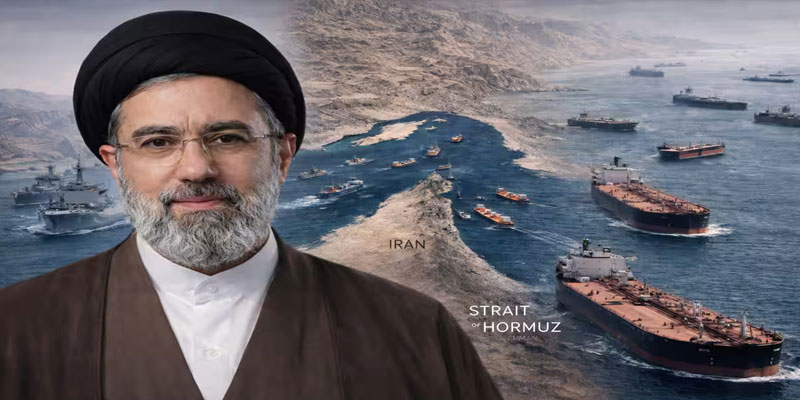
Iran has allowed safe passage through the Strait of Hormuz to “friendly nations” such as China, Russia, India, and Bangladesh—an announcement that carries enormous strategic weight amid a spiralling US-Iran conflict. For India, this is more than a diplomatic courtesy; it is a crucial safeguard for energy security and economic stability at a time of global uncertainty.
The Strait That Powers the World
The Strait of Hormuz is one of the most critical chokepoints in global trade, handling nearly 20% of the world’s oil supply along with significant LNG and fertilizer shipments. Following US-Israel strikes on Iran and Tehran’s retaliation, the region has witnessed a near-total disruption in shipping, with traffic reportedly dropping by as much as 95%.
Iran’s Revolutionary Guard Corps (IRGC) has since imposed strict transit protocols, requiring prior authorization for vessels deemed “non-hostile.” This has effectively turned Hormuz into a controlled gateway, where access is now dictated as much by geopolitics as by maritime law.
Who Gets Through—and Why
Iranian Foreign Minister Abbas Araghchi’s decision to include India among the “friendly nations” permitted safe passage reflects deeper strategic ties. Alongside countries like China and Russia, India’s inclusion is rooted in longstanding cooperation—particularly in energy trade and infrastructure projects such as the Chabahar port.
This designation is not merely symbolic. It ensures that Indian-bound vessels, if compliant with Iranian protocols, can continue navigating the strait even as others face denial or delays. In contrast, adversarial nations like the United States and Israel remain excluded, highlighting the geopolitical divide shaping maritime access.
Diplomacy in Action: India’s Strategic Payoff
India’s presence on this list underscores the success of its multi-aligned foreign policy. By maintaining constructive relations with Iran while simultaneously engaging with Western powers, India has preserved its strategic flexibility.
This balancing act is now yielding tangible benefits. With nearly 85% of its oil needs met through imports, uninterrupted access to Hormuz is critical. India’s prior diversification of energy sources—from 27 to 41 countries—adds a layer of resilience, but the Hormuz route remains indispensable.
Even as global oil prices surge and supply chains strain, India’s diplomatic positioning ensures it is not locked out of a vital artery of global trade. The Chabahar investment, often viewed as a long-term geopolitical play, is now proving its immediate strategic value.
Risks and Realities
However, access does not eliminate risk. The ongoing conflict continues to threaten broader disruptions, and Iran’s strict enforcement—evident in incidents like the halted Pakistan-bound vessel—shows that compliance is non-negotiable. A prolonged crisis could still impact prices, inflation, and supply stability, forcing India to lean further on alternative partners like Russia and the United States.
Strategic Autonomy, Tangible Gains
India’s inclusion among Iran’s “friendly nations” is a clear dividend of patient, calibrated diplomacy. In a fractured global order, where alliances are fluid and access can be weaponized, India’s ability to stay engaged across divides has secured it a critical advantage.
As the crisis unfolds, this approach—steady, balanced, and interest-driven—may well prove to be India’s strongest asset in navigating an increasingly uncertain world.
(With agency inputs)