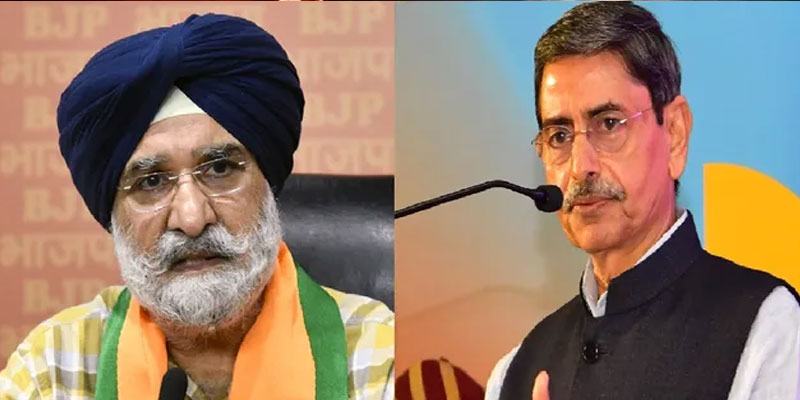
Sandhu and Ravi Sworn into Key Constitutional Roles
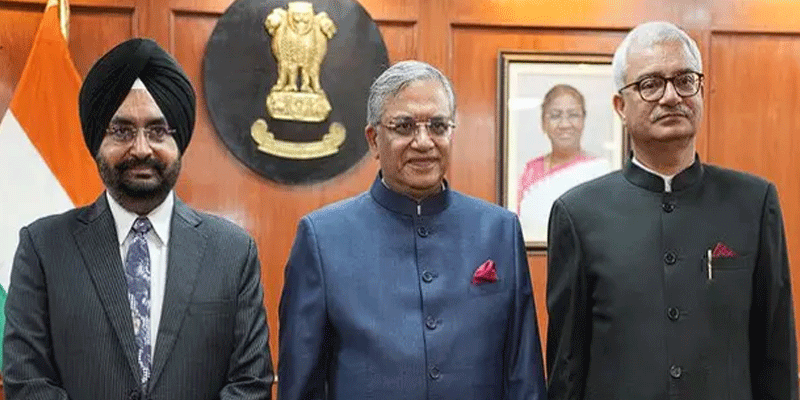
Sandhu, who previously served as India’s ambassador to the United States, was sworn in at Lok Niwas in Delhi by Devendra Kumar Upadhyaya. Meanwhile, R. N. Ravi took oath as West Bengal’s 22nd governor at Kolkata’s Raj Bhavan, administered by Sujoy Paul.
The ceremonies were attended by several political leaders, including West Bengal Chief Minister Mamata Banerjee. However, the absence of the Bharatiya Janata Party leadership from Ravi’s ceremony signaled underlying political tensions in the state.
A Strategic Appointment in Bengal
R. N. Ravi’s appointment comes at a politically sensitive time, with West Bengal preparing for Assembly elections in 2026. His previous tenure as Governor of Tamil Nadu was marked by frequent disagreements with the state government over federal authority and legislative approvals.
In Bengal, where the All-India Trinamool Congress governs the state, the governor’s office has historically been a flashpoint between the state and the central government. R. N. Ravi succeeds C. V. Ananda Bose, who resigned earlier, adding further intrigue to the timing of the reshuffle.
Given R. N. Ravi’s background in intelligence and security agencies, observers believe he may adopt an assertive oversight role in monitoring governance issues and law-and-order developments.
How R. N. Ravi’s Appointment Could Affect TMC–BJP Dynamics
The arrival of R. N. Ravi in Kolkata could sharpen the political rivalry between the Bharatiya Janata Party and the ruling All India Trinamool Congress ahead of the next state polls.
Governors possess constitutional powers that include reviewing legislation, seeking reports from the state government, and raising concerns over administrative matters. In politically charged states like West Bengal, these powers often translate into intense political standoffs.
For the BJP, R. N. Ravi’s appointment may strengthen the party’s narrative around governance scrutiny and alleged irregularities in state administration. For Mamata Banerjee’s government, however, it could be portrayed as an attempt by the Centre to increase pressure on a politically important opposition stronghold.
This dynamic may result in more legal battles, public confrontations, and heightened rhetoric in the months leading up to the election.
What Delhi Could See Politically Under Sandhu
In contrast, the appointment of Sandhu as Delhi’s Lieutenant Governor carries a different political dimension. The national capital has frequently witnessed friction between the Lieutenant Governor’s office and the elected government over administrative authority.
With Sandhu’s long diplomatic career and global experience, analysts expect a more consultative approach to governance in Delhi. His background in international diplomacy may also help strengthen economic partnerships, urban development initiatives, and infrastructure investments in the capital.
Politically, Sandhu’s tenure will unfold against the backdrop of continued tensions between the central government and opposition-led municipal institutions in Delhi, making cooperation a key factor for effective governance.
Constitutional Offices at the Centre of Politics
The appointments of R. N. Ravi in West Bengal and Mr. Sandhu in Delhi highlight how gubernatorial positions often carry significant political weight in India’s federal structure. While governors are expected to function as neutral constitutional authorities, their actions frequently intersect with the competitive dynamics of national and state politics.
In Bengal, R. N. Ravi’s tenure may intensify the already fierce contest between the BJP and the Trinamool Congress. In Delhi, Sandhu’s leadership could shape how administrative cooperation evolves between the Centre and local authorities. Together, these appointments reflect a broader moment in Indian politics where constitutional roles remain deeply intertwined with electoral strategy and governance challenges.
(With agency inputs)