The Satya Niketan tragedy has triggered a sweeping administrative and judicial response after a five-storey paying guest building collapsed on September 5, killing seven people, most of them college students. The owner has been arrested, five senior MCD officials suspended, and authorities have ordered structural audits and inspections of PG accommodations across Delhi, bringing long-standing questions over construction and enforcement failures sharply into focus.
A Collapse Waiting to Happen?
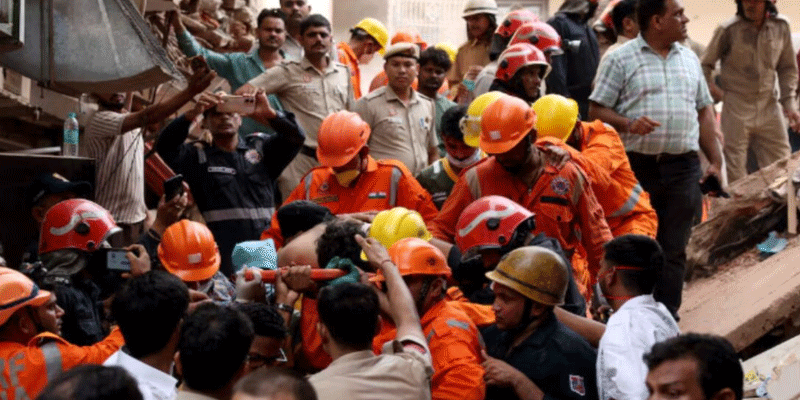
The building, operating as “Hostel Daze,” reportedly collapsed amid heavy rain and ongoing basement repair work. Authorities have pointed to water accumulation and structural weakness as immediate factors. Rescue teams worked for more than 27 hours, pulling survivors from the rubble as the death toll reached seven.
The aftermath revealed disturbing structural concerns, with the damaged building requiring extensive temporary support. Reports also raised questions about missing or inadequate structural members and possible violations involving additional floors and building design.
Police arrested owner Hariram Gupta, also referred to in some reports as Hariram Bansal, after he allegedly fled following the collapse. He was apprehended in Bhiwadi, Rajasthan. His wife was also sent to judicial custody, while their son was remanded to police custody.
The Deeper Problem: Unsafe Student Housing
The tragedy has exposed a larger urban problem in areas surrounding Delhi University, where residential properties are frequently converted into high-density PG accommodation to meet enormous student demand.
Such conversions can place additional pressure on buildings never designed for intensive occupancy. Questions over unauthorised construction, extra floors, structural alterations and inadequate maintenance have persisted for years. The Satya Niketan collapse has therefore raised concerns not merely about one building, but about whether the regulatory system is capable of identifying dangerous structures before disaster strikes.
MCD Faces Immediate Accountability
The Delhi government suspended five senior MCD officials from the South Zone: Deputy Commissioner Rakesh Kumar, Superintending Engineer Ranvir Singh, Executive Engineer (Building) Lalit Kumar Goel, Assistant Engineer Sunil Chauhan and Junior Engineer Ashish Kumar.
The MCD has ordered executive engineers across all zones to inspect buildings under their jurisdiction and submit reports by September 10. The civic body has also begun sealing properties around Satya Niketan that prima facie violates height and floor restrictions, while the collapsed structure is slated for phased demolition.
Court And LG Demand Wider Reform
The Delhi High Court has taken cognisance of the incident and sought responses from the Delhi government, Centre, MCD and Delhi University. It has directed comprehensive inspections of PG accommodations to examine compliance with building bye-laws and student occupancy.
Lieutenant Governor Taranjit Singh Sandhu has separately directed structural audits of buildings in identified PG hubs. Importantly, he has cautioned against indiscriminate sealing that could leave students without accommodation, highlighting the need to expand safe hostel capacity alongside enforcement.
From Punishment to Prevention
The Satya Niketan collapse should not end with arrests, suspensions and sealing drives. Those actions establish accountability, but prevention requires sustained structural audits, transparent records, effective inspections and clear regulations governing PG conversions.
Delhi’s student housing shortage makes enforcement particularly challenging. The real test now is whether authorities can combine strict safety standards with adequate, affordable accommodation. If the tragedy prompts lasting regulatory reform and safer housing, seven lives lost will not be reduced to another statistic in Delhi’s recurring cycle of preventable building disasters.
(With agency inputs)