Policies that Stirred a Nation
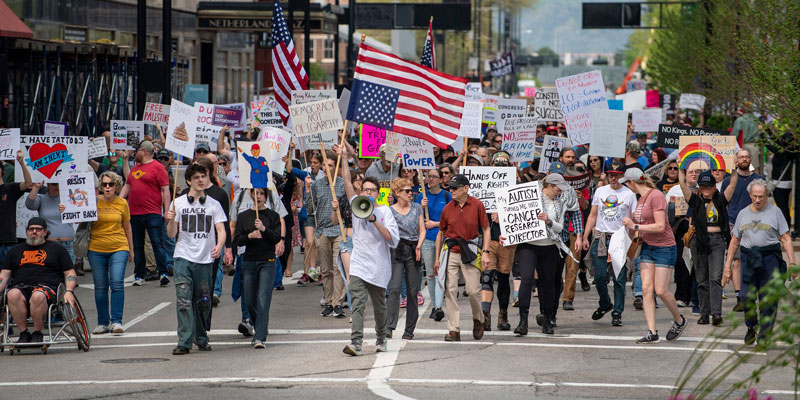
President Trump’s policy blueprint and executive choices have ignited a firestorm of dissent across the United States. Measures tied to immigration crackdowns, restructuring of federal agencies through initiatives like Project 2025, and planned rollbacks in social protections have provoked waves of anger. What began as localized demonstrations has evolved into a national movement, with citizens in every corner of the country rallying against what they see as threats to democratic norms and community rights. The persistence and breadth of this resistance mark one of the most determined civic responses to a sitting president in recent decades.
At the heart of these protests lie three major grievances.
· Immigration Policy: Plans for mass deportations and intensified enforcement have galvanized immigrant-rights groups and their allies, who argue these steps endanger vulnerable families and undermine the nation’s humanitarian values.
· Project 2025 and Power Expansion: Critics claim this blueprint for reorganizing federal departments concentrates too much authority in the executive branch, eroding long-standing checks and balances.
· Cuts to Public Services: Proposals to scale back healthcare, labor protections, and social safety nets have spurred unions and progressive organizations into action, warning of long-term harm to working-class communities.
These concerns merged in high-profile events such as the “Hands Off!” rallies and “Not My President’s Day” marches, drawing thousands to state capitols and urban centers nationwide.
Mobilization: Local Energy, National Reach
The protests have not followed a single command center but instead rely on a hybrid structure — grassroots groups linked by national campaigns. Faith-based organizations, student collectives, labor unions, and immigrant networks have tapped into social media to coordinate dates, amplify slogans, and share strategies. Initiatives like the 50501 campaigns enabled all 50 states to stage demonstrations simultaneously, while local leaders tailored their messages to regional issues. Border communities highlighted immigration struggles, while industrial towns stressed labor rights and economic insecurity.
Although estimates of turnout vary, from organizers’ claims of millions to independent confirmations of tens of thousands, the movement’s visibility has been undeniable. Crowds in major cities combined with smaller but numerous gatherings across rural states give the protests both symbolic and practical reach.
Authorities Respond: From Dialogue to Confrontation
Governmental reactions have been far from uniform. Some state and local officials allowed demonstrations to proceed unhindered, occasionally even opening channels of communication with organizers. Others, however, treated the gatherings as challenges to authority. The federal government, in particular, faced backlash for deploying or threatening to deploy federal resources in certain cities, a move critics framed as an assault on local autonomy. This tug-of-war over who controls the streets has deepened divisions between federal, state, and municipal governments, raising questions about jurisdiction, civil liberties, and the limits of executive power.
Political Ramifications: Risks and Opportunities
The political reverberations of these protests are multifaceted. For opponents of the administration, mass mobilizations serve as recruitment grounds for volunteers, a catalyst for donations, and a platform to shape public opinion ahead of elections. By occupying the streets, they aim to convert raw anger into ballot-box change.
For the White House, the unrest carries both risks and potential gains. On one hand, heavy-handed responses may alienate moderates who value institutional stability. On the other, framing the protests as disruptive could reinforce loyalty among Trump’s core supporters. The balancing act will determine whether demonstrations weaken or entrench his political standing.
Democracy Under Stress, Yet Alive
The nationwide protests against President Trump embody more than momentary outrage — they represent layered anxieties about the direction of governance, fairness in policy, and preservation of democratic safeguards. They fuse concerns over immigration, executive overreach, and social welfare into a broader pushback against centralized authority. Whether this energy produces tangible policy change or primarily fuels political momentum will depend on how both activists and decision-makers channel it.
For now, the demonstrations stand as proof of an engaged citizenry: loud, organized, and ready to challenge authority when it feels democracy is at risk. In doing so, they remind the nation that dissent, while disruptive, is also a vital sign of democratic resilience.
(With agency inputs)