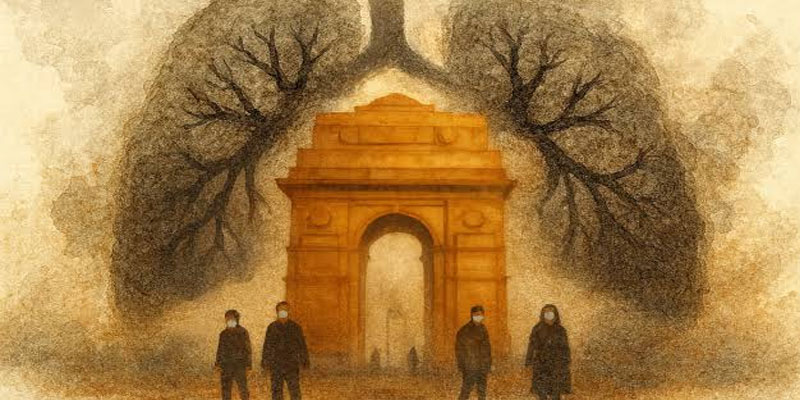
Ozone Pollution Spreads Across Indian Cities, Warns CSE Analysis
India's air pollution challenge is undergoing a significant transformation. A new analysis by the Centre for Science and Environment (CSE) has found that ground-level ozone pollution is rapidly spreading across urban India, emerging as a year-round environmental and public health concern rather than a seasonal phenomenon. Based on data from 25 cities over six years, the study identifies Delhi-NCR as the country's largest regional ozone hotspot, while cities including Chandigarh, Jaipur, Ahmedabad, Mumbai, Chennai, Bengaluru and Patna are also witnessing increasingly severe ozone exposure. The findings suggest that India's air-quality crisis is no longer confined to visible winter smog but is increasingly dominated by an invisible pollutant that poses serious health and climate risks.
Understanding Ground-Level Ozone and Its Growing Threat
Unlike particulate matter such as PM2.5 and PM10, ground-level ozone is not emitted directly into the atmosphere. It is a secondary pollutant formed when nitrogen oxides (NOx) and volatile organic compounds (VOCs), released from vehicles, industries, waste burning and household fuels, react in the presence of intense sunlight.
Historically, ozone pollution was considered largely a summer afternoon problem because higher temperatures and stronger sunlight accelerate the chemical reactions that produce it. However, CSE's review of air-quality data from 2021 to 2026 shows that ozone pollution has evolved from isolated seasonal spikes into a widespread, multi-season urban challenge affecting cities across diverse climatic zones.
Why Toxic Ozone Is Lasting Longer and Spreading Wider
One of the most concerning findings is that toxic ozone is now regularly persisting well into the night. Normally, ozone concentrations decline after sunset as atmospheric chemistry changes. However, in many Indian cities, ozone is becoming trapped within low night-time boundary layers, where limited vertical mixing prevents pollutants from dispersing.
The problem is compounded by reduced nocturnal nitrogen oxide (NOx) emissions, which means there is less fresh chemical breakdown of ozone during the night. As a result, elevated ozone concentrations persist for longer durations, exposing urban populations even after daylight hours.
At the same time, rising temperatures linked to climate change, increasing urbanisation, expanding transport networks, industrial emissions and widespread waste burning continue to release ozone precursors into the atmosphere. This creates a dangerous feedback loop in which higher temperatures accelerate ozone formation, while ozone itself contributes to additional atmospheric warming.
Health, Economic Impact and Precautionary Measures
Ground-level ozone poses significant health risks because it damages lung tissue, inflames airways, aggravates asthma, increases sensitivity to allergens and contributes to chronic respiratory illnesses such as Chronic Obstructive Pulmonary Disease (COPD). Long-term exposure has also been associated with cardiovascular diseases, heart attacks and strokes.
Beyond human health, ozone reduces agricultural productivity by damaging crops and affects regional climate systems, creating broader economic consequences.
Precautionary Measures
· Strengthen year-round monitoring of ozone and its precursor pollutants.
· Reduce vehicular emissions through cleaner fuels and public transport.
· Tighten industrial emission standards and compliance monitoring.
· Eliminate open waste burning and promote scientific waste management.
· Encourage cleaner household fuels and energy-efficient technologies.
· Develop city-specific heat and ozone action plans.
· Vulnerable groups should avoid strenuous outdoor activity during periods of high ozone levels, particularly on hot sunny days.
India Needs a Year-Round Multi-Pollutant Strategy
The emergence of ozone as a persistent urban pollutant marks a fundamental shift in India's air pollution landscape. Unlike visible smog, ozone remains largely invisible while causing substantial harm to human health, agriculture and the environment. The CSE analysis highlights that addressing air pollution now requires a comprehensive, year-round strategy focused not only on particulate matter but also on ozone and its precursor emissions. Strengthening emission controls, expanding scientific monitoring and integrating climate and air-quality policies will be essential to protecting public health as India's cities continue to grow. Recognising ozone as a major environmental threat today will help prevent far greater health and economic costs in the years ahead.
(With agency inputs)