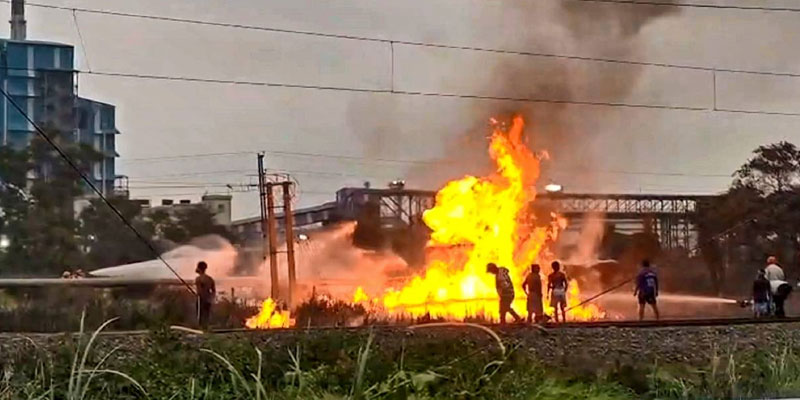
Major Blaze Injures Several, Probe into Cause Underway
A major fire at Haldia Petrochemicals' facility in West Bengal left several people injured early on Tuesday, triggering a large-scale emergency response and renewed concerns over industrial safety. The blaze reportedly originated in a naphtha-carrying pipeline before spreading rapidly, with local media reporting that multiple workers and nearby residents sustained burn injuries. While authorities continue to assess the extent of the damage, the incident has shifted attention towards pipeline security, emergency preparedness and reports of possible unauthorized fuel theft near the plant. Haldia Petrochemicals has acknowledged the incident, stating that the exact cause remains under investigation.
A Critical Petrochemical Hub
Haldia Petrochemicals is among eastern India's largest integrated petrochemical complexes, supplying raw materials to several downstream industries. Given its strategic importance, any disruption at the facility has implications beyond the plant itself, affecting industrial production, logistics and regional supply chains.
Facilities handling hydrocarbons such as naphtha operate under stringent safety protocols because the highly flammable feedstock can ignite rapidly in the event of leaks, pressure failures or accidental ignition. The Haldia industrial belt has witnessed industrial accidents in the past, underlining the importance of continuous monitoring, preventive maintenance and emergency response mechanisms in such high-risk environments.
Latest Developments
Initial reports suggested that between 15 and over 20 people were injured, with some media outlets stating that at least five victims remain in critical condition. The variation in casualty figures appears to reflect updates as rescue and medical operations progressed.
In an official statement, Haldia Petrochemicals confirmed that a few people had sustained injuries and said a detailed investigation had been initiated to determine the cause of the fire. The company also noted that it had repeatedly cautioned nearby communities against unauthorized access to petroleum products. This statement assumes significance because some reports indicate that the blaze may have originated near a location where illegal tapping of the naphtha pipeline was suspected.
Possible Causes and Wider Impact
Investigators are examining whether the fire resulted from a pipeline leak, equipment failure or unauthorized interference with the naphtha pipeline. While local police have reportedly pointed to leakage as a possible trigger, officials have stressed that the final cause will only be established after a comprehensive technical inquiry.
The incident reportedly affected areas beyond the immediate plant premises, with nearby residential localities also impacted. This raises broader questions about pipeline surveillance, perimeter security and whether adequate safeguards existed to prevent public exposure in the event of an accident.
Any prolonged disruption at a major petrochemical facility could temporarily affect production schedules and downstream industries dependent on feedstock supplies. More importantly, the incident may prompt fresh reviews of industrial safety standards and emergency response systems across similar facilities.
Why the Incident Matters
The Haldia fire underscores the multiple risks associated with hydrocarbon infrastructure. If the incident is ultimately linked to illegal fuel theft, it would point to a security lapse alongside potential engineering failures. Conversely, if technical shortcomings are found to be responsible, regulators may push for stricter inspections, upgraded monitoring systems and tighter compliance with industrial safety norms.
A Critical Test for Safety and Oversight
The Haldia Petrochemicals fire is more than an isolated industrial accident. It highlights the delicate balance between operational efficiency, public safety and infrastructure security in India's expanding petrochemical sector. The findings of the ongoing investigation will be crucial in determining whether the blaze resulted from technical failure, human negligence or criminal activity. Its outcome could shape future safety protocols, regulatory oversight and risk management practices across the country's energy and petrochemical industries.
(With agency inputs)