Why Trump Is Eyeing Iran’s Uranium
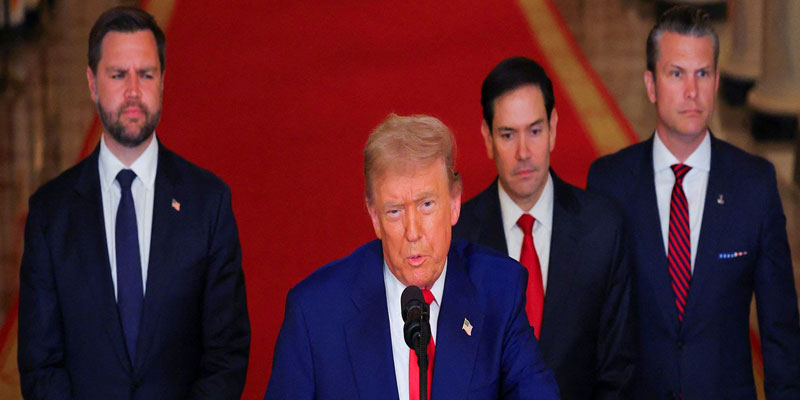
U.S. President Donald Trump is reportedly considering a bold and controversial move: a special ground operation to seize Iran’s enriched uranium stockpile. The plan, still under deliberation, aims to neutralize Tehran’s nuclear capabilities amid stalled diplomacy and an intensifying U.S.-Israel military campaign. While the objective is clear—prevent Iran from acquiring nuclear weapons—the path to achieving it could prove extraordinarily complex and costly.
The Trigger: Escalation and Strategic Urgency
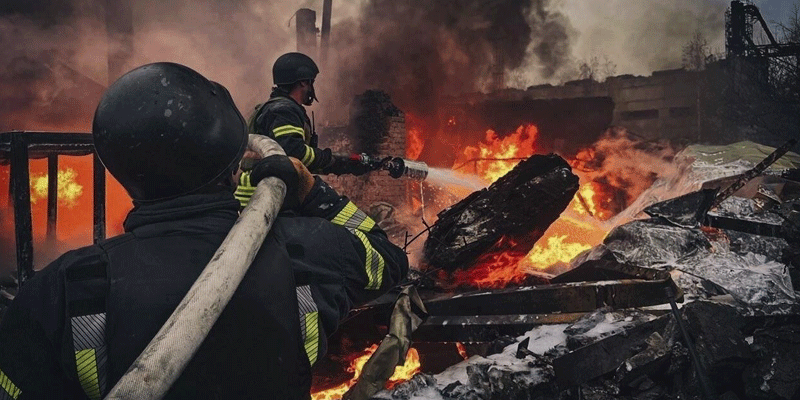
Recent Israeli strikes on key Iranian nuclear-linked sites have heightened urgency. Facilities tied to uranium processing and heavy-water production have been targeted, signaling a shift from containment to active disruption. At the same time, U.S. officials have reportedly pushed for Iran to voluntarily surrender its uranium reserves as part of any conflict resolution. However, with Tehran unlikely to comply, the option of direct intervention has gained traction within strategic circles.
Understanding the Uranium Factor
Iran’s stockpile—estimated at around 450 kg enriched to 60%—is central to the crisis. While not yet weapons-grade, this level significantly shortens the time required to produce a nuclear weapon. According to Rafael Grossi, such a quantity could potentially yield material for multiple warheads if further enriched. Stored in the form of uranium hexafluoride (UF6), the substance is highly volatile, corrosive, and difficult to transport, adding layers of risk to any operation.
Trump’s Strategic Calculus
Trump’s approach reflects a continuation of his “maximum pressure” doctrine—eliminate the threat at its source rather than rely on agreements. A successful seizure would theoretically ensure that Iran cannot rapidly weaponize its nuclear program, while also reinforcing U.S. dominance in the Gulf region. The plan reportedly involves elite forces securing nuclear sites, followed by extraction operations.
However, this strategy assumes precise intelligence, rapid execution, and minimal resistance—conditions that are far from guaranteed in a hostile and fortified environment.
The Operational and Strategic Challenges
Experts warn that such a mission could become one of the most complex military operations in modern history. Unlike targeted strikes, this would require boots on the ground, potentially involving thousands of troops across multiple heavily defended sites. إيران’s Islamic Revolutionary Guard Corps (IRGC) would likely mount fierce resistance, while the hazardous nature of UF6 demands specialized handling under combat conditions.
Logistical hurdles—ranging from transporting heavy, pressurized cylinders to securing evacuation routes—compound the risks. Any mishap could lead to chemical exposure, environmental damage, or mission failure.
Impact: Regional and Global Fallout
The implications of such an operation extend far beyond Iran. A direct U.S. ground intervention could trigger widespread escalation, including missile retaliation and activation of regional proxy groups. Global powers like China and Russia may respond diplomatically or strategically, further polarizing the international landscape.
For countries like India, the stakes are equally high. Disruptions in the Gulf could threaten energy supplies and critical projects such as the Chabahar port, while reshaping regional alignments.
A Costly Path to Security
Trump’s uranium gambit underscores the tension between decisive action and unintended consequences. While eliminating Iran’s nuclear capability may appear strategically sound, the operational risks and geopolitical fallout could outweigh the gains. History has shown that interventions driven by urgency can lead to prolonged instability. The real challenge lies not just in securing uranium, but in ensuring that the cure does not prove more destabilizing than the threat itself.
(With agency inputs)