Opening Narrative: Hard Lines Before Peace
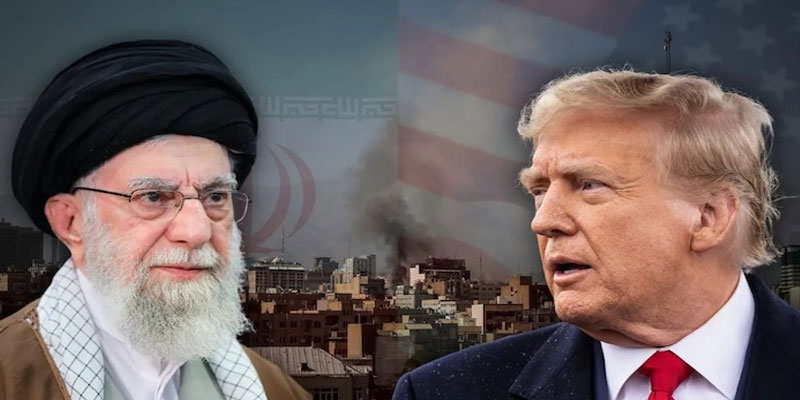
Iran has set uncompromising conditions for any ceasefire even as U.S. President Donald Trump unveiled a reported 15-point framework aimed at halting the conflict. The contrast is stark: Tehran’s terms seek a sweeping reordering of regional power, while Washington’s proposal attempts to impose constraints on Iran’s military, nuclear, and geopolitical reach. Rather than converging toward peace, both sides appear to be negotiating from positions designed to reshape the strategic landscape in their favour.
Tehran’s Tough Terms: A Blueprint for Regional Reset
· Complete closure of all U.S. military bases across the Gulf and wider Middle East
· Payment of significant war reparations by the U.S. and Israel
· A new legal framework for the Strait of Hormuz allowing Iran to charge transit fees
· Binding guarantees preventing any future hostilities
· Immediate halt to Israeli attacks on Hezbollah and allied groups
· Full removal of all international sanctions on Iran
· Unrestricted right to maintain and expand its missile programme
· End to hostilities across all fronts tied to Iran’s regional allies
· Suspension of hostile media campaigns and legal actions against pro-Iran voices
Trump’s 15-Point Plan: Containment Through Conditions
In contrast, the U.S. framework is structured around limiting Iran’s capabilities and influence. Key reported elements include:
· Sanctions relief tied to verifiable Iranian concessions
· Strict limits on missile range, quantity, and usage
· End to Iran’s support for proxy groups such as Hezbollah and others
· Reopening and demilitarisation of the Strait of Hormuz with guaranteed free passage
· Rollback or suspension of nuclear activities, including enrichment restrictions
· Assurances that Iran will not threaten Israel’s existence
· Binding compliance mechanisms and international inspections
· End to attacks on U.S. and allied forces
· A temporary ceasefire period (around one month) for negotiation and monitoring
This framework reflects a traditional U.S. approach: combining incentives like sanctions relief with stringent oversight and restrictions to curb Iran’s strategic reach.
Two Visions, One Impasse
The gap between the two positions is not merely wide—it is structural. Iran’s demands effectively call for a U.S. military withdrawal, economic concessions, and recognition of its regional authority. Meanwhile, the U.S. plan seeks to limit precisely those areas of Iranian strength: missiles, proxies, and nuclear capability.
Control over the Strait of Hormuz emerges as a central fault line. Iran views it as a lever of sovereignty and economic power, while the U.S. insists on open, unregulated passage. Similarly, Iran’s insistence on unrestricted missile development clashes directly with Washington’s push for caps and verification.
The issue of regional proxies further complicates matters. For Iran, these groups are strategic assets and deterrents; for the U.S., they are destabilising forces that must be dismantled. This fundamental disagreement underscores why even a temporary ceasefire remains elusive.
Negotiation or Strategic Deadlock?
What unfolds is less a negotiation and more a contest of incompatible endgames. Iran is leveraging the moment to demand a redefined regional order, while the U.S. seeks to preserve a rules-based framework that limits Tehran’s power. Unless one side significantly recalibrates its expectations, the path to ceasefire will remain blocked. The current proposals reveal not a shared desire for peace, but a deeper struggle over who gets to shape the future of the Middle East.
(With agency inputs)